Close
Back

From now on you can download videos from our website
If you would also like to subscribe to the newsletter and receive our latest updates, click on the button below.
Enter the email address you registered with and we will send you a code to reset your password.
The password must be at least 12 characters long, no spaces, include upper/lowercase letters, numbers and symbols.
Click the button to return to the page you were on and log in with your new password.
Good morning again. And good morning again, Marco Rubio. I really appreciate you being here today. We had a first discussion. We will now continue with – of course – the NATO Foreign Ministers. And the meeting will very much concentrate on a couple of issues also on your mind and the President’s mind, which has to do with the defence spending.
The good news is the money is now coming in. Defence spending is rapidly ramping up, building on the success of the The Hague summit.
Tens of billions and over the years there is hundreds of billions coming in. That also leads us to the question how to spend it. To make sure that it is spent well. And that brings us to the big issue of the defence industrial base, which is not producing enough. This is a problem in Europe. This is a problem in the US. This will be a big issue at the Ankara Summit.
But there are huge opportunities here. We have to produce more to maintain our deterrence and defence. But we're also big in terms of the defence dividend and societal effects here in terms of jobs, new factories opening up, new production lines across the Atlantic, and even more fostering the transatlantic bond.
And, of course, Ukraine will be on the agenda today, making sure that Ukraine stays strong in the fight. I again want to thank the United States for the fact that the critical flow of US military support to Ukraine, in terms of, for example, the interceptors for patriot systems, continues to flow. Paid for by European and Canadian Allies, and it is really vital for Ukraine to stay strong in the fight.
Obviously, today we have Foreign Ministers here, so we will discuss foreign issues. And one of the big issues now, of course, is Iran, the Strait of Hormuz, the issue of freedom of navigation. And I hear from many of my colleagues here that is not acceptable that the freedom of navigation is basically trampled upon as it is at the moment, and we have to think how we collectively can deal with this. And I think everybody acknowledges that the United States degrading the nuclear capability of Iran, but also the long-range missile capability of Iran, is crucial for the Middle East, for Europe, for the whole world.
So, again, Marco, thank you for being here, for your incredible leadership, and being such a staunch supporter of our transatlantic bond.


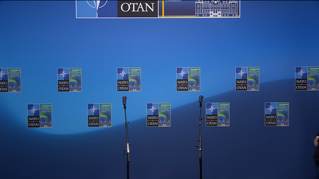
NATO Secretary General Mark Rutte meets with Marco Rubio, US Secretary of State - Meeting of NATO Ministers of Foreign Affairs
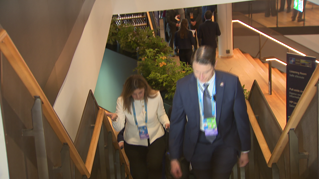
NATO Secretary General Mark Rutte meets with Marco Rubio, US Secretary of State - Meeting of NATO Ministers of Foreign Affairs
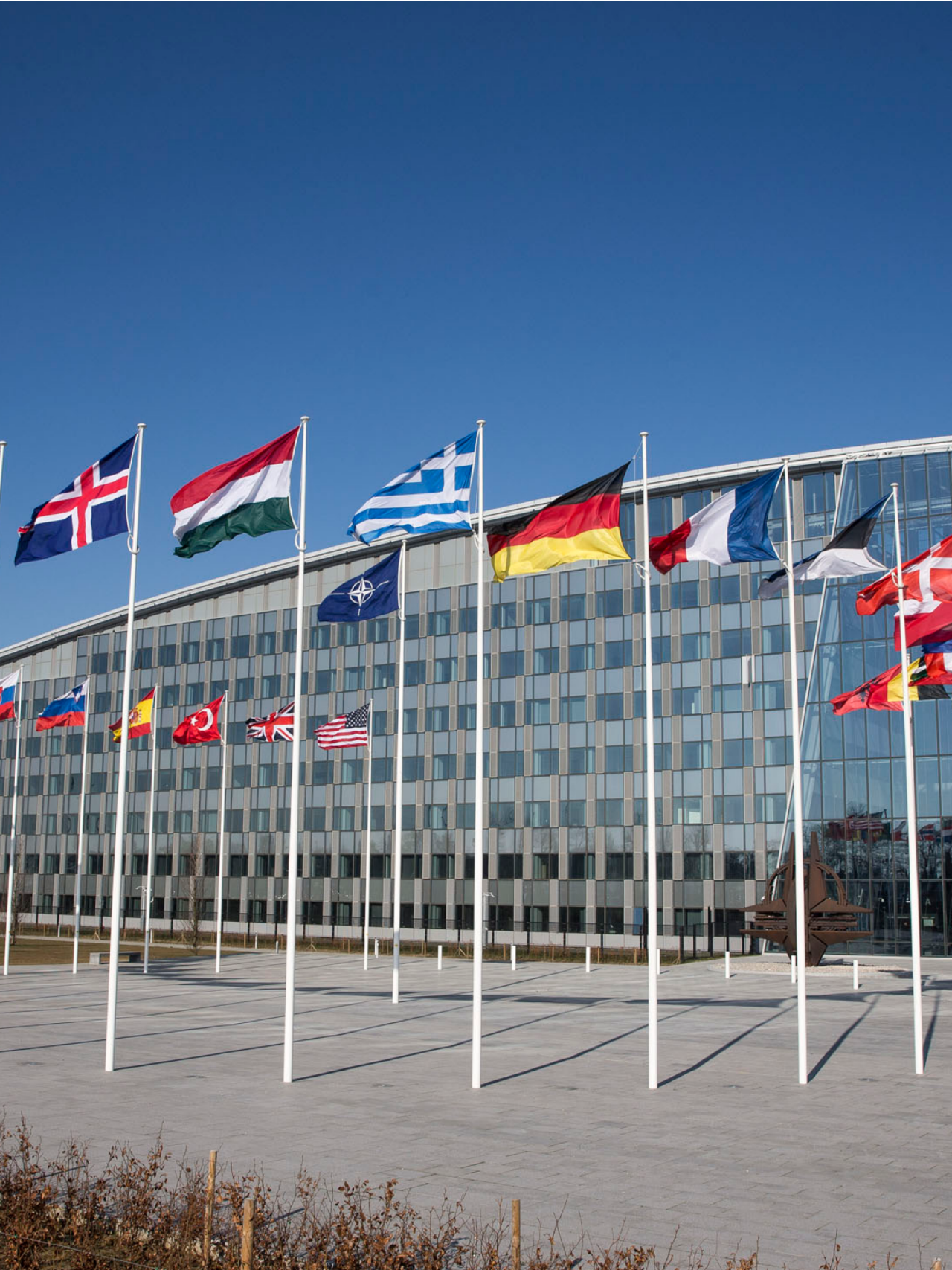
NATO Secretary General Mark Rutte meets with Marco Rubio, US Secretary of State - Meeting of NATO Ministers of Foreign Affairs
NATO Secretary General Mark Rutte meets with Marco Rubio, US Secretary of State - Meeting of NATO Ministers of Foreign Affairs
NATO Secretary General Mark Rutte meets with Marco Rubio, US Secretary of State - Meeting of NATO Ministers of Foreign Affairs
NATO Secretary General Mark Rutte meets with Marco Rubio, US Secretary of State - Meeting of NATO Ministers of Foreign Affairs
Remarks by the NATO Secretary General and the US Secretary of State