Close
Back

From now on you can download videos from our website
If you would also like to subscribe to the newsletter and receive our latest updates, click on the button below.
Enter the email address you registered with and we will send you a code to reset your password.
The password must be at least 12 characters long, no spaces, include upper/lowercase letters, numbers and symbols.
Click the button to return to the page you were on and log in with your new password.
Having been neutral for decades, why did Denmark become one of NATO’s founding members on 4 April 1949? Being both strategically placed yet vulnerable at the same time, what type of member was Denmark during the Cold War? With a strong Scandinavian identity and social progressiveness, what added value does Denmark bring to NATO?
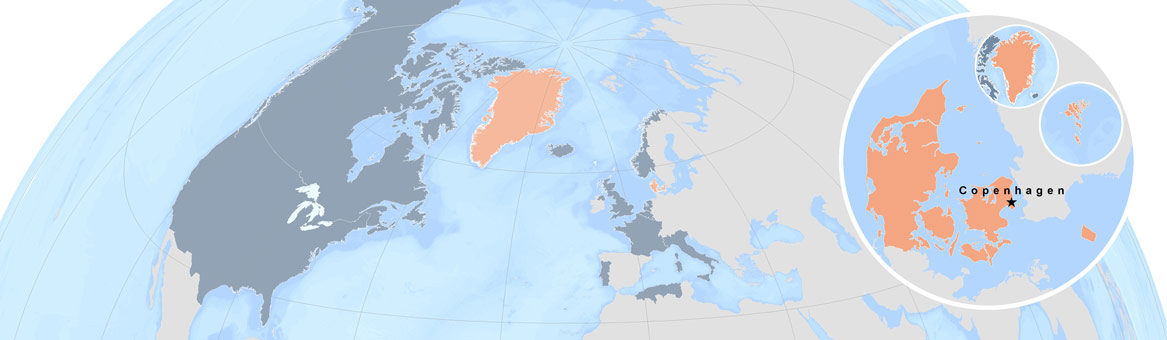
Denmark and its NATO Allies in 1949.
"The goal, the preservation of peace, is also Denmark's, in deep accord with the ardent desire and old tradition of the Danish people."
Danish Minister of Foreign Affairs Speaking at the signing ceremony of the North Atlantic Treaty, 4 April 1949
Perhaps best known for the magic of Lego and Hans Christian Andersen’s fairy tales, the Kingdom of Denmark, although geographically small, is a tactical giant. A bridge between the north and south of Europe, the gatekeeper of the Baltic Straits and the key holder to Greenland and the Faroe Islands, Denmark is a key strategic player for Western Allies. It opens up the way to the Baltic Sea and the Arctic, while providing an essential stepping stone between Europe and North America.
In 1949, the Danish Folketing (Parliament) voted largely in support of NATO membership, firmly turning its back on decades of strict neutrality. Throughout the Cold War, the tradition of neutrality occasionally permeated the country’s defence and foreign policies and sometimes manifested itself during discussions within the Alliance. However, this former neutral power of approximately four million inhabitants at the time had a vital role to play. Later in the post-Cold War period, it proved to be one of the Alliance’s most reliable and active members.
Denmark is intrinsically linked to its Nordic neighbours: Finland, Iceland, Norway and Sweden. They share centuries of history, having occupied each other’s territories at one point in time, signed agreements to strengthen economic cooperation, developed cultural links, shared strong democratic values and, in particular, a culture of consensus-building and consultation that transpires in their daily life. So, it is no surprise that talk of a Scandinavian defence agreement emerged in the 1930s and again in the 1940s. However, the two world wars severely rocked the certainties that had driven the foreign and defence policies of these countries, i.e., neutrality as a watertight security guarantor, so they were keen to consider other solutions. The First World War showed the failings of the League of Nations to keep the peace and the Second World War clearly illustrated that neutrality was a weak shield against occupation.
Denmark’s Nordic neighbours
Finland shared a huge border with the Soviet Union. During the Second World War, Scandinavian cooperation and the lack of Western support had resulted in losses – territorial and human – so the logical alternative was to opt for friendly relations with the Soviet Union. Although there had always been mutual suspicion between the two, conflict was averted. Finland has consistently maintained a policy of military non-alignment which changed following Russia’s full-scale invasion of Ukraine in February 2022 which swayed political consensus in favour of NATO membership. Finland joined the Alliance on 4 April 2023.
Iceland feared being occupied by Nazi Germany during the Second World War. When the British temporarily occupied the country and then withdrew to use their forces on the continent, the void made them rethink their policy of neutrality. On 1 July 1941, Iceland signed an agreement with the United States that allowed for the stationing of American forces throughout the hostilities. Iceland became a founding member of NATO in 1949.
Similarly, Norway had a tradition of neutrality and, after being occupied by Nazi Germany during the Second World War, sought alternative policies. It also became a founding member of NATO.
Sweden was militarily armed throughout the Second World War. This combined with Nazi Germany’s lack of interest, enabled the country to avoid combat. It continued its policy of neutrality and was consequently opposed to having any relation with NATO whatsoever. It proposed a defence pact to Denmark and Norway, which would stop them from collaborating with Western Allies. Both parties turned down the offer as it would render them neutral without providing sufficient military support, something the Second World War had proved to be an unviable situation for them. Despite this initial opposition, many decades later on 7 March 2024, Sweden joined NATO.
All of Denmark’s Nordic counterparts are now NATO Allies.
Composed of around 800 islands, with Greenland in the middle of the Atlantic Ocean and the Faroe Islands off the northern coast of Scotland, Denmark is geo-strategically exposed. Following five years of Nazi occupation, Denmark positioned itself as a non-aligned state prepared to play the role of bridge-builder between East and West. However, during the war, a strong resistance movement developed, the spirit of which remained a powerful undercurrent to Danish society. As such, Denmark displayed a very different approach to foreign and defence policy in 1949. This new approach can be summed up in the slogan:
"Never again a ninth of April."
Danish slogan
The slogan was adopted by the country’s main political parties: the Social Democrats, the Moderate Liberals and the Conservatives. 9 April 1940 was the day Nazi Germany launched its assault on Denmark and Norway. The alternatives to a NATO solution were few and far between: either neutrality or total disarmament, with the consequences that implied in times of war. The Folketing supported NATO membership. Interestingly, during the Treaty negotiations of the future North Atlantic Alliance, Iceland linked its membership to that of Denmark’s and Norway’s so as to maintain a degree of unity among Nordic countries. In 1952, this Nordic link took on the form of the Nordic Council: a body for inter-parliamentary cooperation, initiated and presided over by the Danish Prime Minister, Hans Hedtoft.
Foreign minister Gustav Rasmussen signed the North Atlantic Treaty on 4 April 1949 on behalf of Denmark, even though he was an apprehensive signatory. The main drive behind Denmark’s role as a founding member came from the Prime Minister, Hans Hedtoft. A former member of the Danish resistance movement during the Second World War, he was alarmed by the Communist coup in Czechoslovakia and pushed for NATO membership. For Hedtoft, there was no hesitation: the choice was either isolated neutrality or the North Atlantic Treaty.
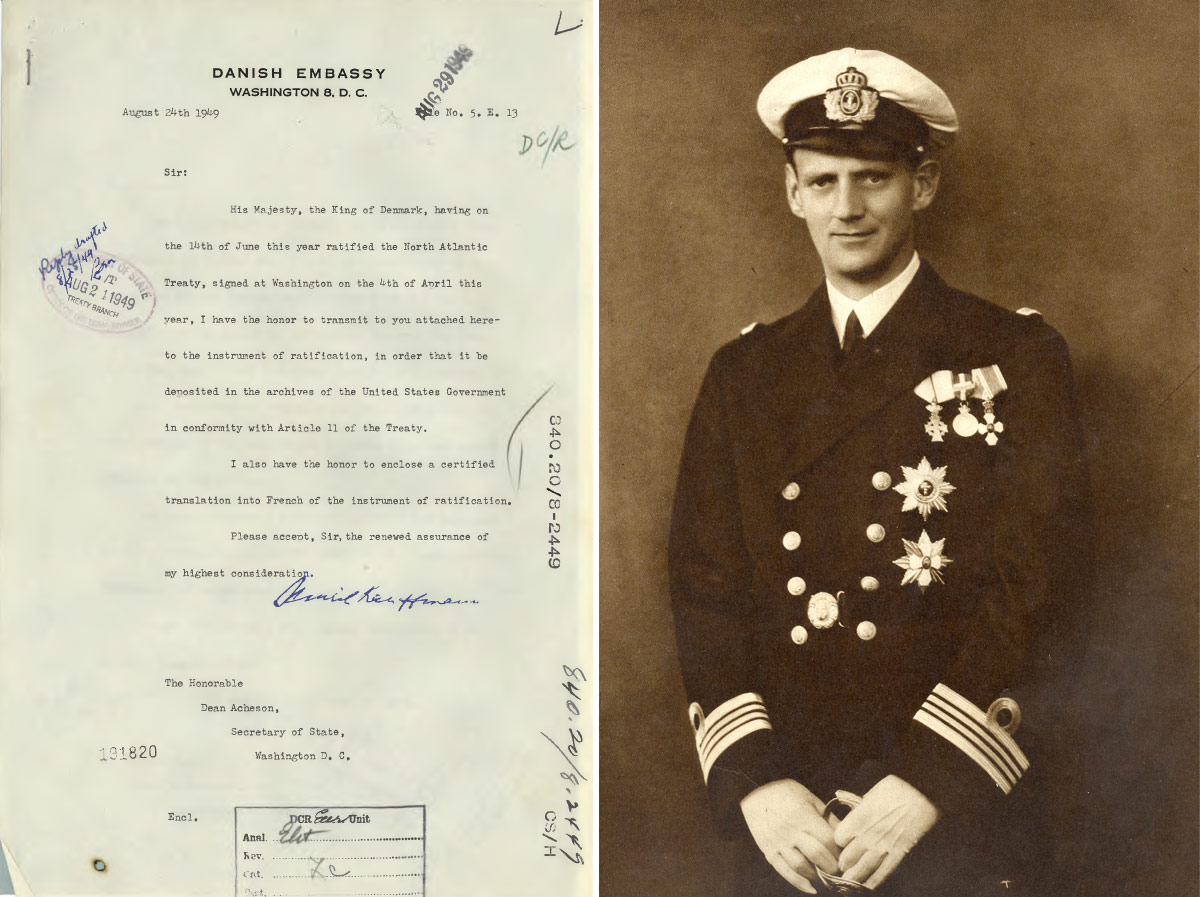
His Majesty the King of Denmark, Frederik IX, signs the Instrument of Accession for Denmark, Copenhagen, 14 June 1949.
To get a snapshot of Denmark in the 1950s, its social and economic life, as well as its political priorities, view this film produced by NATO.
To satisfy all parties and opinions throughout the country, the Danish government laid down limitations to NATO membership, effectively excluding the country from full military integration. The conditions were threefold: no bases, no nuclear warheads and no Allied military activity on Danish territory. Denmark was not alone in imposing these restrictions: both Norway and Iceland adopted similar policies. According to these three countries, by adopting this position they were able to stress the defensive nature of the Alliance’s stance and help avoid aggravating relations with the Soviet Union. Denmark’s base reservation policy was implemented from 1953 onwards, with the exception of Greenland, where the Danes accepted the permanent peacetime stationing of American forces on its territory. With regard to NATO’s nuclear policy, Denmark refused the stationing of nuclear weapons on Danish territory in peacetime from the 1950s onwards, including Greenland. The restrictions against Allied military activities also applied to the entire Danish Kingdom, including the island of Bornholm in the Baltic Sea, where restrictions lasted longer than on the mainland due to the terms of return of the island to Denmark in 1946. All of this, however, did not stop Denmark from participating in NATO exercises.
Originally Danish colonies, Greenland became self-governing in 1953, as did the Faroe Islands in 1948. According to the Danish Constitution, the Danish government is responsible for the foreign and security interests of all parts of the Kingdom so both the Faroe Islands and Greenland have been covered by the North Atlantic Treaty ever since Denmark joined in 1949. This remained the case, even after Greenland was granted home rule in 1979 (and after the Self-Government Act was voted in 2008, transferring even more autonomy to the local government) since foreign affairs and defence remain under the control of the Danish government. See below some snapshots from Greenland.
During the Second World War, the United States was authorised to defend Greenland from Nazi aggression and to maintain an American presence there to thwart any threats to North American. Greenland had always been of strategic interest to the United States. The US even offered to buy the island from Denmark in 1946. The American early warning radar system was therefore stationed on the territory at Thule Air Base, greatly contributing to the defence of the North Atlantic area. This was agreed in 1950 and formalised on 27 April 1951.
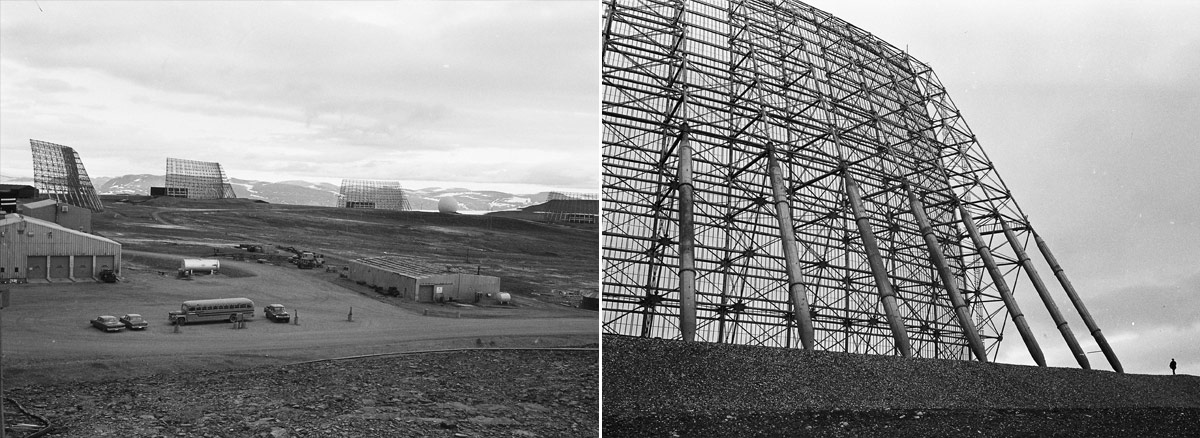
The actual Thule Air Base was constructed between 1951 and 1953, and was part of a strong, unified Cold War defence strategy for NATO. The post-war presence of the United States on the island was controversial from the start: it was authorised by the Danish Ambassador to the United States, Henrik Kauffmann, without the consent of the Danish government.
A secret underground defence
Denmark accommodated the defence needs of NATO in other ways, for instance, by digging underground nuclear-proof shelters in Stevnsfort along the east coast of Denmark. This fortress was part of Denmark’s and NATO’s secret defence against the Soviet Union and is now re-purposed as a Cold War museum.
Denmark was involved in NATO’s Northern Command. In 1951, Allied Command Europe was divided into three regions: the northern, central and southern regions. The Northern Region initially included Norway, Denmark, the North Sea and the Baltic. Then in 1961, it became an integrated NATO Command called Allied Forces Baltic Approaches – or BALTAP – that included Schleswig-Holstein, Germany. The base was in Karup, Jutland, which was acceptable to Denmark since the commander, who was a Dane, was double-hatted with national responsibilities. Denmark also participated in STANAVFORCHAN, NATO’s permanent maritime presence in the English Channel from 1973 onwards. It had national bases such as the land commands in Jutland and Zealand, which also supported NATO’s strategic defence.
The perceived threat was considered to be very real at the time and NATO prepared itself for attacks on Allied territory from all directions, including the northern borders. Denmark fully embraced its role within the Alliance, making it a cornerstone of its defence.
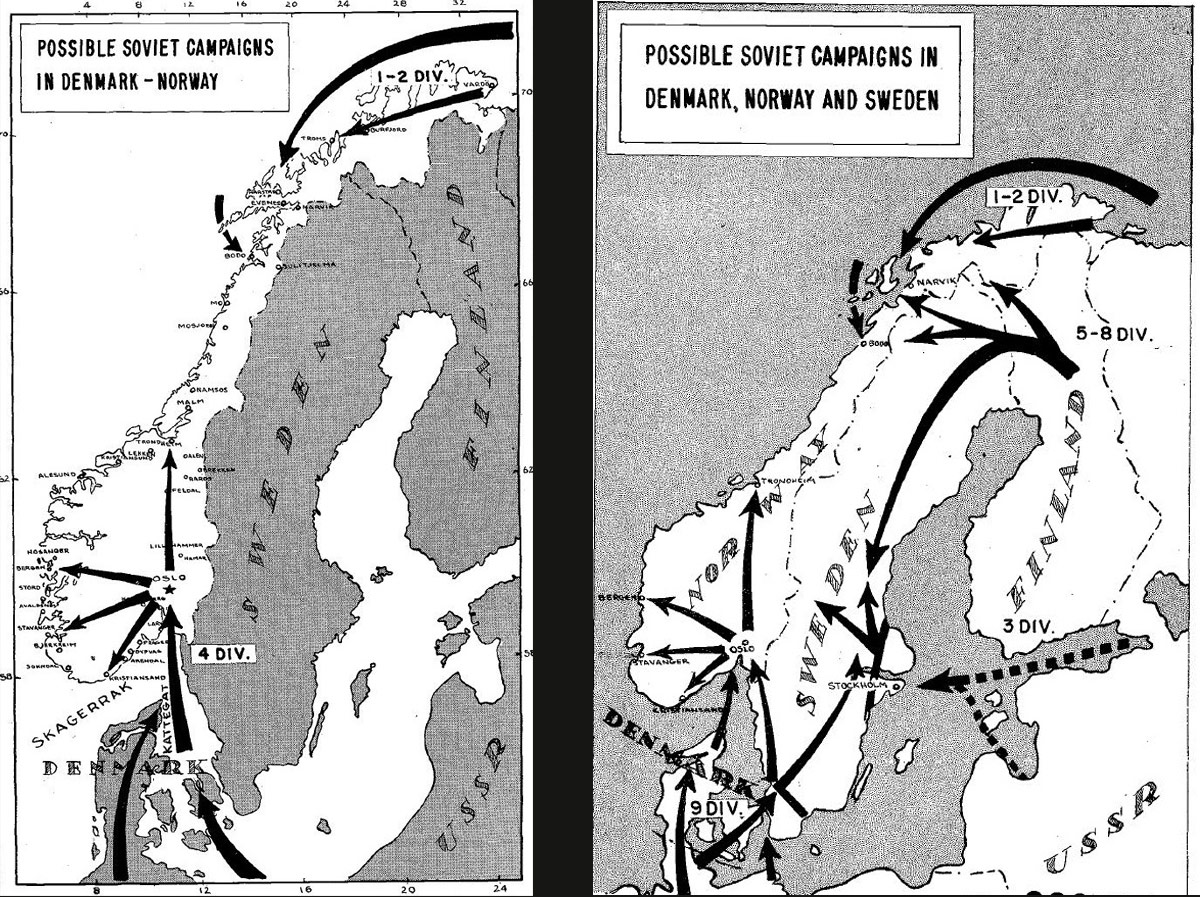
(Left) Feared Soviet campaign in Denmark and Norway, including an invasion of Finland and Sweden (Right) as seen by NATO in September 1953.
The Alliance continues to be the cornerstone of Danish defence. The country is strongly attached to enabling Allied reinforcements in the event of an attack so it has structured and deployed its forces in such a way as to make this possible. This philosophical turnaround was huge considering the decades of neutrality that had characterised Danish strategic thinking before 1949. In the 1970s for instance, Denmark participated in NATO’s trans-European radar system that provided air defence in a supersonic age.
However, Denmark’s level of financial contributions to NATO fluctuated during the Cold War. While it participated in NATO projects, its defence spending remained comparatively low at different periods of time throughout the Cold War. From 1949 to the late 1970s, Denmark sought both to deter and reassure the Soviet Union. And from then until the end of the Cold War, its stance towards the Alliance became driven by domestic politics. The Opposition strongly opposed the deployment of American cruise missiles in Europe in 1983, when the arms limitations negotiations broke down. Lacking parliamentary support, the government had to dissociate itself from Alliance policy, attracting criticism from its fellow Allies. This position collapsed, however, in April 1988 when the government agreed that NATO membership was a far bigger issue than the survival of the government.
Not all contributions to NATO can be measured in numbers. Denmark is socially progressive and this mind-set permeates all parts of Danish society. That is reflected, for instance, in its preference for flat management structures or the creation of the Ombudsman, a mediator whose Danish name has been integrated into all languages. It also means that NATO’s key principle of consensus decision-making is second nature to Denmark. Consensus decision-making at NATO implies that consultations take place until a decision that is acceptable to all is reached. It gives a voice to all member countries regardless of their size, military might and political weight. It also helps members to maintain a certain degree of sovereignty in the field of defence and ensures, through dialogue and consultation, that decisions are forged through open debate and negotiations and not imposed by a select few.
Denmark brings its social progressiveness to the Alliance in many ways. For example, it organised the first NATO Conference of Senior Service Women Officers of the Alliance in June 1961. It was such a success that delegates from Denmark, the Netherlands, Norway, the United Kingdom and the United States agreed that similar conferences should be held on a regular basis. This photo gallery depicts one of these conferences, held in the late 1960s.
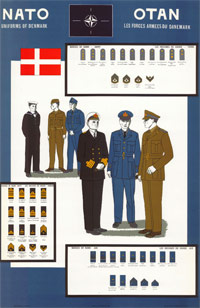
This initiative was a way of pressuring NATO and national authorities to consider employing women more widely within their Services. Women were allowed into the Danish armed forces in 1962. In 1989, the Lotterkorpset (the unarmed Women’s Army Corps) was merged with the all-male Home Guard. Denmark’s Home Guard is a voluntary and unpaid force that emerged from the resistance during the Second World War. It is one of four forces under the command of the reigning monarch, along with: the Royal Danish Army, the Royal Danish Navy and the Royal Danish Air Force.
The 1961 NATO Conference of Senior Service Women Officers mentioned above was organised by the Danish Atlantic Association, a non-governmental organisation set up in 1950 to explain the government’s new foreign policy and the role of NATO to Danish citizens. The Association is extremely active and raises awareness on Atlantic security issues to all age groups. Education is very much a priority in Denmark and a life-long occupation. The Danish Atlantic Association helps to support this effort.
To discover how Denmark contributes to the Alliance today, visit NATO on the Map.


