
Close
Back


From now on you can download videos from our website
If you would also like to subscribe to the newsletter and receive our latest updates, click on the button below.
Enter the email address you registered with and we will send you a code to reset your password.
The password must be at least 12 characters long, no spaces, include upper/lowercase letters, numbers and symbols.
Click the button to return to the page you were on and log in with your new password.
Though NATO's emblem is actually a compass, the forecourt sculpture, affectionately known as the “NATO star”, is a unique and recognisable feature of the Alliance’s headquarters in Brussels, Belgium.
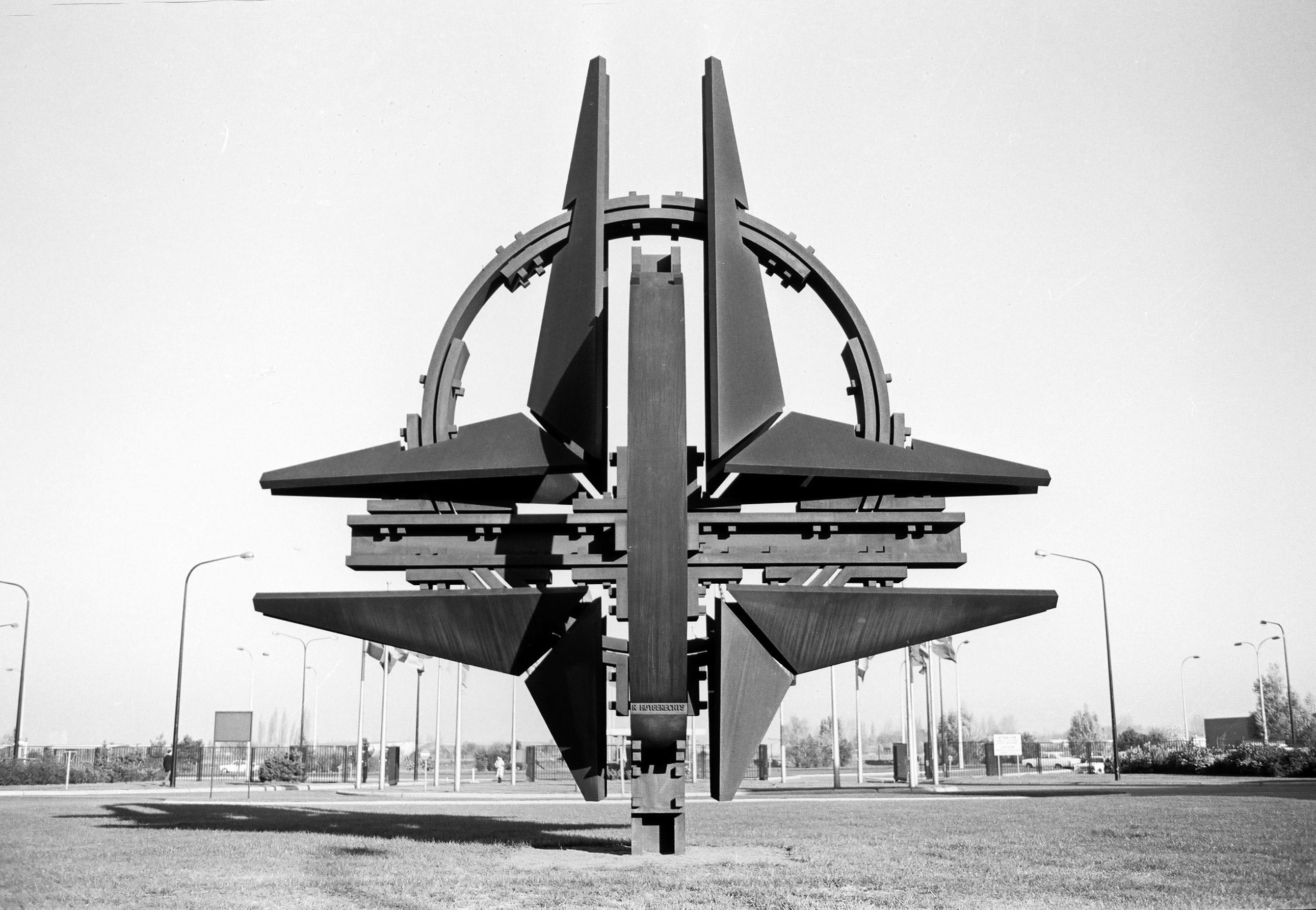
The star scupture in front of NATO Headquarters a few months after its unveiling, November 1971
When NATO moved to Belgium in 1967, the first Brussels headquarters was intended to be temporary, so the original construction did not include any exterior décor. It was only after the North Atlantic Council decided in late 1969 to make the Evere site a permanent home that the question was raised about how to lend a prestigious note to the empty courtyard at the main entrance.
A NATO Working Group declined the initial proposal of constructing a large weather-roof at the main entrance. Instead, they invited consultant architects to come up with an alternative solution to embellish the forecourt, known as the Cour d’Honneur.
Following a suggestion by the Greek representative of the Working Group, Belgian architect Raymond Huyberechts designed a motif inspired by the NATO logo: a stylised “rose des vents” cut by two circles representing Europe and North America. It would be made of a factory-oxidised steel whose red-brown tint would not be affected by atmospheric agents. The Council expressed their preference for this motif when the model was presented at a meeting held on 17 March 1970.
Originally budgeted at 1.5 million Belgian francs, the sculpture was erected in mid-August 1971 and an opening reception took place on 10 September 1971.
Since then, the NATO star has become one of the most popular attractions for visitors, serving as the background for both official and non-official photos.
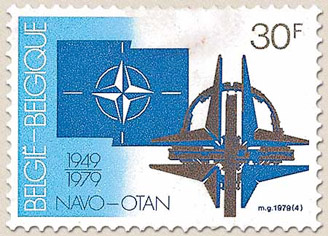
The NATO star sculpture was also chosen as the key image for a special edition Belgian postage stamp, issued on 31 March 1979 to commemorate NATO’s 30th anniversary.
See more NATO stamps, issued by other Allied postal services to mark anniversaries and other special events.
Several decades later, on 11 October 2016, the Belgian post issued another limited edition stamp, this time to mark the Alliance’s 50th anniversary in Brussels and to celebrate NATO’s move to its new headquarters in 2017. This commemorative stamp showcased the façade of the new NATO Headquarters, with the star sculpture installed in its new home, next to the flags of the then NATO member countries.
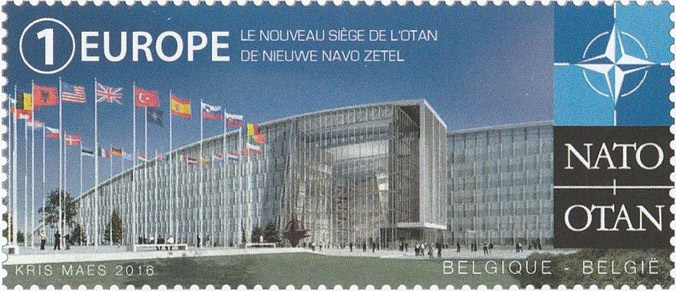
Moving the NATO star to the new NATO Headquarters was not an easy task, given that the sculpture is 7 metres high, between 4.2 and 7 metres wide, and weighs approximately 6 metric tonnes.
To minimise disruption to the community, the sculpture was moved to the new headquarters during the night of Saturday 28 May 2016, in coordination with local authorities. Watch the video below to see the effort that went into the move:


