Close
Back

From now on you can download videos from our website
If you would also like to subscribe to the newsletter and receive our latest updates, click on the button below.
Enter the email address you registered with and we will send you a code to reset your password.
The password must be at least 12 characters long, no spaces, include upper/lowercase letters, numbers and symbols.
Click the button to return to the page you were on and log in with your new password.
Did you know that Belgium has hosted NATO Headquarters since 1967? Or that the first former Prime Minister to become a NATO Secretary General was Belgian? Read this history of Belgium and NATO to learn more about the country’s role in the Alliance during the Cold War and the key figures that shaped its place in NATO.
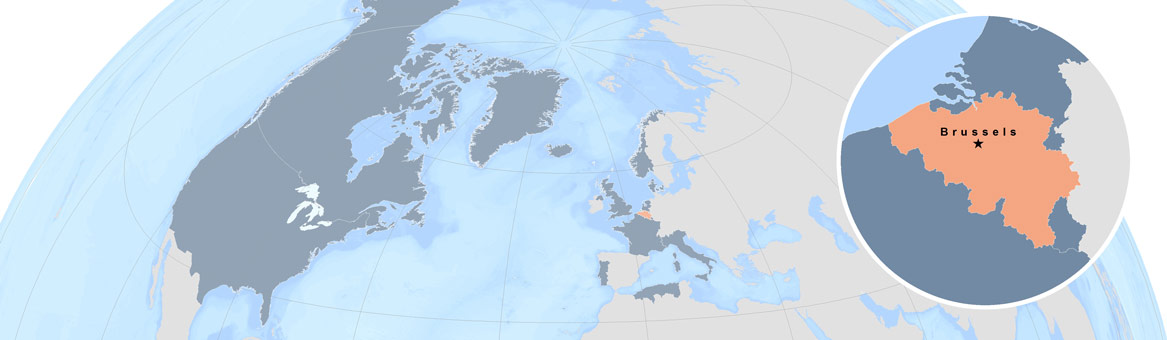
Belgium and its NATO Allies in 1949.
"The great defensive alliance about to be created is an essential milestone on the road leading to the consolidation of peace."
Prime Minister and Foreign Minister of Belgium Speaking at the signing of the North Atlantic Treaty Washington, D.C., 4 April 1949
Often considered the geographic crossroads of Western Europe, Belgium has hosted NATO for over 50 years and counting. Not only does this European country serve as home to both the political and military headquarters of the Alliance, but its capital city Brussels is also the seat of the European Union and numerous other international organisations. This concentration of institutions in one city facilitates closer European political, economic and military cooperation.
For Belgium, its relationship to NATO can best be understood as an extension of its overall foreign and defence policies – its security, economic and political objectives are consistently placed in a multilateral framework. This approach has helped empower Belgium to be a leading voice for smaller countries in the Alliance, particularly in the evolving discussions that tie together European policy, Atlantic cooperation and Allied consultation.
Of all the European countries directly involved in the Second World War, Belgium was the first to restore its economy. Having suffered much less destruction than its neighbours, Belgium’s economic activity was relaunched faster and more easily after the war than elsewhere in Europe. With a limited claim to the funds made available by the United States in 1947 through the European Recovery Plan (also known as the Marshall Plan), it would take only one year for Belgium to recover to its pre-war level of economic activity. This rapid reconstruction and financial fortune, known as the “Belgian miracle”, offered a pretext for Belgium to shift its foreign and defence policies toward multilateral cooperation with its neighbours to protect its advantageous post-war economic situation. The Benelux Customs Union, which eliminated tariffs from all internal trade between Belgium, the Netherlands and Luxembourg, was one of the first successful examples of post-war intra-European integration when it became operational in early 1948.
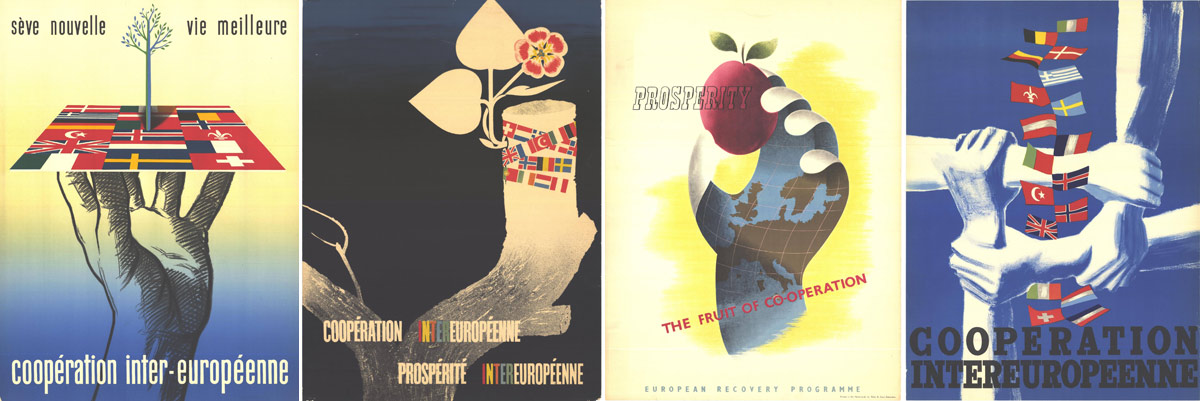
Four examples of European Recovery Plan posters. Take a fuller glimpse into NATO’s online collection of these posters here.
The protection of this new political-economic relationship between these three small Western European countries led to discussions about their mutual defence, with Belgium looking to larger neighbours for close political-military cooperation. On 17 March 1948, Belgium, the Netherlands, Luxembourg, France and the United Kingdom adopted the Brussels Treaty, whose basic tenet was the provision of ‘economic, social and cultural collaboration and collective self-defence’. The signing of this treaty in the Belgian capital reaffirmed the centrality of the country for this union, as all of the capitals of the signatory states fall within 1,000 kilometres from Brussels.
The Brussels Treaty demonstrated that the Western European states were willing and able to self-organise in the wake of the Marshall Plan to ensure their mutual safety and social stability. More importantly, it signalled Belgium’s renunciation of its pre-war policies of neutrality and independence, and projected its readiness for a much broader defence arrangement. By June 1948, the United States began negotiations with the five Brussels Treaty countries toward a cooperative Atlantic security pact. The question of Belgium joining an Atlantic defence alliance at this moment was informed by its increasing alignment with American interests in the area of economic cooperation and European unification. This mutual recognition played into Belgium’s post-war strategy of positioning its foreign security policy within a multilateral framework, and on 10 September 1948, the American government was informed that Belgium endorsed a political-military treaty of transatlantic scope. On 4 April 1949, Belgium and the four other member states of the Brussels Treaty signed the North Atlantic Treaty in Washington, D.C. alongside two North American countries (Canada and the United States) and five other European states (Denmark, Iceland, Italy, Norway and Portugal).
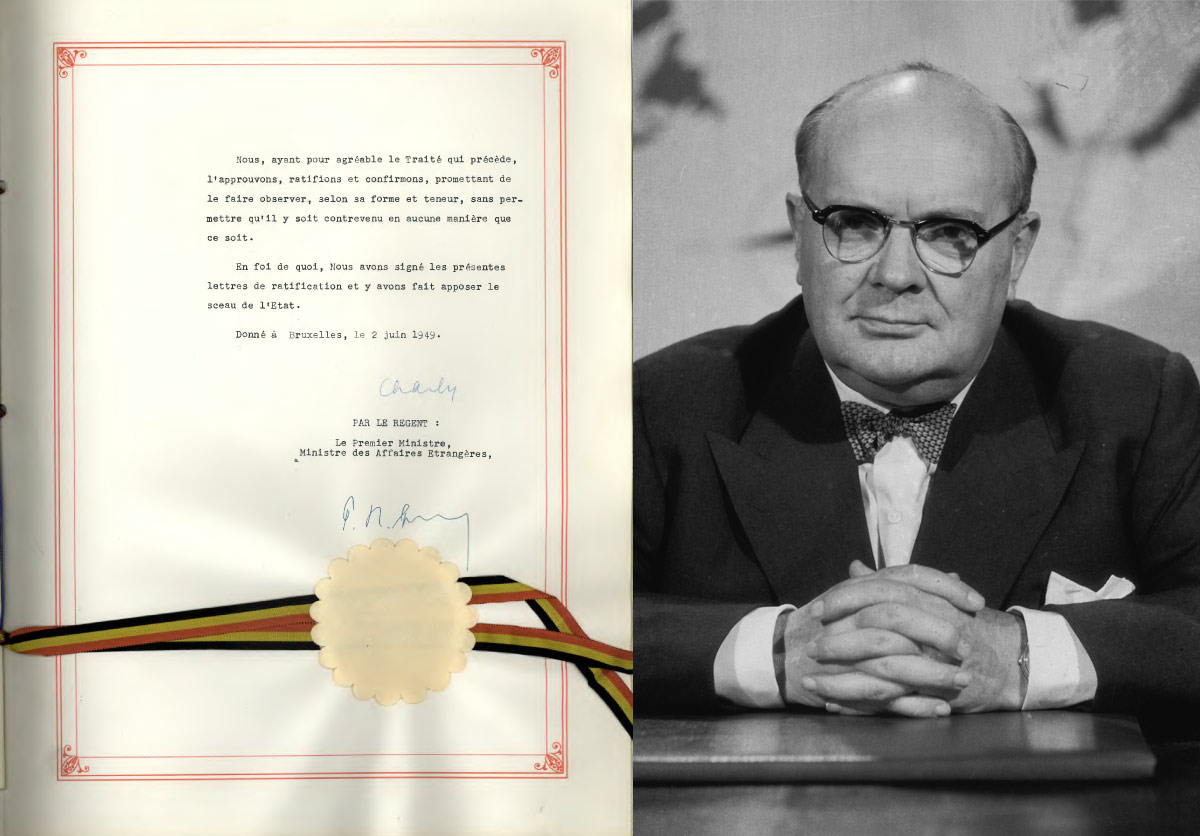
On 2 June 1949, Paul-Henri Spaak, the Prime Minister and Foreign Minister of Belgium, signed his country’s Instrument of Accession to the North Atlantic Treaty.
Boosted by its post-war fortunes, Belgium's status as a founding member of NATO helped raise its international profile and portray it as the "crossroads of Europe". Belgium itself served as a useful example of a country that embodied many of the core values of both Europe and the North Atlantic Treaty. The self-image of a cosmopolitan, industrial country that was both multilingual and multicultural, and whose history had always been open to commercial, cultural and political exchange, was projected to Belgium's Allies.
The most constant presence throughout Belgium's post-war resurgence in international politics was undoubtedly Paul-Henri Spaak, the Belgian diplomat devoted to European unity and international cooperation. Prior to the war, Spaak had several separate stints as Minister of Foreign Affairs (1936-1938; 1939-1940) and Prime Minister (1938-1939) – Belgium's first socialist Prime Minister and the youngest in Europe at the time. After the war, Spaak served in the dual capacity of Prime Minister and Foreign Minister of Belgium from March 1947 to August 1949, acting as the signatory on behalf of his country to the Brussels Treaty, the North Atlantic Treaty and the Instrument of Accession to NATO.
With Belgium's defence and security assured by the North Atlantic Treaty, Spaak continued his tireless campaign to promote further European economic integration, which would also contribute to safeguarding peace: a club of economically united countries would not go to war against each other. A leading spokesperson for the Benelux countries, Spaak served as the first President of the Common Assembly of the European Coal and Steel Community, which met in 1952-1953 to regulate the industrial production of six European countries under a central authority. Spaak also made a major contribution to the establishment of the European Economic Community (EEC) and the European Atomic Energy Community (EURATOM), where he was given considerable credit for convincing all the parties to agree to the respective treaties.
Spaak's reputation and credibility as a leader in the European integration movement, as well as his positive role as Belgium's Foreign Minister, did not go unnoticed by NATO. On 14 December 1956, Spaak was chosen by the North Atlantic Council to succeed Lord Ismay as Secretary General of NATO. However, before he was to assume his NATO post on 15 May 1957, Spaak finished a last crucial piece of European integration business. On 25 March 1957, Spaak, in his capacity as Belgian Foreign Minister, was the first to sign both the EEC and the EURATOM treaties in Rome, paving the way for the creation of two of the most important and longstanding European institutions in the second half of the 20th century.
The appointment of Paul-Henri Spaak as NATO Secretary General (1957-1961) came at a crucial moment in the early history of the Alliance. The shock of the brutal Soviet crackdown of the Hungarian uprising and the Allied tensions that were exposed following the Suez Canal Crisis (both in October 1956) led NATO to a fuller recognition of the important place that political issues occupied in preserving the harmony of the Alliance. Spaak's experiences as a Belgian head of state brought a specific leadership approach to NATO that foregrounded the necessity of political consultation to ensure cohesion and solidarity within the Alliance. Spaak also believed in broadening NATO's scope, especially in the areas of economic and scientific concern, and he steered the Alliance toward multilateral possibilities beyond its dominantly military concerns. Spaak was able to affirm these elements of his leadership posture when he became the first NATO Secretary General to chair the first NATO Summit at the level of Heads of State and Government, held in Paris on 16-19 December 1957.
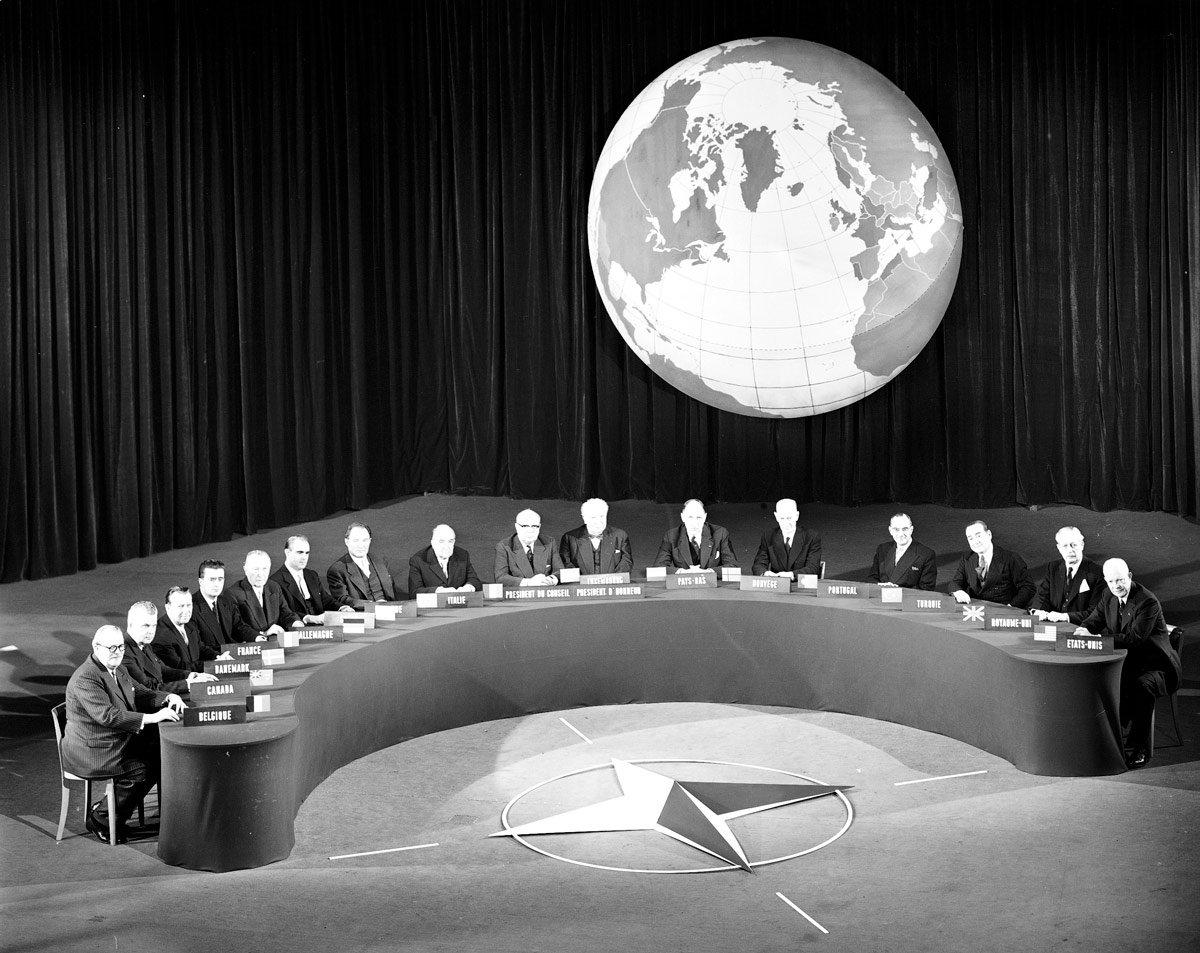
A family picture of the Allied Heads of State and Government, along with Secretary General Spaak (centre, behind "President du Conseil" sign), from the 1957 Paris NATO Summit.
In 1959, Spaak presided over the long-awaited move of NATO Headquarters in Paris from its temporary location at the Palais de Chaillot to its permanent home constructed at Porte Dauphine. In appreciation for the efforts that he brought to the station of NATO Secretary General, Spaak was rewarded with a unique office furniture set that was commissioned by the Direction générale des Arts et des Lettres on behalf of the French government.
A designer desk for Spaak
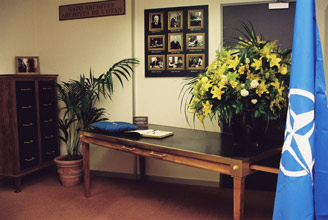
The celebrated French architect and decorator André Arbus designed the office furniture set for Spaak, which was delivered to the new NATO Headquarters on 25 June 1960. Arbus was entrusted with numerous décor assignments by the French government, who commissioned him with several interiors for their international offices, such as the French Embassy in Washington in 1955. When Spaak tendered his resignation as NATO Secretary General at the start of March 1961 to return to Belgian politics, his desk stayed behind at NATO Headquarters to serve the successors to his post over the following 35 years before it was donated to the NATO Archives in 1999 for long-term preservation.
As Secretary General, Spaak embraced public engagements , holding numerous press conferences and contributing to several in-house publications to promote his vision of the Atlantic Alliance. During NATO’s first decade anniversary celebrations in 1959, he edited a special issue of the NATO Letter, whose title explicitly expressed this vision: “Ten Years of Atlantic Co-operation”. To introduce this issue with an historical perspective, Spaak called on the support of a fellow countryman who had faithfully represented Belgium since the earliest days of the Alliance’s creation: André de Staercke.
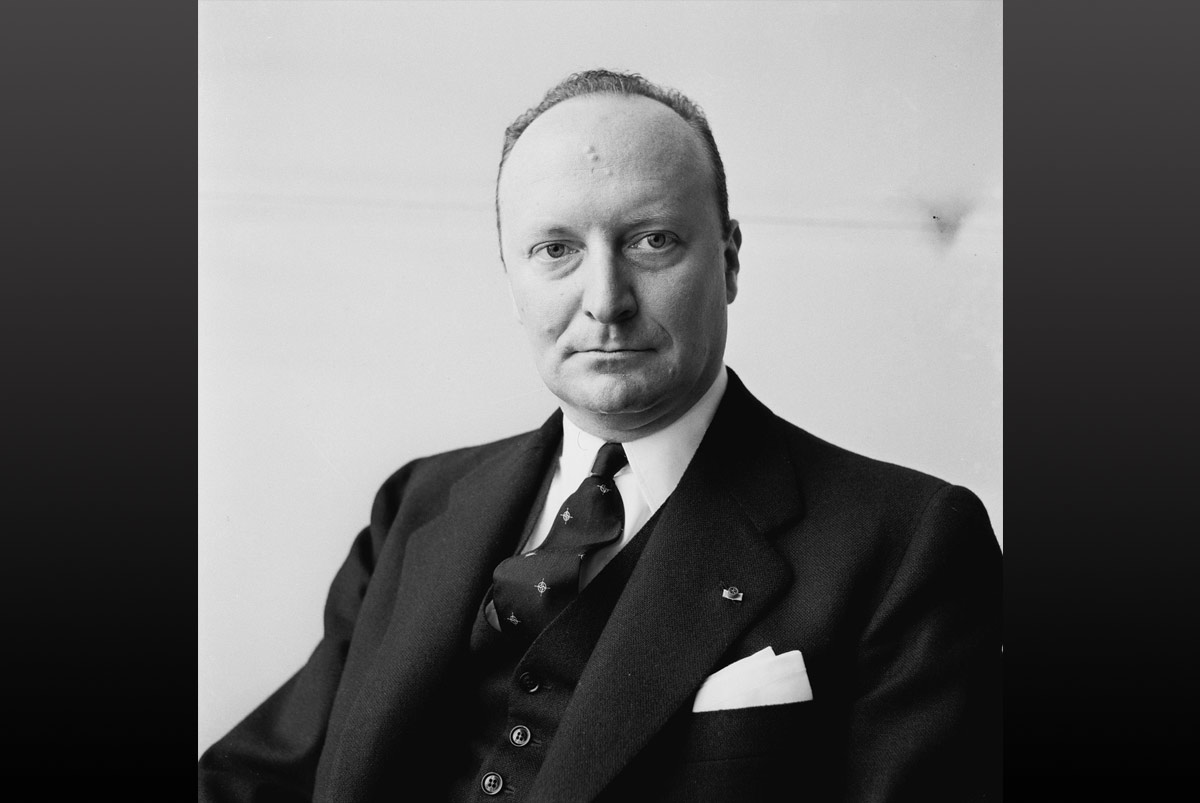 André de Staercke was an early mainstay at NATO, serving as the Belgian Representative for the North Atlantic Council of Deputies in London from 1949-1952, before becoming the Permanent Representative of Belgium – or Ambassador – to the North Atlantic Council (NATO’s top political decision-making body) in April 1952. A well-educated man of philosophy, history and letters, de Staercke won the respect of his fellow NATO Ambassadors for the impassioned work and support that he gave to the Organization on behalf of his country and to the office of the Secretary General. He became the longest-serving ambassador in 1957, earning himself the title of the Dean of the Council, a distinction that he would hold until his retirement in 1976. His longstanding service gave him the unique distinction of being the only NATO national representative to have consecutively served at NATO Headquarters in London, Paris and Brussels.
As Dean of the Council, de Staercke worked closely with Paul-Henri Spaak while he was Secretary General, serving as a trusted advisor and even sometimes acting as his speechwriter. It was a timely circumstance that these two Belgian statesmen held leadership positions within the Organization at the moment of the move into the new headquarters at Porte Dauphine. They would contribute one of the first and arguably most important elements of décor by inscribing a Latin maxim on the walls of NATO’s new conference area. This short phrase would become NATO’s motto, perfectly encapsulating the Belgian belief in the consultative approach.
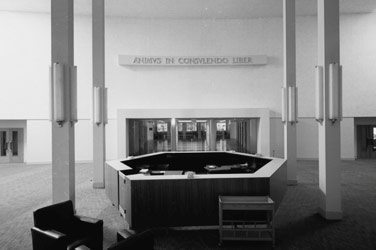
HQ Porte Dauphine’s conference area, overlooked by the Latin maxim, “animus in consulendo liber” (English: “in discussion a free mind”).
Inspired by the installation of the NATO motto, de Staercke eagerly acted as the facilitator between the Belgian government and NATO in 1962 for a national gift that would act as both a symbolic and aesthetic gesture that expressed the values of the Alliance. In his classic consultative fashion, de Staercke hosted a meeting at his private residence in Paris between the Director of the Belgian Fine Arts Museum and an ad-hoc NATO Taste Committee consisting of the NATO Deputy Secretary General and the Ambassadors of France, Germany, the United Kingdom and the United States to discuss the official selection of an appropriate gift. It would take three years for the Belgian gift to be completed and when it was finally presented to NATO, the sheer size and scale of the project left a considerable impact on all who gazed at it: a tapestry of monumental proportions and inimitable colours.
The Belgian Tapestry
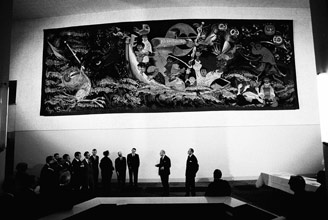
On 3 June 1965, André de Staercke unveiled Belgium’s gift to the home of the Alliance: a traditional wall tapestry titled ‘Le Triomphe de la paix’ (English: ‘The Triumph of Peace’). Measuring 13.3m wide by 4.7m high, it was prominently displayed in the main conference hall of NATO Headquarters at Porte Dauphine, opposite the inscription of the NATO motto. This monumental tapestry, designed and created by Belgian artist Roger Somville with bright dream-like colours and an allegorical resonance, was dedicated to the aftermath of war and to the hope that sustains men involved in a fight for peace. ‘Le Triomphe de la paix’ was later returned to the Belgian government after NATO moved to Brussels in 1967, since the new headquarters could not accommodate the dimensions of the tapestry. It is now part of the contemporary art collection of the European Commission, on display at the Berlaymont building in Brussels.

1966 marked an important year of change for NATO. That spring, French President Charles de Gaulle formally announced his country’s intention to withdraw from NATO’s integrated military structure, effective 1 July 1966. Though France would remain in NATO politically, the decision meant that all non-French military forces, including those stationed at SHAPE (the Supreme Headquarters Allied Powers Europe), would need to vacate French territory by 1 April 1967. Shortly after President de Gaulle announced the French withdrawal, Belgium was proposed as the most appropriate country to relocate the military headquarters of the Alliance.
This decision was confirmed in early June 1966, with SHAPE announcing that Belgium would be the destination for its relocation. The timing of this confirmation coincided with the meeting of NATO Foreign Ministers that was held in Brussels on 7 June 1966, an event that NATO promoted with a special issue of the "NATO Letter" dedicated to Belgium that functioned as an introduction to the country’s history, culture, geography, economics, military capabilities, and its role within Europe and NATO.
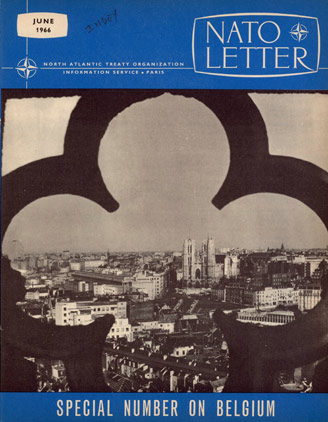
By early June 1966, SHAPE confirmed that neighbouring Belgium would be the destination for its relocation. The timing of this confirmation coincided with the meeting of NATO Foreign Ministers that was held in Brussels on 7 June 1966, an event that NATO promoted with a special issue of “NATO Letter” dedicated to Belgium that functioned as an introduction to the country’s history, culture, geography, economics, military capabilities, and its role within Europe and NATO.
In his opening address at the June 1966 ministerial meeting, NATO Secretary General Manlio Brosio paid tribute to Paul-Henri Spaak. Spaak had just finished his last stint as Belgium’s Foreign Minister in March 1966 and was preparing to retire from political life by the end of that summer. Following the June ministerial meeting, Spaak would make his last parliamentary intervention to argue the case that the Belgian government consolidate the political and military headquarters of NATO in Belgium, with Brussels serving as the new home of the North Atlantic Council. On 30 September 1966, Spaak’s successor as Minister of Foreign Affairs, the former Prime Minister Pierre Harmel, sent a letter to Secretary General Brosio to offer his assurances that the Belgian government stood ready to welcome the North Atlantic Council, the International Staff and the Military Committee to Brussels. At their meeting on 26 October 1966, the North Atlantic Council announced its decision to accept the generous offer of the Belgian government. The Belgian era of NATO was about to begin.
Preparations for the construction of SHAPE in the Mons-Casteau region of Belgium began on 17 November 1966, with a ground-breaking ceremony presided by Supreme Allied Commander Europe (SACEUR) General Lyman Lemnitzer, Belgian Prime Minister Paul Van den Boeyants and Belgian Minister of Defence Charles Poswick.
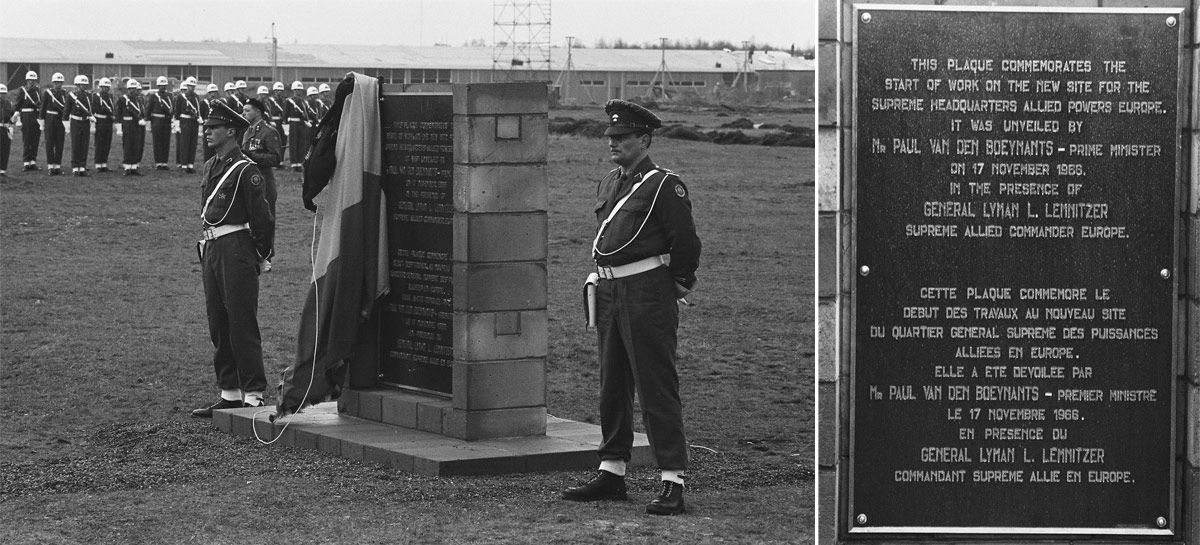
The rank and file of the Belgian military standing at attention during the ceremony were instantly recognisable to their NATO counterparts in attendance thanks in part to the 1961 poster campaign that introduced the national military uniforms and ranks for each NATO Ally.
Read more about the SHAPE ground-breaking ceremony in the January 1967 issue of “NATO Letter”, where the event was the featured cover story.
It would take only six and a half months for the SHAPE headquarters buildings to be erected and ready for operation. On 31 March 1967, SACEUR General Lemnitzer delivered an opening ceremony speech that congratulated Belgium and in particular the local Mons-Casteau community for this construction achievement, and welcomed the warm and gracious hospitality of his new Belgian neighbours whose lives were now directly intertwined with SHAPE.
Back in Paris, André de Staercke was taking his role as NATO’s Belgian Ambassador to literal levels of hospitality by hosting an exhibition titled “Brussels Welcomes NATO” as everyone prepared for the move. Organised by the Belgian Institute of Information and Documentation, the exhibition featured panels displaying practical information as well as introductory seminars and conferences. “Brussels Welcomes NATO” was installed in the grand hall of the Porte Dauphine Headquarters and formally launched by Secretary General Brosio on 26 May 1967, with André de Staercke faithfully at his side.
Just over five months later, NATO also moved its political headquarters from Paris to Brussels. The construction took place in record time, starting with a ground-breaking ceremony on 20 March 1967 and an opening ceremony just seven months later, on 16 October 1967. In his speech, Secretary General Brosio reiterated the virtues and effectiveness of Belgian hospitality and praised the collaboration and support given by the Belgian authorities to NATO staff for the expedient constructions of both SHAPE and NATO Headquarters. NATO was now preparing to continue its work with a new impetus, with the Brussels Headquarters serving as a physical site that reorganised and set out to improve the future tasks of the Organization.
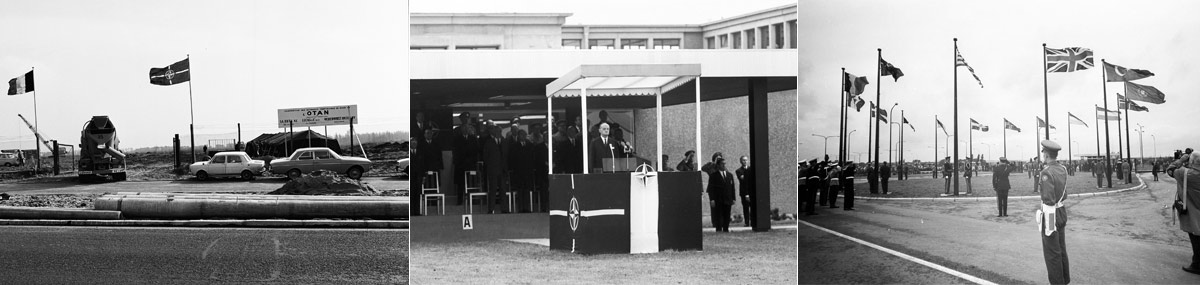
As NATO settled into its new Brussels Headquarters, the time was ripe to start looking ahead to the new challenges that faced the Alliance. Spearheading this initiative was Pierre Harmel, the Belgian Minister of Foreign Affairs whose key foreign policy objectives were détente and disarmament, a conviction that he held since taking up the post in March 1966. He believed that adopting a dual-track policy for NATO: deterrence and détente, i.e., maintaining an adequate defence while promoting political détente, was the best way forward for the Alliance. He was given a year to coordinate several working groups and produce a report to present to the North Atlantic Council. The Report on the Future Tasks of the Alliance – or the “Harmel Report” as it was more commonly known – broadened NATO’s approach to security and anticipated the breakdown of the deadlock between East and West. It made a plea for balanced force reductions in the East and West, while seeking solutions to political problems dividing Europe. It also highlighted the mechanism in which smaller countries in the Alliance would have just as much a voice as its larger Allies: “As sovereign states the Allies are not obliged to subordinate their policies to collective defence”. With this article, Harmel ensured that a country like Belgium could always engage in bilateral initiatives with Soviet bloc states to work toward rapprochement without any Allied reproach. At the NATO Foreign Ministers meeting in December 1968, the North Atlantic Council approved Harmel’s report and its two-pronged approach became a cornerstone of the new Belgian era of NATO, helping to pave the way forward for the East-West détente of the 1970s.
The acceptance of the Harmel Report at the end of the 1960s demonstrated the extent to which a relatively small country such as Belgium could exert an impact in advocating the Alliance to respond and adapt to new challenges. It also served as an implicit acknowledgment of the central role that NATO played in the security and defence policies of Belgium. The Harmel Report and the relocation of NATO Headquarters to Brussels helped define the new Belgian era of the Alliance from a political and organisational perspective.
The “NATO Star”
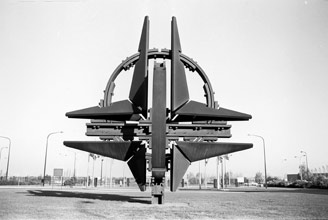
On 10 September 1971, a sculpture inspired by the NATO logo and designed by Belgian architect Raymond Huyberechts was installed in the Cour d’Honneur opposite the main entrance to the Headquarters. Affectionately known as the “NATO Star”, the sculpture is arguably one of Belgium’s most photographed public monuments as visitors from all over the world, whether they be Heads of State or visiting students, often clandestinely snap a quick photo of it as proof of their presence at the home of the Alliance. Find out more about the NATO Star.
Belgium has consistently supported the theory and practice of transatlantic cooperation and consultation in the area of security and defence as an essential foundation within the Alliance. It was therefore fitting that, on 26 June 1974, NATO leaders signed the Atlantic Declaration in Brussels as part of the celebrations for the 25 anniversary of the founding of the Alliance. It was only the second time that NATO hosted a summit meeting and it was the first to be held in Belgium.
Throughout the greater part of the Cold War, Belgium was the only NATO country that underwent a constant annual increase in its defence budget as a percent of its gross national product. It also participated in NATO-led exercises and provided training, in cooperation with the Netherlands, for naval mine clearance. As host to NATO since 1967, Belgium has always placed great importance on functioning as a reliable and credible Ally.
To discover how Belgium contributes to the Alliance today, visit NATO on the Map.