Close
Back


From now on you can download videos from our website
If you would also like to subscribe to the newsletter and receive our latest updates, click on the button below.
Enter the email address you registered with and we will send you a code to reset your password.
The password must be at least 12 characters long, no spaces, include upper/lowercase letters, numbers and symbols.
Click the button to return to the page you were on and log in with your new password.
During the Cold War, a wide range of movies and TV shows used the geopolitical tensions between the Western and Eastern Blocs as a source of drama in their stories. Cold War spy thrillers sensationalised the East-West divide, often pitting their characters against each other in cat-and-mouse, spy vs. spy stories.
Several of these productions made explicit reference to NATO as a means to internationalise the scope of their stories and raise the stakes of their espionage narratives.
For the most part, NATO was popularly depicted as a formidable (though often unseen) military and political force, including through its nuclear capabilities. It was also presented as the target of espionage activity, rather than as an initiator of covert operations itself.
These depictions continue to shape public opinion of NATO to this day.
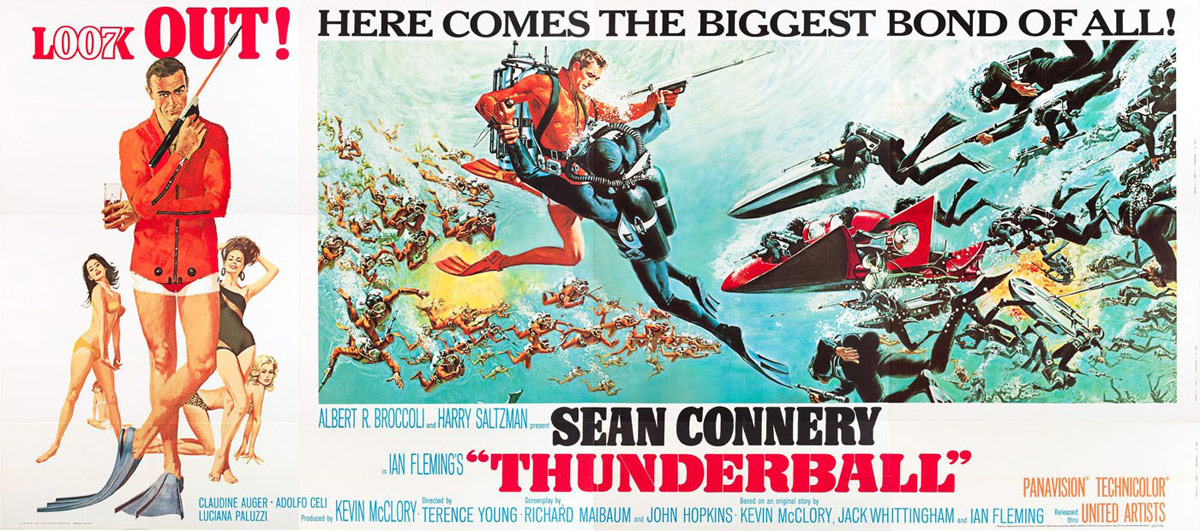
The publicity for Thunderball (1965) emphasised the film’s escalated spectacle and scale, and linking James Bond and MI5 to NATO (which had not yet been done in the previous films in the series) increased the global scope and added Cold War nuclear gravitas to the story.
The plot sees Britain and the United States blackmailed by the terrorist organization SPECTRE (Special Executive for Counter-intelligence, Terrorism, Revenge and Extortion), whose ambitious “NATO project” consists of hijacking two nuclear bombs from a NATO training flight and threatening to destroy a major city unless a huge ransom is paid by the “North Atlantic Treaty powers”. By thwarting this global threat, James Bond functions as a hero of the NATO Alliance. The climax of the film sees 007 leading Allied collaboration when the US Navy and the Royal Navy defeat the forces of SPECTRE in an underwater battle (a landmark sequence in cinema history, the likes of which audiences had never seen before).
NATO would ultimately show its gratitude to Bond by including the opening sequence of From Russia With Love (1962) in the introduction to the NATO security education film A Puzzle For Collectors (1971).
Le Cerveau (1969) is a heist comedy that uses a topical event - the move of the NATO Headquarters from Paris to Brussels in 1967 - to set its plot in motion.
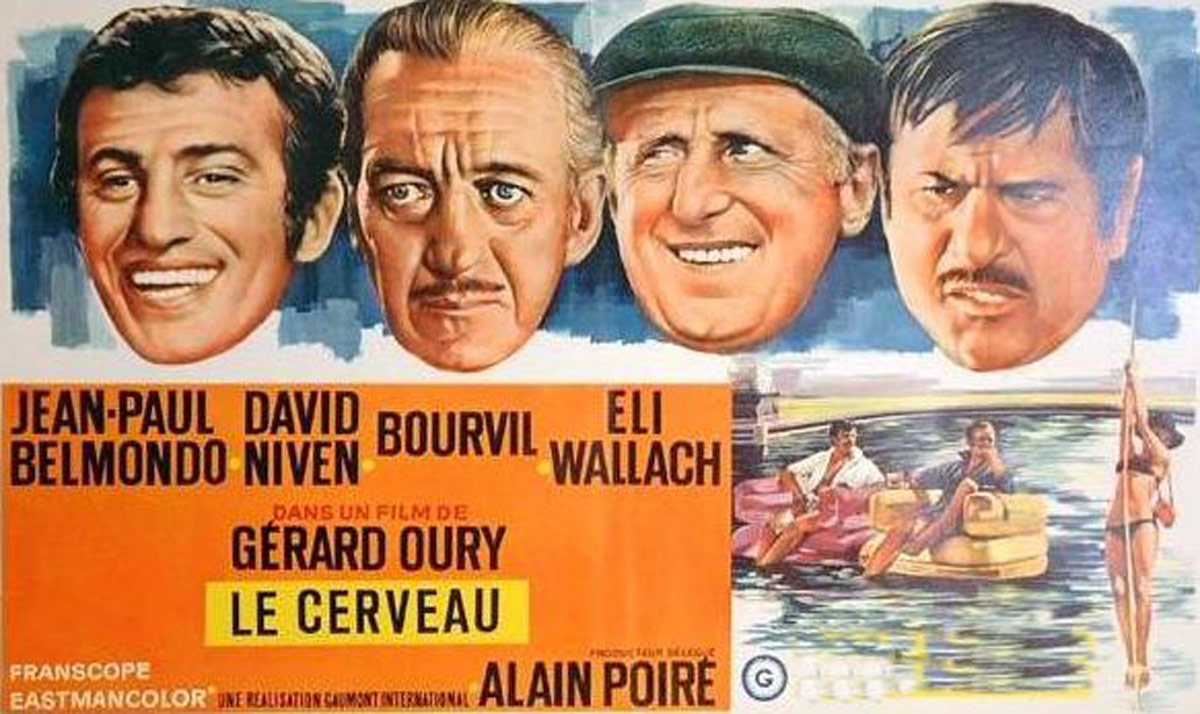
Le Cerveau revolves around two competing criminal teams. The first is a pair of bumbling French thieves, while the second is headed by “Le Cerveau”, a British mastermind with ties to the Mafia. They plan to execute the same heist: the robbery of a train holding the “secret funds” of fourteen NATO countries as it travels from Paris to Brussels on 16 July 1967. Both teams conduct espionage to gain information about the train, to the extent that “Le Cerveau” even goes undercover as a NATO colonel overseeing the transfer of the funds (stuffed in duffle bags identifiable by their country flags) at the Gare du Nord train station in Paris.
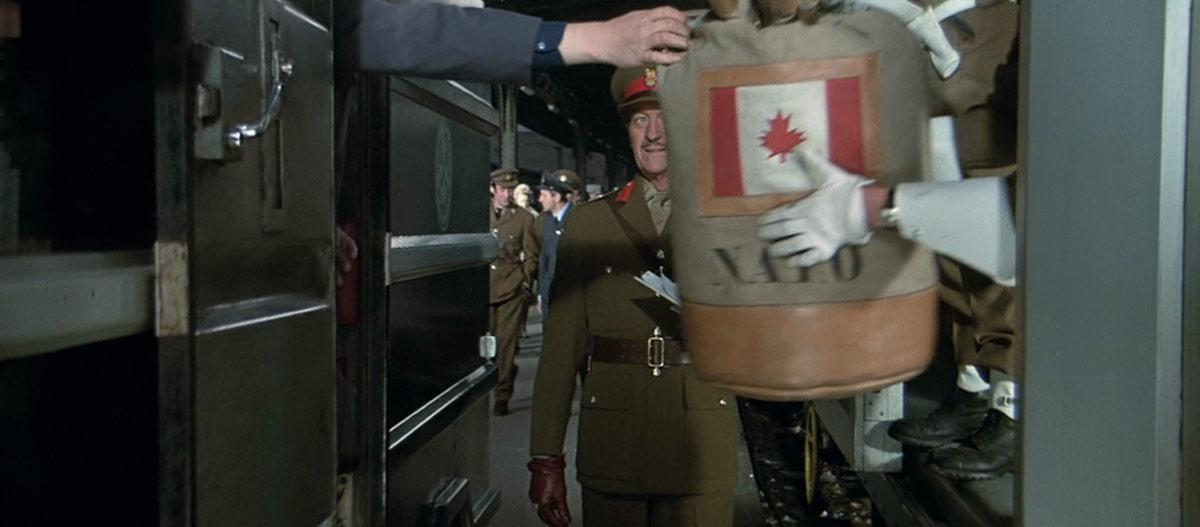
The movie is a French-Italian co-production shot on location in France, Italy, the United Kingdom and the United States. A sequence in the film where French characters explain NATO is even shot in front of the actual entrance of the previous NATO Headquarters at Porte Dauphine in Paris.
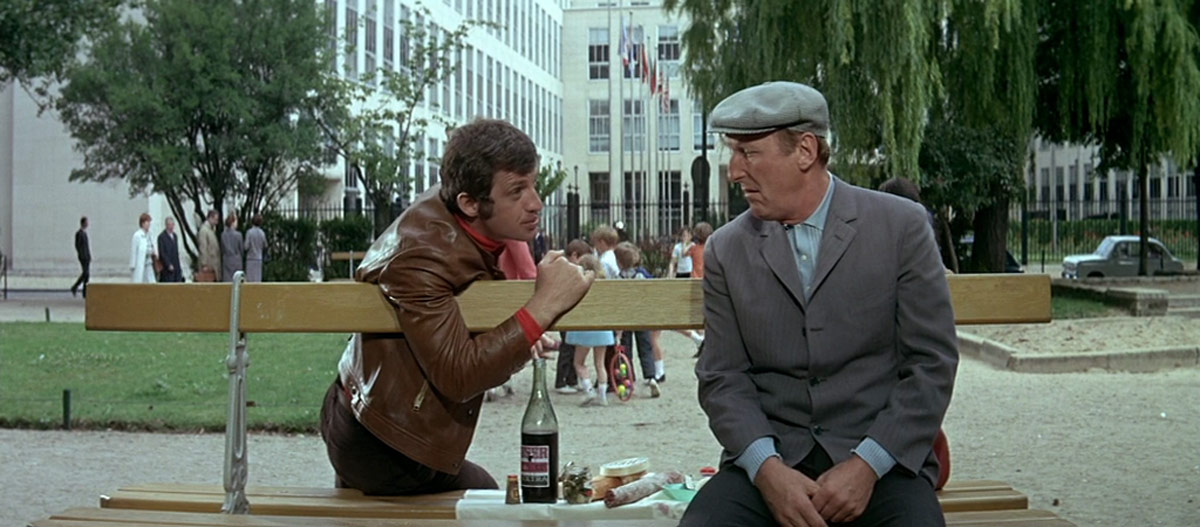
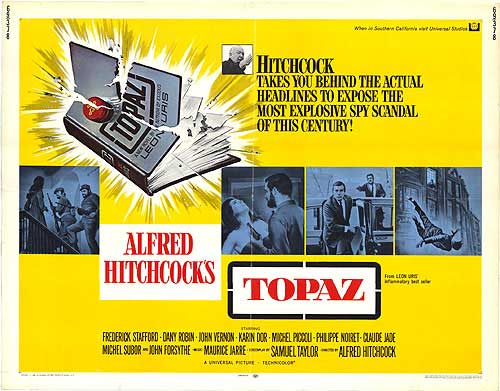
NATO would appear in movie theatres again that same year, though in a much more serious register. Topaz (1969) was Alfred Hitchcock’s late-career return to the espionage thriller, a genre that he helped shape and define in British and American cinema.
A return to the traditional espionage business of defection, betrayal and the security of information, Topaz was an adaptation of the 1967 novel written by Leon Uris. The novel itself was closely based on actual events known as the Sapphire Affair, which exposed an international Soviet spy ring in France.
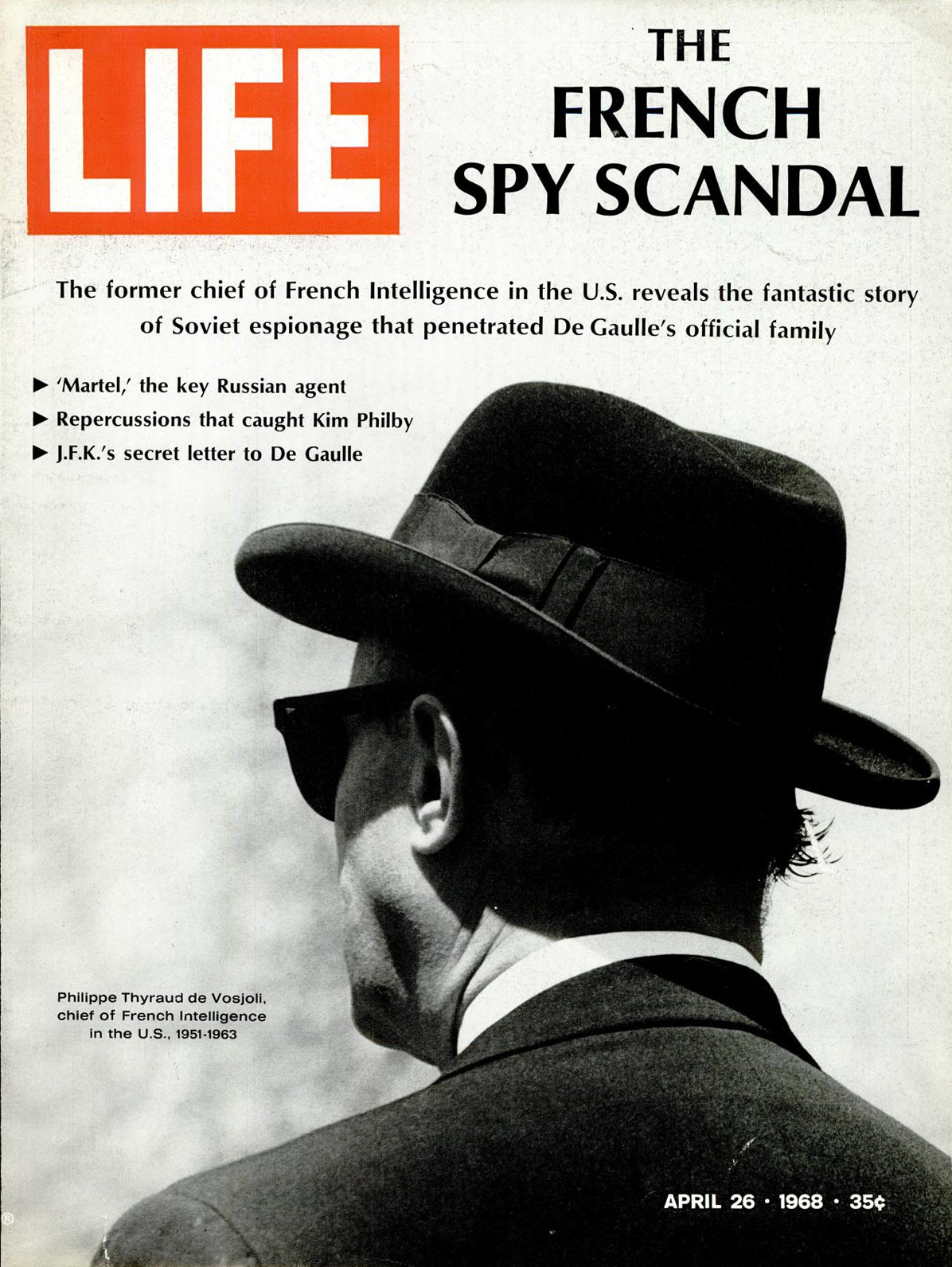
In 1962, a Soviet defector disclosed to French and American counter-intelligence agents that a Soviet spy organsation code-named “Topaz” had compromised the French Intelligence Services, and that NATO Headquarters in Paris was so deeply penetrated that top secret NATO documents were deliverable to Moscow in 48 hours.
Click here to download the full story, as reported in the 25 April 1968 issue of LIFE Magazine.
In the film, the Topaz mole leaking documents to the KGB is revealed to be a senior NATO economist with direct access to Allied intelligence sharing. These same leaked documents are used in a scene to confirm the identity of a high-ranking Soviet defector, who must prove himself by correctly distinguishing actual NATO documents against forgeries.
Almost twenty-five years later, the code name “Topaz” would haunt the Alliance again. In 1993, an undercover agent (code-named “Topaz”) working in the Economics Directorate at NATO Headquarters was revealed to have been leaking classified NATO documents to the East German Intelligence Services since 1977. The full story of the activities and eventual exposure of Topaz is considered to be one of the most damaging espionage cases in the history of the Alliance.
The theme of stealing classified documents from NATO Headquarters was revisited in Deutschland 83 (2014), a German television miniseries set in 1983 against the backdrop of the arrival of the US Pershing II ballistic missiles on European soil and the build-up of the classified NATO military exercise “Able Archer.”

Deutschland 83 follows a young East German border guard who goes undercover as an aide to a West German general who sits on NATO’s Military Committee and is responsible for NATO’s nuclear deterrence strategy. The series is steeped with the Cold War anxieties felt by the Soviet bloc about “Able Archer”, a NATO nuclear training exercise that was mistakenly interpreted by Moscow as an actual nuclear strike against the Warsaw Pact member countries.
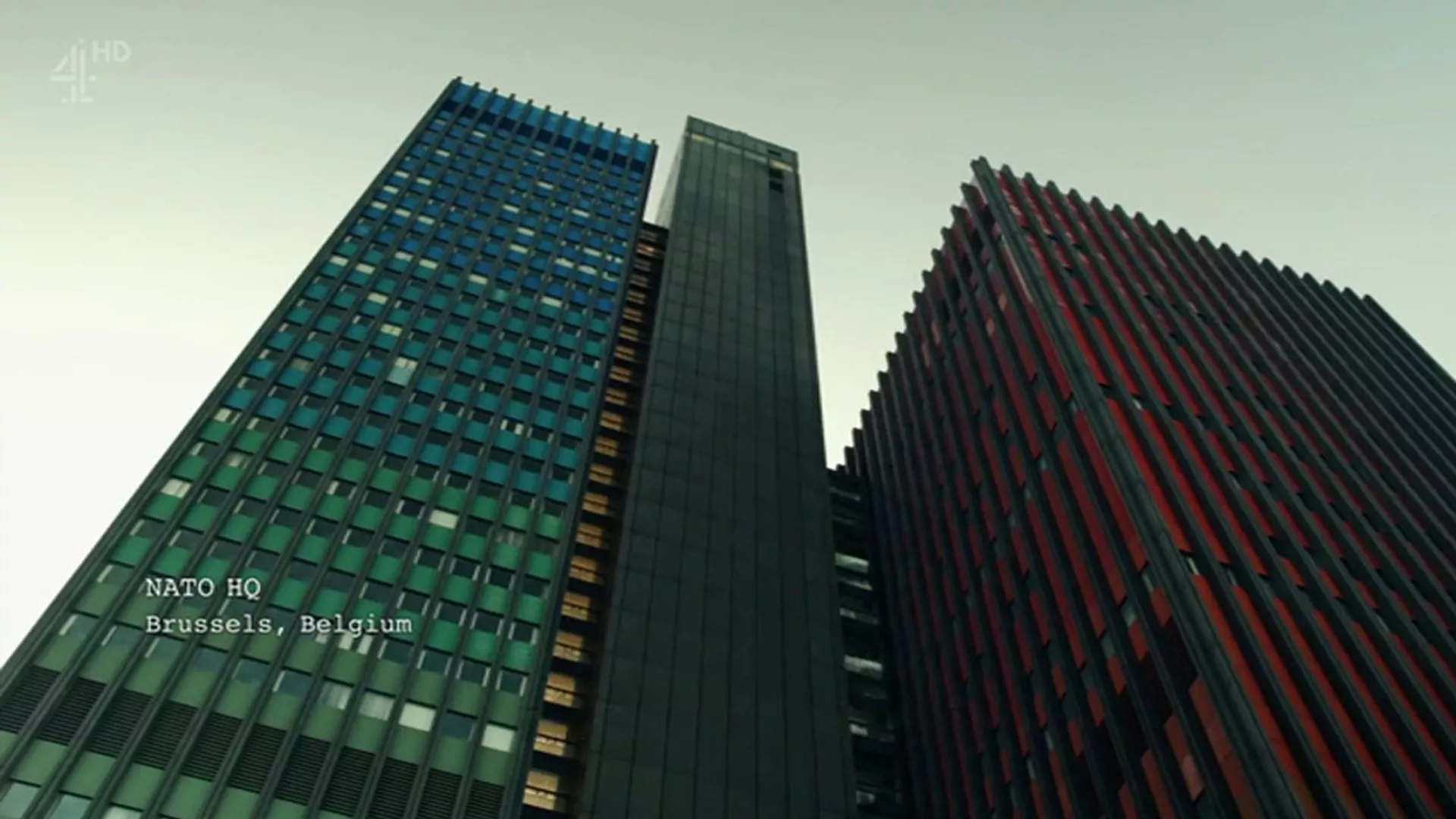
Though Deutschland 83 pays great attention to period details, events and locations to present a semblance of historical accuracy, the series takes significant creative license with its NATO references to heighten the drama. This is obvious in the show’s depiction of NATO Headquarters in Brussels, whose exteriors and interiors share very little in common with their real-world counterparts.

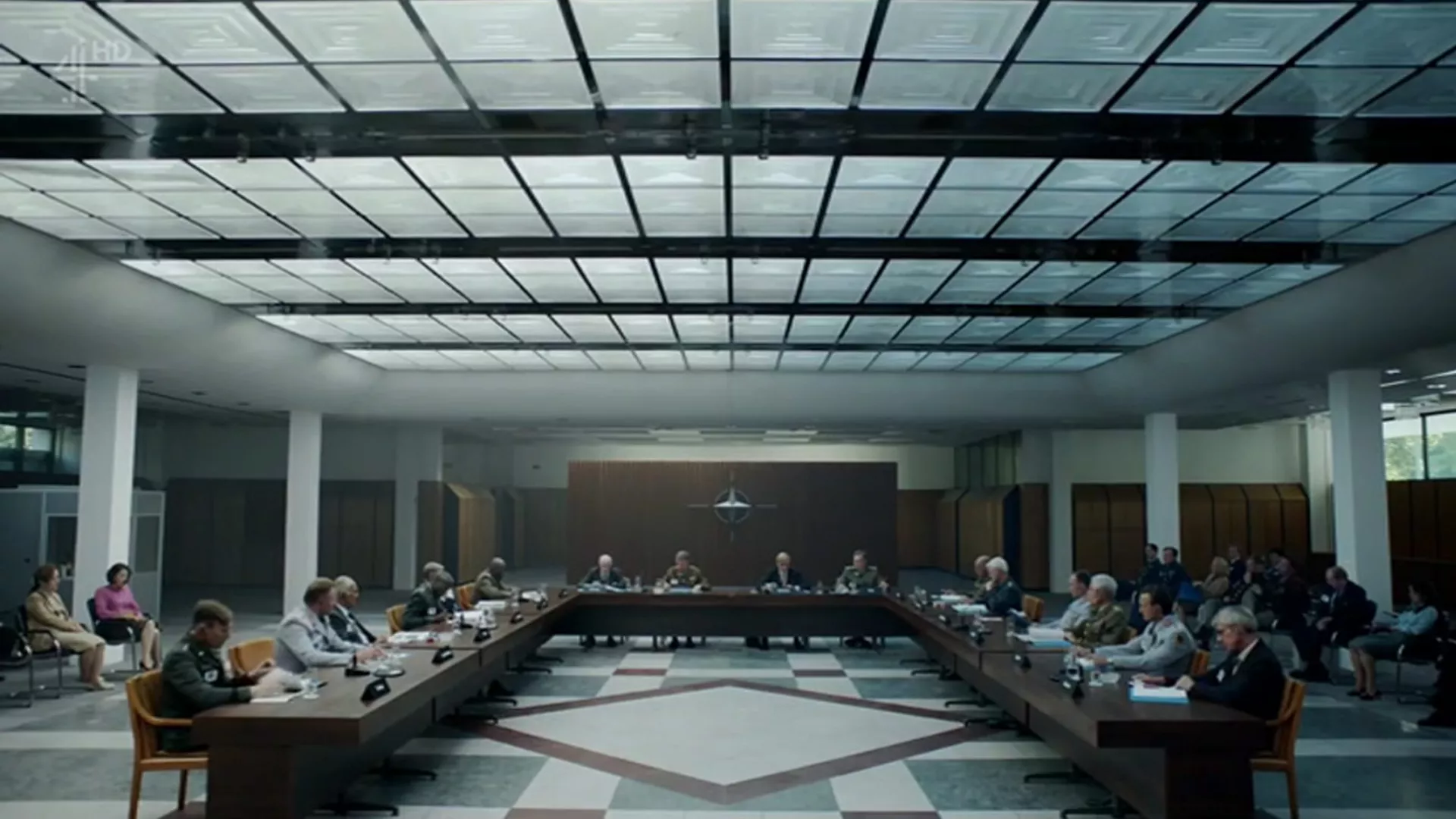
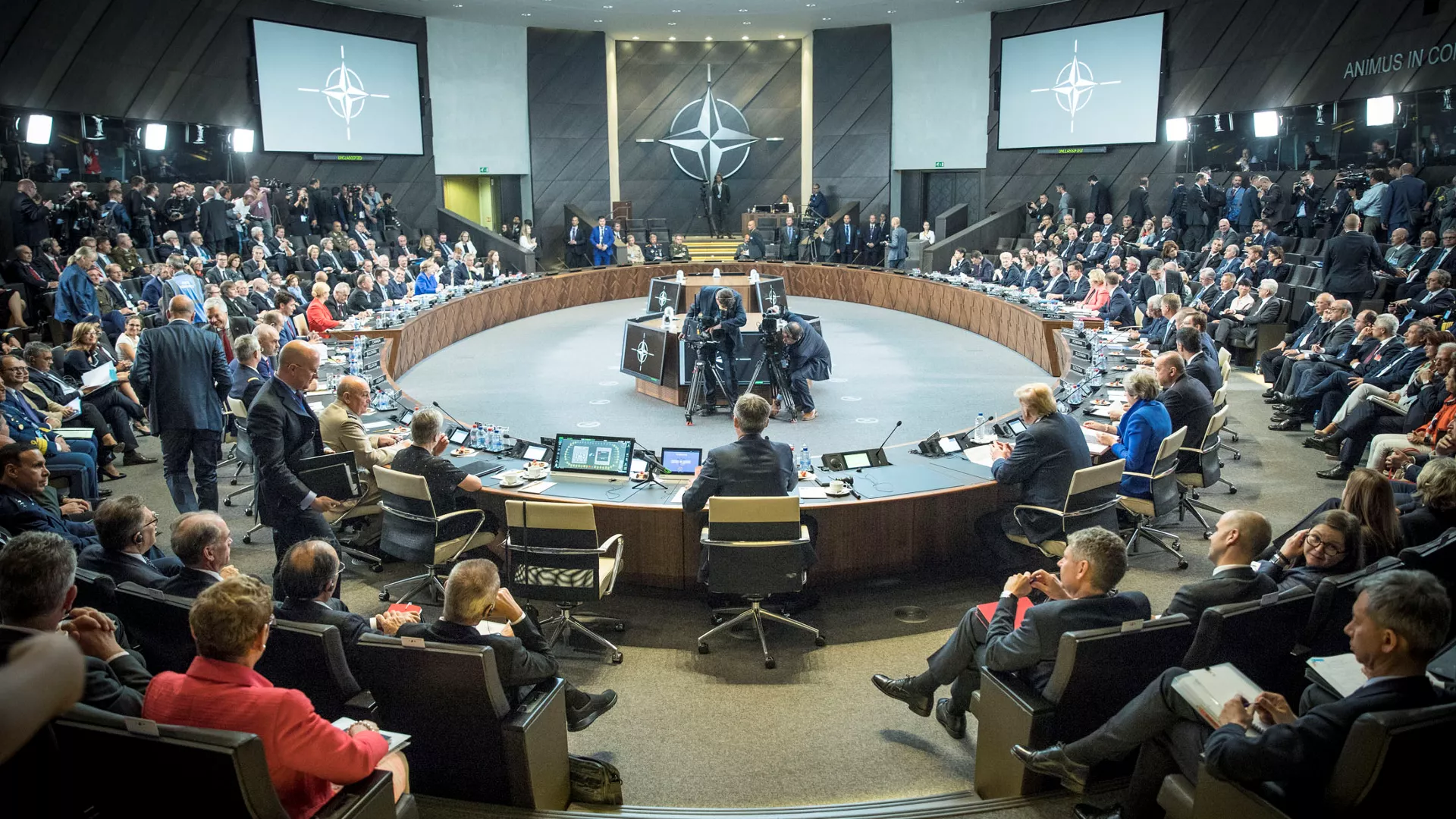
This same dramatic license extends to the details surrounding the Able Archer exercise. While Deutschland 83 depicts a world on the brink of a nuclear apocalypse thanks to the faulty interpretation of Soviet intelligence, the official NATO line on Able Archer confirms that it was a routine exercise that yielded little reaction on either side of the East-West divide.