Close
Back

From now on you can download videos from our website
If you would also like to subscribe to the newsletter and receive our latest updates, click on the button below.
Enter the email address you registered with and we will send you a code to reset your password.
The password must be at least 12 characters long, no spaces, include upper/lowercase letters, numbers and symbols.
Click the button to return to the page you were on and log in with your new password.
NATO’s ability to operate effectively across all domains increasingly depends on access to space-based data, products and services. These enable a host of operational necessities, including communications, surveillance, and navigation. NATO does not seek to become an independent space actor or own assets in space. Instead, NATO relies on capabilities provided by Allies, commercial industry, and trusted partners. Industry plays a critical role in delivering the assets and services that help NATO maintain operational advantage in a contested and congested space environment.
This collaboration is particularly important in the following key areas:
The air domain is critical to the Alliance’s core tasks of deterrence and defence, cooperative security and crisis management. NATO’s activities in the air domain include civilian-military coordination in air traffic management, air policing, and intelligence, surveillance and reconnaissance (ISR). The Alliance supports capability development across emerging air domain technologies such as autonomous and unmanned systems, electronic warfare, and infrastructure critical for aviation.
NATO supports and improves innovation and collaboration in the development of Allied maritime capabilities whenever and wherever it can. The 2025 Allied Maritime Strategy highlights the maritime domain to a core arena for deterrence, defence and warfighting. It prioritises the protection of critical maritime infrastructure and commits the Alliance to fully integrated multi-domain maritime operations, including through the extensive use of uncrewed systems. This collaboration is particularly important and ongoing in the following key areas:
Selected NATO HQ and staff actors are relevant depending on the issue:
CDT contributes to the relevant capabilities in all domains (Land, air, maritime, space and cyber) and promotes coherence for Information and Communications Technology (ICT), cyber security and cyber defence efforts across the NATO enterprise.
NATO relies on the supply of land capabilities to meet Deterrence and defence requirements. A strong industry is the cornerstone of NATO’s land power, as it plays a key role in translating the Alliance’s military requirements into modern, interoperable, and sustainable land forces.
Critical areas for the land domain are:
https://www.forsvaret.no/en/organisation/centre-of-excellence-cold-weather-operations/
NATO’s cyber defence relies on strong partnerships with industry. Industry provides critical innovation, expertise and technologies that strengthen resilience, accelerate the adoption of emerging capabilities, and help NATO stay ahead of evolving cyber threats. This collaboration is particularly important and ongoing in the following key areas:
Your gateway to information and business opportunities offered by NATO
NATO works closely with industry to develop and deliver capabilities needed to fulfil the Alliance’s missions and objectives, and defend its one billion citizens. The importance of a closer relationship between NATO and industry was acknowledged at recent NATO summits. NATO has developed a Framework for NATO-Industry Engagement (PDF) which includes the principles guiding an entire spectrum of relationships between the Alliance and industry.
‘Industry’ from a NATO perspective refers to defence as well as non-traditional defence companies, prime contractors and small and medium-size enterprises, and also startups and deep tech companies.
At the non-contractual or pre-competitive stage, NATO interacts with industry through the NATO Industrial Advisory Group (NIAG), Framework for Collaborative Interaction (FFCI), Defence Innovation Accelerator for the North Atlantic (DIANA), NATO Innovation Fund. NATO also interacts through regular events such as the NATO-Industry Forum the NATO Summit Defence Industry Forum, conferences, symposia and seminars.
At the contractual stage the relationship with industry is governed by procurement rules and regulations (see below).
The Cyber and Digital Transformation Division (CDT) oversees all aspects of cyber and digital transformation across the entire NATO Enterprise’s civil and military bodies, being a central player for Capability Development. This encompasses all efforts in promoting Artificial Intelligence (AI), Data, Cloud, Networks and Communications.
CDT guides digital and command and control standardization for the alliance through the Digital Policy Committee and its substructure.
The division also coordinates on all aspects linked to countering hybrid actions and takes forward policy and industry engagement on energy security and critical undersea infrastructure.
In this capacity, CDT contributes to all domains (Land, Air, Maritime, Space and Cyber) and promotes coherence for Information and Communications Technology (ICT), cyber security and cyber defense efforts across the NATO Enterprise.
The Defence Industry, Innovation and Armaments Division of the NATO HQ is at the forefront of the development and delivery of capabilities covering the full range of defence and deterrence needs. Particular focus is placed on the development of innovative capabilities based on the requirements stemming from NATO Defence Planning Process (NDPP), increasing industrial capacity to support this, and securing defence-critical supply chains.
One of D2IA’s responsibilities is the overall relationship between the NATO enterprise and industry, for which it has developed an Industrial Relations website, reflecting the efforts to improve Trans-Atlantic Defence technological and Industrial Cooperation (TADIC).
The NATO Industrial Advisory Group (NIAG) is a high-level consultative and advisory body of senior industrialists from NATO member countries. It acts as a forum for free exchange of views on industrial, technical, economic, managerial and other relevant aspects of the research, development and production of defence and security equipment within the Alliance. Allied and partner nations’ industry is represented in NIAG through national Heads of Delegation.
NATO Common Funding supports the Alliance’s objectives and priorities by enabling the delivery of critical military capabilities. Common funded procurement is governed by the Procurement Policy for NATO Common Funding and Procedure for NATO Competitive Procurement. It remains firmly grounded in the principles of performance and delivery, open and fair competition, transparency, good governance, and efficiency and proportionality.
ACT is one of NATO’s Strategic Commands. It leads continuous NATO military transformation in order to enhance effectiveness in current and future operations through the innovative development and delivery of training, education, capabilities, doctrine and concepts.
ACO is one of NATO’s Strategic Commands responsible for planning and executing all NATO operations. Its structure comprises a strategic level headquarters (SHAPE – Supreme Headquarters Allied Powers Europe), three Joint Force Commands and three tactical-level air, land and maritime Commands.
DIANA is an organisation established by NATO to find and accelerate dual-use innovation capacity across the Alliance. DIANA provides companies with the resources, networks and guidance to develop deep technologies to solve critical defence and security challenges, from operating in denied environments to tackling threats to collective resilience.
NCIA is NATO’s technology and cyber hub. NCIA enables NATO’s mission by procuring digital solutions and resilient communication and information services for seamless connectivity among Allies and partner countries.
NCIA is a key partner in NATO's digital transformation, collaborating with industry to deliver technical solutions and expertise, facilitating political consultations and enabling multi-domain operations.
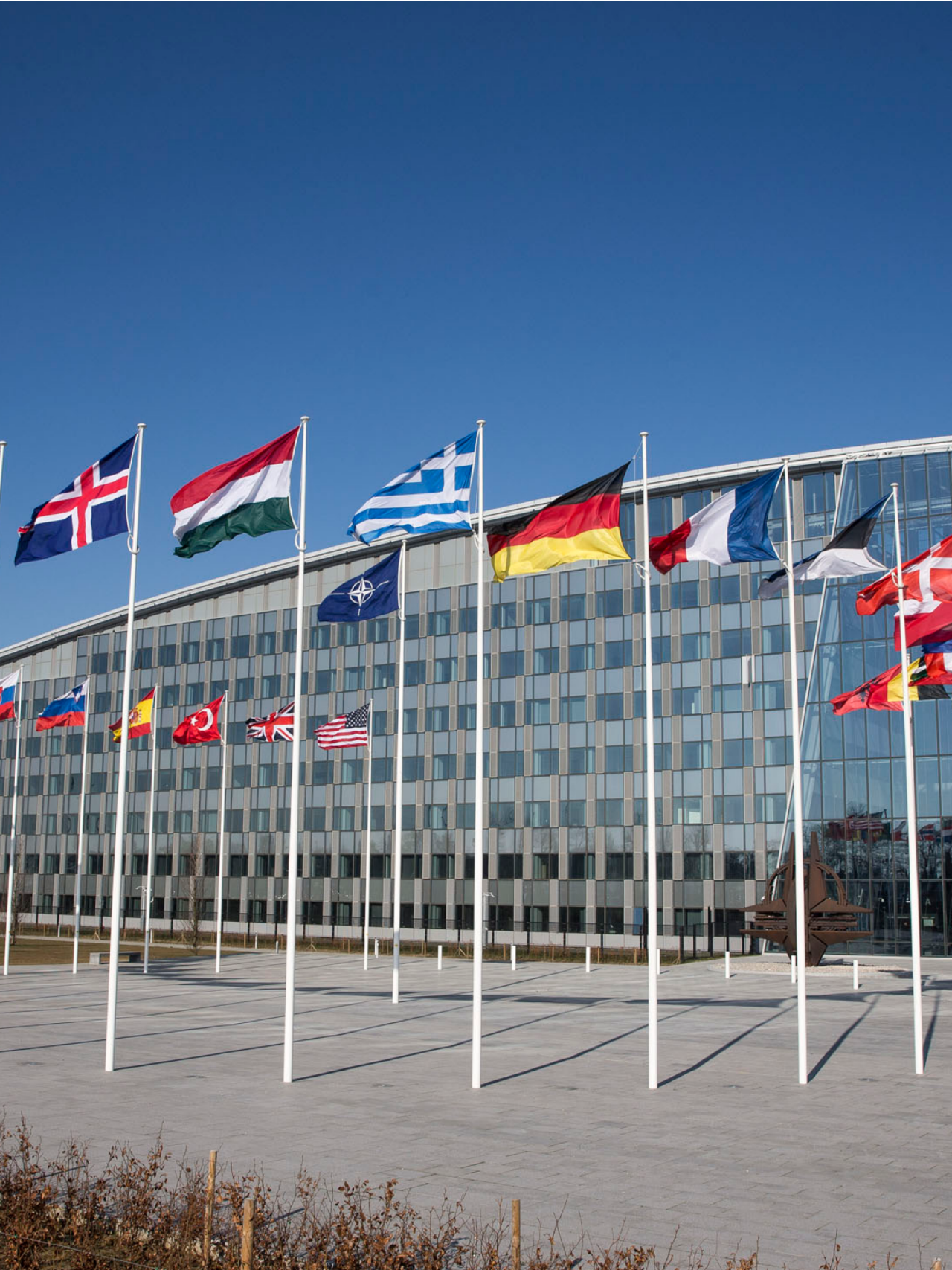
The NATO HQ in Brussels is the political and administrative centre of the Alliance and the permanent home of the North Atlantic Council, which is NATO's senior political decision-making body. Most of NATO HQ business opportunities relate to the day-to-day running of the headquarters (ICT, construction works, facility management, maintenance, consultancy services, etc.).
The NATO Innovation Fund is a €1 billion venture capital fund that invests in deep tech to address challenges in defence, security, and resilience. The fund invests independently in breakthrough technologies across the 24 countries backing it, with Allies supporting its portfolio’s success and helping provide entrepreneurs with access to commercial and public markets
NSPA is NATO’s lead organisation for multinational acquisition, support and sustainment for NATO countries and partners. NSPA mission is to link national requirements with industrial capabilities, consolidate demand, generate economies of scale and make interoperability real. Registered suppliers can bid on NSPA contracts for a wide range of products and services across all domains.
The STO is the main NATO venue for science and technology. Its mission is to promote and conduct collaborative research to support capability development and partnership objectives and to provide strategic advice to NATO decision-makers. The STO consists of the Centre for Maritime Research and Experimentation (CMRE) in La Spezia, Italy, the Collaboration Support Office (CSO) in Neuilly-sur-Seine, France, and the Office of the Chief Scientist at NATO HQ, Brussels, Belgium.
NATO standardization is a key enabler of interoperability across the Alliance, helping nations, NATO bodies and industry develop capabilities that can operate together effectively across all domains. This section provides an overview of NATO’s standardization approach, the main standardization areas, and the relevant Tasking Authorities responsible for guiding standardization activities.
For industry, of particular interest are the materiel and digital technology standardization areas, including the roles of the Conference of National Armaments Directors (CNAD) and the Digital Policy Committee (DPC). Industry can typically participate in NATO standardization activities after nomination by a NATO Ally, ensuring that validated industry expertise is brought into NATO’s standardization process.
This section also points to NATO’s standardization documents database (NSDD) and the NATO Interoperability Standards and Profiles (NISP). The NISP supports “interoperability by design” by guiding the use of digital technology standards in capability development. The NISP is especially relevant for capability planners, requirements managers, programme managers and suppliers seeking to align products, services and roadmaps with NATO’s digital and cyber interoperability needs.