Close
Back

From now on you can download videos from our website
If you would also like to subscribe to the newsletter and receive our latest updates, click on the button below.
Enter the email address you registered with and we will send you a code to reset your password.
The password must be at least 12 characters long, no spaces, include upper/lowercase letters, numbers and symbols.
Click the button to return to the page you were on and log in with your new password.
Good morning.
It is really a pleasure to address the 2026 NATO Resilience Symposium in Rome.
I’m really sorry that I could not join you today.
But I’m really glad to know that there are hundreds of you there for these valuable discussions on resilience, and that you represent all parts of our societies – governments, civilians and military staff, NGOs, academia and industry.
We must all work together to build resilience against the threats that we are facing.
And that starts with being clear about what these threats are. Cyber attacks. Arson. Sabotage. Airspace violations. GPS jamming. Assassination attempts.
It’s much more than the threat of conventional attack. And it is much more than just our militaries that are the targets.
Russia has been ramping up malign actions like these, targeting individuals, private companies and civilian infrastructure.
Putin is failing on the battlefield. In the past few months, Russia has been losing more than 40,000 troops - killed or seriously wounded - every month. And in October, early reporting indicates this number may have climbed to over 50,000.
So, he is desperate. And therefore, he continues to attack Ukrainian cities and energy infrastructure, with missiles and drones.
And he is also intensifying hybrid attacks against NATO countries, trying to disrupt our societies. His key aim is to deter us from supporting Ukraine.
But he is failing there as well. We are not intimidated. And we are sending even more support to Ukraine, not less.
But these attacks are still causing real damage.
So, what is NATO doing to strengthen our resilience against these threats?
We have launched military activities to protect critical infrastructure – like Baltic Sentry, which protects undersea cables and pipelines in the Baltic Sea.
We are also strengthening our digital networks, and hosting cyber defence exercises to identify vulnerabilities and train rapid responders.
And NATO Allies have a robust intelligence sharing system, which help detect and disrupt potential attacks.
These are just some examples.
The point is that we are taking these threats seriously, and we are taking actions. Now!
But we can’t do this alone.
And here I want to talk to our private sector and our civil society partners in particular. We need you!
Not just because NATO – and your national militaries – can’t be everywhere at once, defending against every threat.
But also because, as I said before, you are the target of these hybrid attacks too.
We are already seeing this play out, with civilian companies, public utilities and institutions affected by cyber attacks or sabotage.
And this is during peacetime.
In crisis or conflict, you will be an even bigger target.
And at the same time, we will be asking more of you.
Because you are a crucial part of our collective defence.
You supply vital goods and services that keep our forces fed, armed, and digitally connected.
You keep the lights on and the water running.
You make it possible for our troops to travel from Point A to Point B across our territory.
We rely on you for the things we need to fulfil our mission and keep our one billion people safe. Therefore, you are essential.
So, what do we need from you?
First and foremost, you need to have clear plans in place, so you know immediately what to do in any crisis.
If you have not got a plan in place by now, then planning must start today – not just in cooperation with NATO, but by talking to each other, and to your partners, at every step of your supply chains.
Second, exercise together across all levels of government and business. So, that we strengthen even more our civil-military cooperation.
And lastly, talk to your employees about the current threat level. So that your employees know what is expected from them during crisis or conflict. But also, in a broader sense, to build – and together - a stronger security culture.
But for now, I leave you with this.
NATO’s strength doesn’t just come from our military might.
It comes from our unity. From our open and democratic societies. Our free markets, innovating and creating, challenging the status quo.
Our strength is our adversaries’ greatest fear, and they will keep trying to disrupt and trying to weaken us. But they will fail.
Because we have 32 Allies working together – building our resilience and keeping our societies strong and free.
Thank you for supporting us in this very important endeavour.
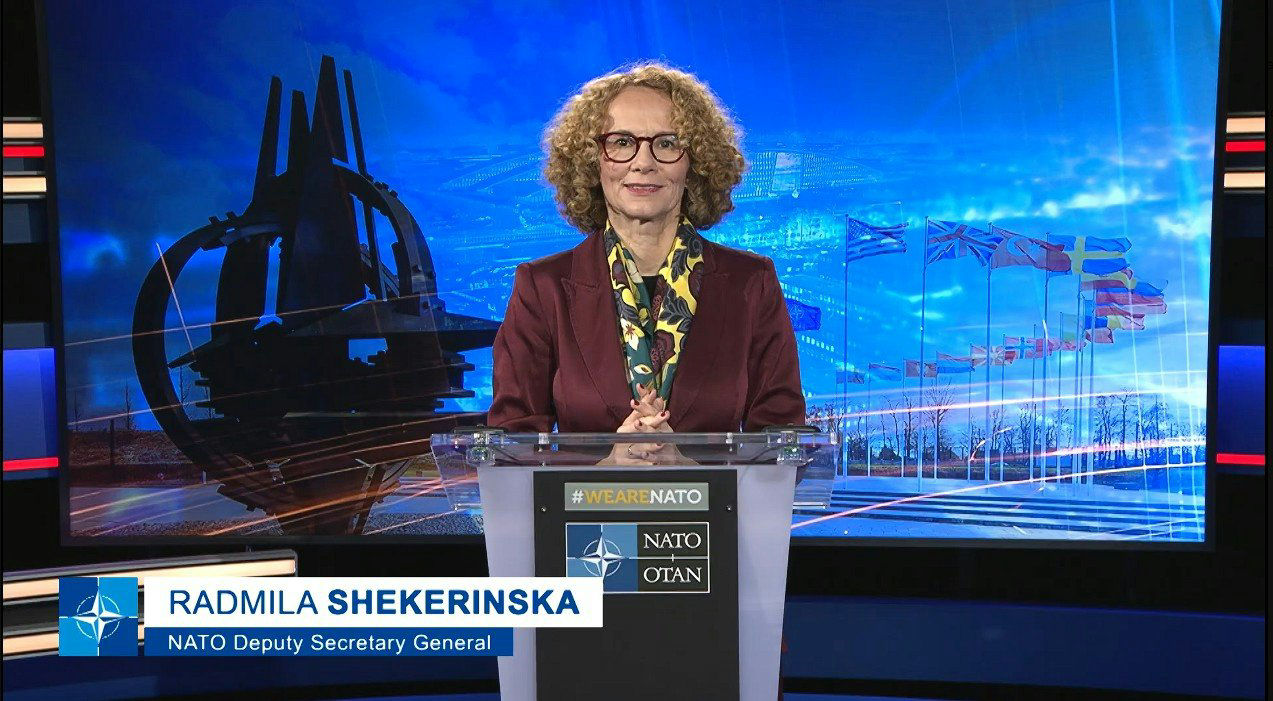
Address by the NATO Deputy Secretary General at the NATO Resilience Symposium