Close
Back

From now on you can download videos from our website
If you would also like to subscribe to the newsletter and receive our latest updates, click on the button below.
Enter the email address you registered with and we will send you a code to reset your password.
The password must be at least 12 characters long, no spaces, include upper/lowercase letters, numbers and symbols.
Click the button to return to the page you were on and log in with your new password.
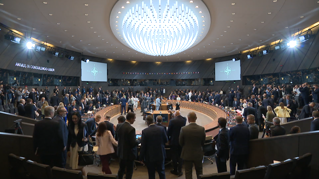
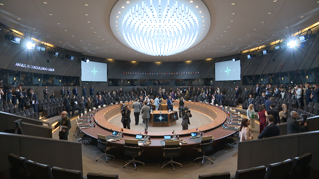
Good morning, and welcome to this meeting of NATO defence ministers. This is the last milestone before our Summit in Ankara in just three weeks. Today we will address how European Allies and Canada are taking more responsibility for their conventional defence. To rebalance our security for the better, we are building a stronger Europe in a stronger NATO. That means Allies demonstrating clear progress and a credible path towards investing 5% of GDP on defence, and turning that increased spending into combat-ready forces and capabilities, now. We are already seeing truly impressive progress.
In 2025, European Allies in Canada invested over $90 billion more than the year before. That's an increase of nearly 20% in a single year and we already see, foreseeing, further increases when it comes to the books for 2026. To accelerate defence production and innovation in Europe and North America it is vital that we also turbocharge transatlantic defence cooperation. There is no other way.
We will also discuss issues outside of Europe that very much affect our security. Allies have long agreed that Iran cannot be allowed to have a nuclear weapon, and today as a result of US action, they are further from that than at any time in recent memory. We all are heartened by the prospects for peace following the US-Iran agreement. Pete, this is truly a remarkable achievement. Thank you. And, of course, thank the President for this. Restoring freedom of navigation in the Strait of Hormuz is vital for the global economy, so we will have the opportunity today to address Allies' concrete contributions to international efforts to support freedom of navigation.
On Ukraine, I expect further pledges of support to be made at the Ukraine Defence Contact Group later today, because we must continue to step up and sustain our support, so that Russia's brutal war ends. It is important that every Ally does their fair share, particularly through NATO's PURL Initiative, given its effectiveness at providing crucial air defence, which only the United States can deliver. But before we begin our closed session, my dear friend Pete, the US Secretary of War, has asked for the floor. So, Pete, the floor is yours.
![[from left to right] NATO Deputy Secretary General Radmila Shekerinska and NATO Secretary General Mark Rutte](https://s7g10.scene7.com/is/image/ncia/20260618_mod-nac_0006:16x9?fmt=webp-alpha&qlt=80 "Meeting of the North Atlantic Council in Defence Ministers' Session - Meeting of NATO Ministers of Defence")


![[from left to right] Raivis Melnis (Minister of Defence, Latvia) and Robertas Kaunas (Minister of Defence, Lithuania)](https://s7g10.scene7.com/is/image/ncia/20260618_mod-nac_0036:16x9?fmt=webp-alpha&qlt=80 "Meeting of the North Atlantic Council in Defence Ministers' Session - Meeting of NATO Ministers of Defence")

![[from left to right] Boris Pistorius (Minister of Defence, Germany) and Nikolaos Dendias (Minister of Defence, Greece)](https://s7g10.scene7.com/is/image/ncia/20260618_mod-nac_0038:16x9?fmt=webp-alpha&qlt=80 "Meeting of the North Atlantic Council in Defence Ministers' Session - Meeting of NATO Ministers of Defence")
![[from left to right] Catherine Vautrin (Minister of the Armed Forces, France) and Boris Pistorius (Minister of Defence, Germany)](https://s7g10.scene7.com/is/image/ncia/20260618_mod-nac_0039:16x9?fmt=webp-alpha&qlt=80 "Meeting of the North Atlantic Council in Defence Ministers' Session - Meeting of NATO Ministers of Defence")
![[from left to right] Antti Häkkänen (Minister of Defence, Finland) and Catherine Vautrin (Minister of the Armed Forces, France)](https://s7g10.scene7.com/is/image/ncia/20260618_mod-nac_0040:16x9?fmt=webp-alpha&qlt=80 "Meeting of the North Atlantic Council in Defence Ministers' Session - Meeting of NATO Ministers of Defence")


![[from left to right] Chair of the Military Committee, Admiral Giuseppe Cavo Dragone and Supreme Allied Commander Europe, General Christopher G. Cavoli](https://s7g10.scene7.com/is/image/ncia/20260618_mod-nac_0044:16x9?fmt=webp-alpha&qlt=80 "Meeting of the North Atlantic Council in Defence Ministers' Session - Meeting of NATO Ministers of Defence")
![[from left to right] Willem van de Voorde (Permanent Representative of Belgium to NATO) and Theo Francken (Minister of Defence, Belgium)](https://s7g10.scene7.com/is/image/ncia/20260618_mod-nac_0047:16x9?fmt=webp-alpha&qlt=80 "Meeting of the North Atlantic Council in Defence Ministers' Session - Meeting of NATO Ministers of Defence")


![[from left to right] Supreme Allied Commander Europe General Alexus G. Grynkewich, Matthew G. Whitaker (US Permanent Representative to NATO) and Pete Hegseth (US Secretary of War)](https://s7g10.scene7.com/is/image/ncia/20260618_mod-nac_0074:16x9?fmt=webp-alpha&qlt=80 "Meeting of the North Atlantic Council in Defence Ministers' Session - Meeting of NATO Ministers of Defence")
![[from left to right] Nikolaos Dendias (Minister of Defence, Greece), Boris Pistorius (Minister of Defence, Germany), Catherine Vautrin (Minister of the Armed Forces, France), Antti Häkkänen (Minister of Defence, Finland) and Hanno Pevkur (Minister of Defence, Estonia)](https://s7g10.scene7.com/is/image/ncia/20260618_mod-nac_0081:16x9?fmt=webp-alpha&qlt=80 "Meeting of the North Atlantic Council in Defence Ministers' Session - Meeting of NATO Ministers of Defence")
![[from left to right] Dan Jarvis (Secretary of Defence, United Kingdom) and Pete Hegseth (US Secretary of War)](https://s7g10.scene7.com/is/image/ncia/20260618_mod-nac_0083:16x9?fmt=webp-alpha&qlt=80 "Meeting of the North Atlantic Council in Defence Ministers' Session - Meeting of NATO Ministers of Defence")
![[from left to right] Yaşar Güler (Minister of Defence, Türkiye), Dan Jarvis (Secretary of Defence, United Kingdom) and Pete Hegseth (US Secretary of War)](https://s7g10.scene7.com/is/image/ncia/20260618_mod-nac_0085:16x9?fmt=webp-alpha&qlt=80 "Meeting of the North Atlantic Council in Defence Ministers' Session - Meeting of NATO Ministers of Defence")

![[from left to right] NATO Secretary General Mark Rutte, Antti Häkkänen (Minister of Defence, Finland) and Pete Hegseth (US Secretary of War)](https://s7g10.scene7.com/is/image/ncia/20260618_mod-nac_0093:16x9?fmt=webp-alpha&qlt=80 "Meeting of the North Atlantic Council in Defence Ministers' Session - Meeting of NATO Ministers of Defence")


[from left to right] NATO Deputy Secretary General Radmila Shekerinska and NATO Secretary General Mark Rutte
North Atlantic Council (NAC)
Valentin Hajdinjak (Minister of Defence, Slovenia)
NATO Secretary General Mark Rutte and Dragan Krapović (Minister of Defence, Montenegro)
Władysław Kosiniak-Kamysz (Minister of Defence, Poland)
Dan Neculăescu, Permanent Representative of Romania to NATO
Władysław Kosiniak-Kamysz (Minister of Defence, Poland)
Tore O. Sandvik (Minister of Defence, Norway)
Vlado Misajlovski (Minister of Defence, North Macedonia)
Dragan Krapović (Minister of Defence, Montenegro)
Yuriko Backes (Minister of Defence, Luxembourg)
[from left to right] Raivis Melnis (Minister of Defence, Latvia) and Robertas Kaunas (Minister of Defence, Lithuania)
Romulusz Ruszin-Szendi (Minister of Defence, Hungary)
[from left to right] Boris Pistorius (Minister of Defence, Germany) and Nikolaos Dendias (Minister of Defence, Greece)
[from left to right] Catherine Vautrin (Minister of the Armed Forces, France) and Boris Pistorius (Minister of Defence, Germany)
[from left to right] Antti Häkkänen (Minister of Defence, Finland) and Catherine Vautrin (Minister of the Armed Forces, France)
Jaromír Zůna (Minister of Defence, Czechia)
Dimitar Stoyanov (Minister of Defence, Bulgaria)
[from left to right] Chair of the Military Committee, Admiral Giuseppe Cavo Dragone and Supreme Allied Commander Europe, General Christopher G. Cavoli
[from left to right] Willem van de Voorde (Permanent Representative of Belgium to NATO) and Theo Francken (Minister of Defence, Belgium)
NATO Deputy Secretary General Radmila Shekerinska
Geert De Decker, Military Representative of Belgium to NATO
Chair of the Military Committee, Admiral Giuseppe Cavo Dragone
Pete Hegseth (US Secretary of War)
NATO Secretary General Mark Rutte at the North Atlantic Council (NAC)
[from left to right] Supreme Allied Commander Europe General Alexus G. Grynkewich, Matthew G. Whitaker (US Permanent Representative to NATO) and Pete Hegseth (US Secretary of War)
[from left to right] Nikolaos Dendias (Minister of Defence, Greece), Boris Pistorius (Minister of Defence, Germany), Catherine Vautrin (Minister of the Armed Forces, France), Antti Häkkänen (Minister of Defence, Finland) and Hanno Pevkur (Minister of Defence, Estonia)
[from left to right] Dan Jarvis (Secretary of Defence, United Kingdom) and Pete Hegseth (US Secretary of War)
[from left to right] Yaşar Güler (Minister of Defence, Türkiye), Dan Jarvis (Secretary of Defence, United Kingdom) and Pete Hegseth (US Secretary of War)
Raivis Melnis (Minister of Defence, Latvia) and Boris Pistorius (Minister of Defence, Germany)
[from left to right] NATO Secretary General Mark Rutte, Antti Häkkänen (Minister of Defence, Finland) and Pete Hegseth (US Secretary of War)
NATO Secretary General Mark Rutte and Valentin Hajdinjak (Minister of Defence, Slovenia)
Robert Kaliňák (Minister of Defence, Slovak Republic) and Valentin Hajdinjak (Minister of Defence, Slovenia)
Þorgerður Katrín Gunnarsdóttir (Minister of Foreign Affairs, Iceland) and Jörundur Valtýsson (Permanent Representative of Iceland to NATO)
Nuno Melo (Minister of Defence, Portugal)
NATO Secretary General Mark Rutte and Valentin Hajdinjak (Minister of Defence, Slovenia)
Hanno Pevkur (Minister of Defence, Estonia) and Pete Hegseth (US Secretary of War)
Dilan Yeşilgöz-Zegerius (Minister of Defence, Netherlands)
Meeting of the North Atlantic Council in Defence Ministers’ Session