Close
Back


From now on you can download videos from our website
If you would also like to subscribe to the newsletter and receive our latest updates, click on the button below.
Enter the email address you registered with and we will send you a code to reset your password.
The password must be at least 12 characters long, no spaces, include upper/lowercase letters, numbers and symbols.
Click the button to return to the page you were on and log in with your new password.
05 November 2026
2 MIN READ

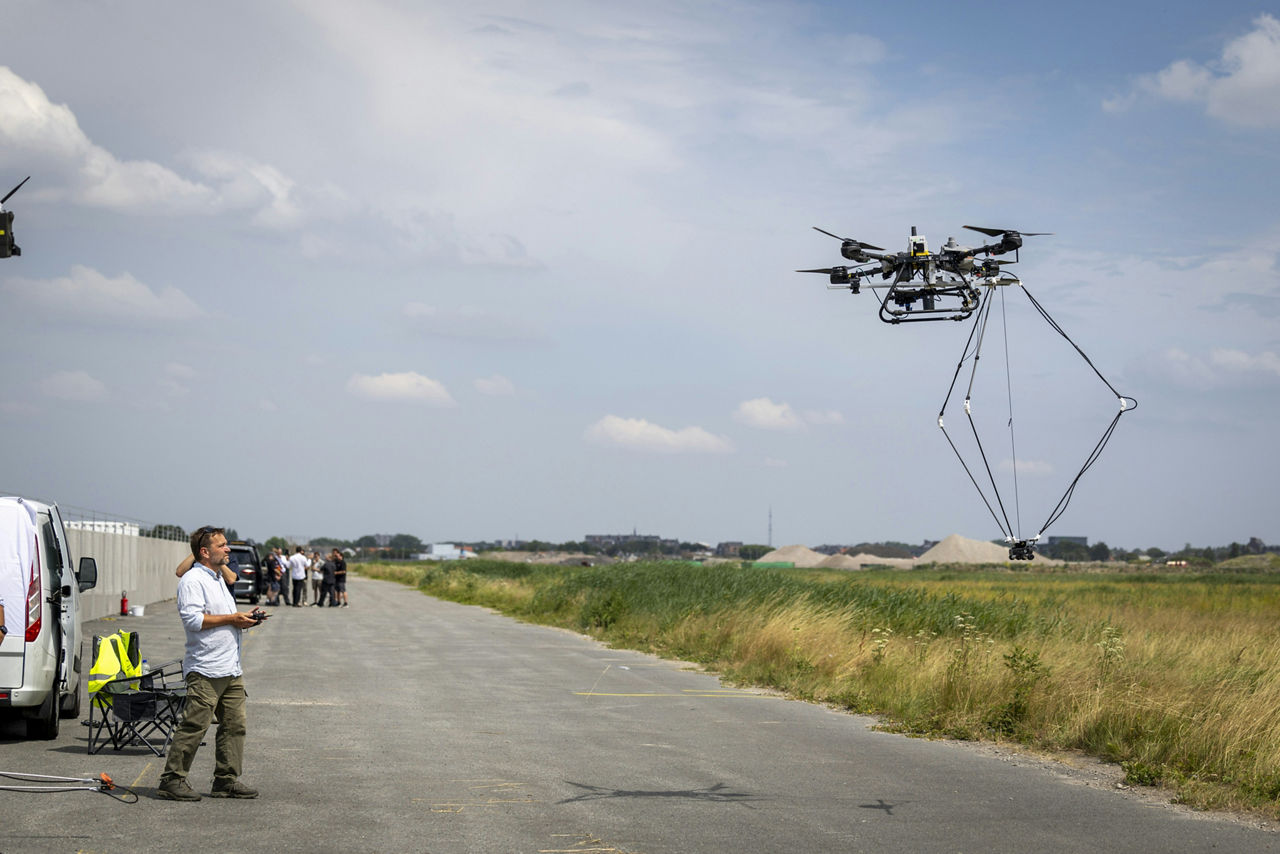
On Thursday (5 November 2026), NATO launched the Counter-Unmanned Aircraft Systems (C-UAS) marketplace to accelerate the acquisition of counter-drone technologies. It’s part of Drone Edge, an initiative launched at the NATO Summit Defence Industry Forum in Ankara in July.
The counter-drone marketplace aims to facilitate Allies’ access to suitable solutions to urgent operational requirements. Through the marketplace, Allies will be able to procure these solutions directly from the NATO catalogue without any further tender process.
As part of the marketplace, the NATO Communications and Information Agency (NCIA) has competed and selected 16 solutions from five companies; Alta Ares; Axon Enterprise Inc.; Northrop Grumman; OSL UK; and Quantum Systems. The solutions were selected based on experience gained through NATO, national innovation activities and exercises. The selected capabilities have already been deployed in Allied countries and in Ukraine. The selected solutions cover a mix of static, transportable and on-the-move systems.
NCIA, which hosts the NATO Counter-UAS Centre of Expertise, is responsible for the multi-award counter-drone framework contracts. The framework contracts are valid for one and a half year and NATO intends to run regular competitions to ensure that the newest technologies are made available to Allies.
NATO has also allocated 3.1 million euros to fund further testing of the selected solutions by nations or NATO commands. The marketplace complements Allies’ other commitment, under NATO’s Drone Edge, to invest over USD 40 billion in counter-drone capabilities over the next five years.

4 November 2026

29 October 2026

29 September 2026