Fermer
Retour
Accédez aux ressources médiatiques officielles de l'OTAN. Un contenu de qualité professionnelle, diffusé sur les dernières actualités. La référence pour les professionnels des médias.
Accédez aux ressources médiatiques officielles de l'OTAN. Un contenu de qualité professionnelle, diffusé sur les dernières actualités. La référence pour les professionnels des médias.
Désormais, vous pouvez télécharger des versions complètes ou partielles de nos vidéos depuis notre site Web.
Si vous souhaitez également vous abonner à la newsletter et recevoir nos dernières mises à jour, cliquez sur le bouton ci-dessous.
Entrez l'adresse e-mail avec laquelle vous vous êtes inscrit et nous vous enverrons un code pour réinitialiser votre mot de passe.
Le mot de passe doit comporter au moins 12 caractères, sans espaces, inclure des lettres majuscules/minuscules, des chiffres et des symboles.
Cliquez sur le bouton pour revenir à la page sur laquelle vous étiez et connectez-vous avec votre nouveau mot de passe.
Governor Branstad, Ambassadors, dear Faye, dear Matt, it's great to be in Iowa. Ladies and gentlemen, it's great to be in Iowa. It is my first time in this state, but your reputation, I can tell you, is well known – not least thanks to one great Iowan, which is Matt Whitaker, the U.S. Ambassador to NATO and my favourite former Iowa Hawkeyes tight end. I have the great pleasure of working with him, and he is a truly excellent representative of this great nation and your great state.
Now you might be wondering what I’m doing here in Des Moines today. Indeed, tomorrow is New York. But of course this is always the right order: first Des Moines, then New York.
NATO may seem far away from America’s heartland. But believe me, the two are inextricably linked – by history and also by shared values.
Iowa has always had a role in keeping America safe and prosperous. During the Second World War, Iowans served, sacrificed, and supplied for the sake of freedom and security.
Whether deploying to distant shores or supporting right here on the home front, the men and women of Iowa helped ensure that the right side would win.
NATO was founded soon after that war and at the dawn of another. The Cold War posed another existential challenge, this time from the Soviet Union. And, in 1949, America and 11 other democracies joined forces in the belief that working together was the best way to ensure that the right side would win yet again.
But NATO isn’t just a lofty ideal. We’re a deeply practical, a roll-up-your-sleeves-and-get-to-work Alliance. I’d like to say we’re sort of Iowan in that way.
We’ve agreed on standards, ways of doing things, so that cooperation between militaries actually works.
We train together to make sure we’re continually testing our skills and learning as we go. We’ve agreed on standards for military equipment – so that the equipment our men and women in uniform are using doesn’t limit cooperation but facilitates it.
We share information and intelligence on the threats we face. We have plans in place to deter potential aggression and to defend, if needed.
This has been NATO’s work now for over 75 years. And while a lot has changed over time – the threats, the tactics, the technology – the fundamentals, they remain the same.
Our freedom and security matter. And we can secure them best by working together.
And I’m not just talking about security in Europe. I know that’s sometimes a question Americans have about NATO – why is the United States still involved? What’s in it for us?
It’s an important question – and one that’s pretty easy to answer.
When it comes to securing the U.S. homeland, you need a secure Europe, a secure Atlantic, and a secure Arctic. The U.S. is mighty, but doing all of this alone is not efficient, and it’s not necessary. You now have 31 Allies in NATO. And these 31 other democratic countries joined NATO in order to contribute to our collective security.
Now some may agree with the premise but still question the reality: are your Allies really carrying their weight and adding to America’s security?
There are many examples of how Allies have consistently contributed. When the United States was attacked on 9/11, we invoked NATO’s Article 5 for the first and only time in our history.
This is our collective defence clause – if any Ally is attacked, we’ve all been attacked. And your Allies were with you.
NATO planes helped police U.S. airspace in those dark days after 9/11. We deployed to the Mediterranean to ensure that terrorists weren’t able to move material that would support further attacks. And later, in Afghanistan, all of your Allies in NATO served alongside their American brothers and sisters. And many paid the ultimate price.
So this is not just a commitment in principle.
It’s a commitment backed by blood and treasure.
However, when it comes to fairly sharing the burden for our security, there has been a problem in the past. Some of America’s Allies relied too heavily on the United States to do the heavy lifting. They weren’t investing enough in their own defence.
The United States called on them repeatedly to step up and more fairly share the responsibility. Administration after administration after administration.
But things have changed. Both because the threats to our security have increased, and because there is a new appreciation for what it takes to keep an Alliance strong.
When President Trump came to office the first time, he pushed Allies to invest more in defence – as had every President before him going back to Dwight Eisenhower. And some Allies heeded that call and began to up their investments. But progress was slow. And not all were moving.
When President Trump returned to office in January of last year, he made abundantly clear that while the U.S. was committed to NATO, America’s Allies would need to step up. The threats we face are real. And the U.S. has commitments around the world. So, if NATO is to make continuous sense for America, things would need to change. And change they have.
When the leaders of all the NATO countries gathered in my hometown, The Hague, last year for the NATO Summit, they agreed to a historic new spending target. They agreed that each and every one of them would invest substantially more in their defence – 5% of GDP per year – to ensure we were all ready and able to do our fair share.
Now that kind of increase takes time – and they agreed on a 10-year window to reach the target. But I have to say, the progress we’ve seen just two years into this 10-year project is remarkable.
America’s Allies in Europe and Canada have already invested more than 250 billion additional dollars in defence. That’s massive. And the trend continues.
Now I want to get practical again – because as I said, NATO isn’t just about ideas and ideals. Our job is to deliver real security for one billion people – including 340 million right here, in the United States.
And to deliver real security you don’t just need to budget more dollars for defence. You need men and women in uniform. Trained and ready. And you need the capabilities – the tanks and ships, the weapons and ammunition, the drones and other technology that are essential to keep us safe.
So we’re working with industry to ensure they ramp up production. Because right now, the supply cannot meet the demand on either side of the Atlantic.
And we’re working to cut red tape when it comes to procurement – because we need things to work more quickly and flexibly on both the government and industry side of the picture.
Iowa knows the kind of ingenuity we need. Whether it’s looking back to World War Two when Roy Carver converted an old sauerkraut factory two hours back down I-80 in Muscatine to produce military pumps. Or when researchers at Iowa State developed the method for producing the purified uranium that was essential to the success of the Manhattan Project. Or more recently, in producing the corn that Iowa is so famous for not only to feed but to fuel.
We’re working across the whole of NATO to foster this kind of ingenuity to meet our current challenges.
There is an additional upside to increased defence investment. It’s not just the security it brings – the ability to deter potential aggressors and defend ourselves should anyone try to test our resolve. There’s also a defence dividend.
More jobs. More innovation. More opportunities across the whole of NATO, not least here in the United States. Last year alone we saw nearly 200,000 American jobs supported by sales from top U.S. defence firms to Europe, or by European defence companies producing here in the U.S.
And the demand continues to rise.
And here, I have to applaud the work of your representatives in the House and Senate who are breaking barriers by enabling real multi-year procurement cycles. With this legislation, the Pentagon will be able to procure systems not just for the next year, but for the next five years or even more. This will send the demand signal industry needs to justify major investments in production.
So we are doing the work. Keeping it practical. Delivering real progress.
And as I close, I’d like to come back to why NATO is good for America.
This is a great country. Your indispensable leadership has helped keep the world free.
And you haven’t had to go it alone. America’s friends and Allies in NATO are playing a vital role in helping to keep Europe, the Atlantic, and the Arctic secure. This helps keep the U.S. homeland secure. Your Allies also provide crucial basing and logistics, enabling the U.S. to project power far from home.
Together, we help keep the peace in Kosovo – a state partner of Iowa and a place where I know members of Iowa’s National Guard have provided crucial support and training for the Kosovo Security Forces through KFOR1.
Together in NATO, we help ensure that Ukraine can defend itself against Russia’s ongoing aggression – with the U.S. providing key air defences and other equipment paid for by your NATO Allies in Europe and Canada.
And let there be no doubt – Ukraine’s security is closely linked with our own.
I’ve been told Iowans understand the value of working hard and working together. And I know you have a particular appreciation for the freedoms we all hold dear.
I was struck when I saw the motto on your flag when I visited the capital today: “Our liberties we prize and our rights we will maintain.”
This is what NATO is all about. Drawn together by a commitment to liberty, democracy, and the rule of law, we’re doing the daily work to make sure that we can protect what matters, together. Thank you.
Q&A Session
Leslie Vinjamuri, President & CEO, Chicago Council on Global Affairs
Secretary General, that was tremendous, powerful, and thank you for reminding us what the words are on the state flag – Illinois has good words too, I'm sure my chair, John Ettelson, will tell me what they are before the end of the evening. And I should say, I'm from Nebraska, so there are other states. Omaha. There are other states in the Midwest that matter. Tremendous, tremendous remarks to start us out. We have a lot of people that will want to contribute, but I want to ask you a few questions. And the first one is about the perception of the threat that Americans face, that Europeans face, because it matters. You know, a there's a concern, I think, by many in the United States, including across the middle of the country, that the United States is insufficiently strategically focused, including when it comes to deploying resources towards the challenge that China presents and towards the Indo-Pacific – you know the argument, both of you, extremely well. Europeans obviously have a very different – one might argue – probably you won't, a very different threat; Russia is very close to home, even more so as you move to Poland and obviously into Ukraine and other states on the eastern borders of NATO. So, is there a common perception of the security threat? You've talked about this generation, this complex security environment being the worst that it's been an entire generation. But do we really actually have alignment and a common understanding on both sides of the Atlantic, and this is a question for both of you. I'll come to you first, and then to you, Ambassador. Do we have alignment on what that security threat is? And if we don't, and you know, if we don't have alignment, it might be because we don't actually have the same threat, calculus or reality. And, if that's the case, how do how do we cope with that? So do you do you accept the premise of the question, and if you do, then what?
NATO Secretary General Mark Rutte
It's my absolute conviction that we have a common perception, a common analysis. This is what I hear in the Pentagon, in State, in the White House, the National Security Council, everywhere, and that is this: that yes, there might be an issue in the Indo-Pacific if China would move against the First Island Chain. But there is also an absolute conviction that, if that would happen, that the Chinese will first force the Russians, Vladimir Putin, to keep us busy in Europe, and that means that we have to be ready everywhere. The United States cannot do that alone, because the United States will have a big role to play in the Indo-Pacific, and therefore it is only right that the Europeans are stepping up more when it comes to the conventional defence of Europe. It makes total sense. That doesn't mean the US leaving the conventional defence of Europe, but the Europeans taking on a bigger share of the responsibility, more senior roles, etc.
When it comes to the threat to NATO territory, our assessment is that the Russian threat is there and it is long-term. At the same time, we see the last couple of weeks the hybrid attacks, etc. and we see sometimes drone sightings. And we have seen what happened in Leipzig, and the German government clearly assessing that it is Russia which is behind it. What I'm telling my European colleagues, particularly, is stay calm, carry on, and keep supporting Ukraine. Staying calm because we know that Russia, in the end, is doing this because they are not successful at the moment in Ukraine. It was the Russian generals telling Putin that he would be successful in Ukraine in two or three weeks. We are now four and a half years into this war, it's taking longer than the U.S. participated in the Second World War, and it tells you something. It is four and a half years going on now. So, Russia is facing big difficulties when it comes to Ukraine, big difficulties, and we have to stay calm. We also have to carry on. We have to carry on making the necessary investments, making sure that we are ready to protect every inch of Allied territory, and the Russians know we will. And we have to make sure that we keep the support for Ukraine going. And this is so very important, because what he tries to do is scare us, divide us, and therefore, he hopes that the Europeans will stop supporting Ukraine. But what's happening, basically, is the contrary of that. Europeans are spending more on Ukraine, and the US is still providing vital material into Ukraine, paid for by the Europeans and Canada, from interceptors for air defence systems, and other important military aid. So, this is this is really crucial.
So, what we have to do is, as Europeans, as NATO as a whole, we need a steely resolve. We are stronger. We are making sure we are prepared for whatever could come towards NATO territory. But let's not fall into the trap of Putin, who wants to create panic, because this is what he wants, and there's no reason for that. But we have to be clear-eyed, not naive, keep on going, making sure we make the investments, making sure we keep the support for Ukraine, and then we can keep both theatres, the Indo-Pacific and the Euro-Atlantic, safe and secure together.
Leslie Vinjamuri, President & CEO, Chicago Council on Global Affairs
Secretary General, what I didn't mention in our data, and I pose this to you, Ambassador, to bring you into the conversation, is that the Chicago Council's data also show maybe a less good finding, which is that Americans are less convinced today than they were a year ago, even, that Europeans would come to their defence, where U.S. vital interests, security interests at risk. That number has declined, and this is a reading on the public, right? Not the sort of decision makers, but American public does not have the same level of confidence that it used to have that it's a mutual agreement. That's how I might interpret that finding. So, do you think, to this question of is there a shared set of security priorities, or does the U.S. need to kind of turn some of this work over to Europe? You've suggested that that can be part of the equation, the Europeanisation of NATO. But does America fundamentally have a different set of security concerns, a different set of priorities, and need to kind of look beyond NATO?
Ambassador Matthew G. Whitaker, Permanent Representative of the United States to NATO
Yeah, I think, where we sit right now, and it's obviously an honour to have Secretary General Rutte here in Des Moines, and to spend some time talking about these really fundamental and important issues. We just have a broader aperture. Ultimately, I think there's a question of a level of ambition. The United States believed for a long time that we could fight a two-front war globally with sort of how, you know, and we're kidding ourselves. And as a more realistic kind of mindset, realistic view of foreign policy and how to project power, you know, really came to reside in this administration. I think we realised a fundamental need to have more capable Allies, and so, I don't think it's a matter of a will of our Allies to, you know, respond if needed. It's a capabilities [matter], that they just had been so hollowed out by the illusory peace dividend post-collapse of the Soviet Union, that they just found themselves to have underinvested in their own defence, and therefore the collective defence, and that underinvestment turned into a real hollowing out of their capabilities. And so, what we've seen is that, whether the willingness to participate is there or not, they don't have the ability to participate in what we would need them to do. And that's what, I think, Secretary General Rutte and myself, along with of course President Trump's leadership, has brought a clear-eyed focus on increasing capabilities in Europe, more capable Allies that can equalise with the United States, that can have tanks and frigates and soldiers and the things that you need – air defence, F 35s – the things that you need in the modern world to deter and defend. And you know, right now, Secretary General points out that we are up against the clock. You know, we have said that in The Hague Defence Commitment, that our Allies agreed to do all this project within 10 years. Many of them are moving out much quicker than that. And Germany is a prime example. They'll have the project done by 2029, which is great because they're the largest economy in Europe. The Poles are already there. The Baltic countries, although small, they are mighty in their spending. But there are some that are lagging behind. But there is no doubt that the direction of travel is in the right direction, and that we will get this done. But our adversaries are not going to possibly allow a 10-year runway. Let's hope they do. You know, right now Russia is bogged down in Ukraine and would not be able to put meaningful pressure, except for the you know maybe some hybrid activity that they're currently doing. But it also… I just think there's a reality, and one of the things that Mark and I were able to accomplish with our 31 other Allies in The Hague Defence Commitment is a recognition that it's more than tanks and F-35s. It also is a societal resilience, a hardening of infrastructure, and because – you know, while I completely agree with this idea of simultaneity, that a move by China in the Pacific would be preceded or simultaneous with a move by Russia, you know, in Europe to try to freeze what the United States has in Europe, the first shot of any future global conflict is not going to be troops across a border. It is going to be attacks on infrastructure and attacks on, you know, sort of technology and very sophisticated, you know, increasing hybrid warfare. And so, you know, we have to make sure that we're ready for that as well, because all of this – and we're going to have to do it all at the same time. And I think that's one of the hardest things that, you know, Mark and I are doing together in the Alliance is bringing everybody along on AI, on hybrid, together with capabilities, together with industrial base, and just we have to do all these things at the same time because of where we found ourselves, you know, really not as prepared as we should have been. And, you know, the United States obviously has been leading and is spending the money. We're clear-eyed on what it's going to take to become capable enough to deter and defend. What we have to address as the United States – and that's what I'm often making sure our Allies understand – is, you know, we have, you know, read our national security strategy, read our national defence strategy. These are the fundamental documents that lay out the philosophy. And the philosophy right now is that our, you know, number one is the homeland. Number two is our own hemisphere, the Western Hemisphere. Number three is the Pacific, and number four is Europe. And while, you know, that's just how this administration has decided to prioritise the work, it doesn't mean we're abandoning Europe. We're just asking Europeans, as we, you know, don't step back, that they step forward and equalise and meet us, you know, where we all need to be.
Leslie Vinjamuri, President & CEO, Chicago Council on Global Affairs
Secretary General, you talk a lot about the Europeanisation of NATO. As being something that is designed to make the transatlantic partnership stronger, not weaker, that seems to align with what you're saying. But we are here in part to talk to Americans, not only in this room but online and, you know, symbolically. And it's very affirmative to hear the two of you speaking. It seems to be that there is an alignment of views, of ambition, of understanding. But it doesn't read that way always to the American public. It reads as Europeans are spending more because they're terrified that America doesn't have their back, and they're terrified that Vladimir Putin has ambitions even beyond Ukraine. So, I'm curious. When, you know, when you are talking to your European member states in NATO and to publics, is the push for 5% motivated by the kind of arguments that the two of you are making here, or is it motivated by deep fear? How do you read the public, I guess, in Europe?
NATO Secretary General Mark Rutte
It is motivated by an analysis of what we, as NATO, collectively need to protect ourselves. We made that analysis and finalised that analysis in 2025, just before the Summit in The Hague with the Defence Ministers. This is the so-called capability targeting process, which basically says what each nation needs to be able to do if Article 5 is triggered, to make sure that the collective is well protected. And that then was costed, and that led to the analysis that somewhere 3.4, 3.5, 3.6% in core defence spending, plus 1.5% in defence-related spending, including resilience, societal resilience, infrastructure, industry-based, etc. had to be done. This is the 5%. So, it is deeply rooted in an internal process.
Then, to the fear, Europeans realise that we are in this together, and that the United States needs NATO as well as the Europeans need it. Let me give you quickly a couple of examples. One, when the Norwegian Prime Minister was visiting the White House and President Trump last year, April, he showed the maps of these huge nuclear submarines of the Russians who are just across the border from Norway, and he said, "Mr. President, these nuclear submarines are not there to attack Norway; they are there to attack the United States”. And, as an Alliance, as NATO, we will protect the United States and prevent these submarines from ever appearing at the shores of the U.S. mainland. Example one. Example two is, second example is today, the Greenland deal. I think President Trump was right in assessing that the High North, including Greenland, is increasingly under threat from Russians and Chinese being active there. And particularly, when it came to Greenland, he felt that more had to be done to protect that part of NATO territory. So, we started Arctic Sentry, NATO nations working together to collectively protect the High North. And when it came to Greenland, a deal had to be struck, which came together today between Greenland, Denmark, and the United States to make sure that, whatever investment the US will make on Greenland to protect also its own homeland and NATO territory, but also the core homeland of the United States itself, that these investments will be valid also if Greenland would ever decide to become independent from Denmark. This is a second example that all of this is connected. The High North, the Arctic, you cannot separate it from the United States or Canada and from Europe. It's all working together. It is all connected. And finally, as I said, indeed, we have to make sure that we can, as also Matt was explaining, are able to deal with two theatre problems at the same time, Indo-Pacific and the Euro-Atlantic. So, for all these reasons, when I speak with my American family here, living here in the United States, they get it, and not for me, because I'm only their nephew and this bloke from The Hague, not interested. But they get it because they sense what is at stake here, and that the threats are there from Russians, from the Chinese. Russia, China, Iran, North Korea, working together intensively, sharing knowledge, innovation, etc. Not to build their economies, but to be a threat to, in the end, all of us.
Leslie Vinjamuri, President & CEO, Chicago Council on Global Affairs
I didn't know you had American family, so welcome home.
NATO Secretary General Mark Rutte
Not in Iowa.
Leslie Vinjamuri, President & CEO, Chicago Council on Global Affairs
Not in Iowa. Okay, Ambassador, it's marvellous to hear an analysis of the last several months that focuses on the good outcomes, more spending, an agreement that you've mentioned today, Secretary General, on Greenland. But I think we do need to know the extreme provocation and disruption that was felt. I was in Europe at the time of the, you know, the sort of grab for Greenland, shall we say? Perhaps it was rhetorical, but these things do affect the public. They affect public sentiment. They certainly affected many European leaders, and there is a question about whether the style is ultimately warranted because it really doesn't deliver a result. That might be part of the goal, and so, I'm curious your reactions to that. But I also want to ask you the question about 5%. There's so much focus on… first it was 2%, now it's 3.5 plus 1.5, 5%. When we're talking to the American public, and I'm sure when you're talking to the European public, these are numbers. What do they actually tell us? I mean, you know, they're sort of constructs, right? Because you can imagine – we know, we all do budgets. I have to do a budget pretty soon. We're sort of, you know, you kind of move numbers around, and they're real, but they're also moving numbers around. So, why 5%? I mean, what is it, Ambassador Whitaker, what is it that you think America is going to get from Europe, concretely, by European states, each and every one, hitting a 5% target when they do? It's not just something to be able to communicate to the American public to make the case for America's participation in NATO. It surely needs to be something concrete. So, what is it that really explains the 5%? Why 5%?
Ambassador Matthew G. Whitaker, Permanent Representative of the United States to NATO
Well, I mean, I'll go back to sort of what the Secretary General was explaining, is… You know, we have a very disciplined process that is starting right now for another four-year cycle, and that is, we'll start with Political Guidance 27, where we sort of talk about what's the ambition for the Alliance, and for each member of the Alliance. And then that Political Guidance 27, which we'll all agree to next year, will lead to Capability Targets 29, which is what everyone needs to bring to a fight in the event of conflict, and that's the sort of hard capabilities, whether it's, you know, things like satellites or, you know, ISR – intelligence, surveillance and reconnaissance – or whether it's F-35s or refuelling tankers. I mean, it's all just the inventory of things. And as the United States is being more realistic about what, in the event of a conflict, the United States could be counted on, you know, we're not going to bring all of our aircraft carriers, for example, to Europe for, you know, if there's a conflict, because we will need them elsewhere. We need our European Allies to gain more capabilities or commit more capabilities to NATO, which was one of the challenges that we faced in this this last round of sort of, you know, another process that we run, which is the NATO Force Model, and, you know, it's… a lot of these processes, you know, seem to be a little bit process-driven, but I think those processes are forcing the conversations to happen around the table, that are actually ending up in a stronger Alliance. But you know, fundamentally, you know, we just we need more capable Allies. We need Allies that just have more stuff in their inventory. And what it also means is, it means it's European soldiers that are providing the heft of any force to, you know, to address the challenges, to provide the deterrence that ultimately will prevent the conflict. And so, one prime example is what Germany is doing in Lithuania, with putting a tank brigade and manning that tank brigade and putting the Leopard tanks in Lithuania. I mean, that's the real result of the work we're doing and what a more European NATO looks like. And then that frees up, obviously, the U.S. to project power wherever we need to go. I think the other thing that everyone needs to understand is just, one of the discussions we're having right now is, you know, what our European basing, what does the United States get out of that? And we're realising, especially in Midnight Hammer and Epic Fury, that we get a lot out of our European basing, and it allows the United States to project power into the Middle East. You know, obviously throughout Europe, but also into the Pacific, and what we used to call the Near East – which, you know, some of these terms are being quickly eclipsed just as the global system is rebalanced and the power balance is being hashed out in real time right now. But ultimately, you know, it boils down to – I mean, is the 5% sort of an artificial construct? It's actually not. It's actually, it attaches itself very closely to the capability targets, which was the three and a half percent, three and a half to 3.7, if you do the back of the envelope, what tanks and aeroplanes and all the necessary things to provide SACEUR the equipment he needs and the forces he needs to deter and defend. But then, you know, the one and a half percent is just looking at the reality of that we had to extend the jet fuel pipeline from old NATO to where NATO, you know, eastern flank is now. If you look at what it takes to reinforce and build bridges that can handle tanks being moved from Western Europe to Eastern Europe. If you look at the port infrastructure, if you look at putting, you know, creating a common warfighting, you know, software and, you know, network package together, so that we can all communicate with each other as countries and as Allies, so there is just a lot of investment that needs to happen. And it's moving out, I think. If I remember right, [the] Secretary General should know this off the top of his head, but we're about it, you know, all in, at about almost 4% across the Alliance of that 5%. But this last 1% is going to, you know, matter.
And then, you know, it also, I think, it focuses governments. It focuses leaders on what the real commitment for this moment in world security is. Because it is a different time, the Wales Pledge in 2014 was made, you know, when the annexation of Crimea was happening, and Allies agreed to 2% of GDP. We got to the re-election of President Trump, and two-thirds of our Allies weren't even at 2% and that's after the 22 invasion, full invasion, of Ukraine. So, I think there's just a final, you know – I'm sure that some in the room would disagree with President Trump's rhetoric or how he goes about things – but I mean there has to be a moment in time where you call the question, and I think we, in this administration, have just said we are very serious about this. We've been talking about it for 77 years. We're not going to talk about it anymore, and we expect our Allies to, you know, become more capable and to be more serious.
And I think the other thing that after this, you know, what I call the illusory peace dividend happened, in all honesty, was the underinvestment in defence by our NATO Allies. [That] has caused some of the weakness in their economies because they haven't had the dual use technology innovation that the United States has benefited from. They haven't had that manufacturing demand that the United States has really benefited from. And when that hollows out, sometimes it's refining, it's very hard to bring back. But we're pushing every single day to make sure that the transatlantic industrial base is working. I've visited many facilities in both the United States and in Europe where, you know, we are seeing a lot of cross-pollination and a lot of investments, both from the U.S. into Europe and from Europe into the U.S. One is here. We were just talking to the governor about the Czech ammunition plant over in Middletown, Iowa, where there's, you know, 600 million – is that what she said? – of Czech money going into an old World War II artillery plant in order to modernise it and to make it more productive and supply the Alliance. So, I mean, there's really a lot of good news happening.
Leslie Vinjamuri, President & CEO, Chicago Council on Global Affairs
A lot of good news. And please, if you'd like to add to that, we're going to come to the audience quickly. But if can I ask you one thing as you respond to that, if you were going to make a concise, singular case to the people in this room, to the people of the state, to the people of the Midwest, what's in it for America? And you had two or three sentences: why it matters to support Europe to be part of NATO. What would so that people can walk home and make the case to their communities, what would it be?
NATO Secretary General Mark Rutte
One, protecting this country. Helping to protect the United States from threats of Russia, other threats. The fact that the Russians, North Koreans, China, and Iran are working together, and preventing, for example, the Arctic from becoming militarised by the Russians and the Chinese. Preventing these nuclear submarines to end up here at the shore, making sure that the Atlantic, the Arctic, Europe is secure – all crucial for the security of this country. Reason number one.
Reason number two, because NATO, its Allies, is one big platform of power projection. Matt was already mentioning this: 5,000 planes taking off from European bases in support of Epic Fury since 28 February this year. 5,000, and that was counting until mid-April. In the meantime, probably much more. But this, the numbers I have from the Ankara Summit: 5,000 sorties – crucial. You could argue it would have been impossible to do Epic Fury without having Europe as a power protection platform for the United States.
Finally, with Europeans now spending more, it's fair. I would be, with Trump, irritated with Europeans that, hey, the Europeans spend it on pensions and welfare, the United States spends it on its defence, and would also like to spend more on all these other lofty, beautiful items. But they can't because they had to spend so much on defence. This is now equalising, so that's the fairness element. But hey, take the Middle East. Why was the United States necessary to take out the nuclear capability of Iran? Why is now everybody again looking at the United States when it comes to the Houthis in the Red Sea? Because somehow the Europeans did not have enough capabilities to do it themselves. This is Europe's backyard. It's not the United States' backyard. So, I applaud the President for doing it. It was necessary, I think, to degrade the nuclear capability of Iran. But in the future, what you get from a stronger NATO is that Europeans can take care of their own backyard.
Leslie Vinjamuri, President & CEO, Chicago Council on Global Affairs
Thank you. Just to be fair to Europeans, not all Europeans agreed that the war was the right thing to do. As we know, it's a complicated debate. Okay, let's come to the audience. We have so many questions here. I know for a fact. Please put your hands up high. I won't get to everybody, but I want to hear from all of you. I'm going to come to Dr. Ari Tabatabai, John Ettelson, and then the gentleman at the back. So please, we'll take them one at a time, but we'll try to kind of do lightning speed answers.
Audience Member
Thank you, Leslie, Secretary, Ambassador. Thank you so much for joining us today. I'm Ari Tabatabai, Vice President of Research at the Council. A quick question, kind of piggybacking off of all of the conversations about integration on the defence industry side of things. Over the summer in Ankara, there was a defence industry forum that convened for the first time, bringing together all of the Allies, defence industries. Can you talk to us a little bit about what you expect will happen next? Are we going to see these defence industry forums convene at the site of each of these Summits going forward, number one. And number two, what do you hope to see coming out of them? Thank you.
NATO Secretary General Mark Rutte
With four months, I'm extremely pragmatic. So, in Ankara, this worked, and we had to do it because basically Matt and I have three priorities: money, industry, support for Ukraine. In that sense, our job is easy: money, industry, Ukraine, three words. That's what we work on the whole day. And when it comes to industry, we had to make sure that we would bring together the defence industrial base of the whole of the Alliance, from Türkiye up to and including the United States, to ramp up the production. The President here saying we have to quadruple the output from Lockheed Martin and Raytheon and all the other big and smaller companies in the United States. The same is true for Europe. That is why we organised that defence industrial forum. It was a huge success. Tens and tens and tens of billions of dollars in contracts. So, if that would work again next time, we will do it. But what I want to prevent – because this is a bit how NATO was organised, we do it once, and now we do it every year, even if it is not any more necessary. So, let's just constantly look for the biggest impact, and if necessary, and with your advice, we might do it again.
Ambassador Matthew G. Whitaker, Permanent Representative of the United States to NATO
Yeah, and piggybacking on that, one of the things that I've been doing is I have taken U.S. industry on tours of Europe. We did one Germany, Netherlands, Belgium, and then Luxembourg. Took about 60 companies from small, medium, large U.S. companies. Just connected them with those other you know companies in in those countries. I'm doing a second one here in November, where I'm doing Poland, Ukraine and Italy, and I was just in the Czech Republic last week, and there's a lot of demand there as well, and so I'll probably do a third one early spring. And then I'm also planning on bringing a bunch of European companies and NATO folks to the United States in the Midwest, and so, I'm intentionally trying to play matchmaker and create this connective. I learned it from Governor Branstad actually, who is very good at this type of stuff. But it's super important to get co-production, joint ventures, you know, and to really foster some of that transatlantic industrial base.
Leslie Vinjamuri, President & CEO, Chicago Council on Global Affairs
I have one intuition as we come to John Ettelson. I think integrating the language of high-paying jobs in the pitch to Americans is a really important thing to say very clearly at the top of every sentence, because people hear industry, they don't necessarily hear jobs. I think jobs, high-paying jobs, are incredibly important lesson. It's embedded in everything you're saying. John Ettelson.
Audience Member
Mr. Secretary General, and Ambassador Matthew, thank you very much for being here and doing this. I'm John Ettelson. I'm board chair of the Chicago Council on Global Affairs. So, we've seen in the Ukraine and Russia, obviously, rapid technological innovation, both whether it's drone technology, whether it's targeting technologies, missile technologies, a lot of rapid innovation there. From a European standpoint, how quickly can they adapt again? Because they've been living in a different world for so long, and we've seen so much technological innovation there. How easy, hard will it be to adapt to the kind of the new realities of warfare?
NATO Secretary General Mark Rutte
It's not easy, but we are doing it. So, we have this joint organisation, Ukraine-NATO, where we capture all the lessons from the war, making sure that we understand what is happening, and particularly drone warfare and counter drone warfare. What it means, and learning from that. One of the things we learn is that these drones, the drone technology, is developing so fast that doesn't make sense to have your shelves full with drones for when war breaks out. You have you have to make sure that the drone production capacity is there, and then producing the drones of the latest technology. So that's one.
Let me also say that if NATO would be at war with Russia, and clearly NATO is a defensive Alliance, we will never ever opt for a conflict with the Russians, but if they would force us to return something they are doing, it will be a different war. Because we have other means than the Ukrainians have, and I'm not talking about nuclear, obviously, but in the conventional domain, we have other means to make our views known to the Russians.
Leslie Vinjamuri, President & CEO, Chicago Council on Global Affairs
Thank you. Right at the back here, is that okay if I come to? I'm going to try and get a few more questions in. We have limited time, but important. Gentleman at the back for the mic. And if you tell us who you are? Thanks.
Audience Member
Hi, my name's Joe. I'm just some guy from Iowa, so forgive me for that.
Ambassador Matthew G. Whitaker, Permanent Representative of the United States to NATO
It makes two of us.
Audience Member
So, I guess in the context of Russia-Ukraine, we see kind of this new style of warfare where it's you know very high impact, low cost, and oftentimes easy to deny. When we talk about NATO and their future investment, how do we know that you know, as Americans, and as you know, leaning on our European Allies, that as we make these investments, that we are going to meet that new style of warfare, and that we're also going to help work on the non-proliferation, so that way we don't see that style of conflict happen, you know, in Europe, in America.
Leslie Vinjamuri, President & CEO, Chicago Council on Global Affairs
Great, thank you. Great question from a tremendous individual from Iowa.
Ambassador Matthew G. Whitaker, Permanent Representative of the United States to NATO
These are the questions of the moment. I mean, ultimately, the non-proliferation piece is the hardest one because these technologies are so cheap and generally available. But you know, we're making a lot of investments right now in the right things. We need to actually make sure that the talent in Ukraine is captured as well. That's one of the things that I've been making trips back and forth to Ukraine, making connections with industry, so that when that war does end, that those folks don't go, you know, to our adversaries, that they come work with the United States and our Allies.
Leslie Vinjamuri, President & CEO, Chicago Council on Global Affairs
Thank you. I'm going to come to the gentleman here. I'm sure that will be a good question.
Audience Member
Hello, Greg Brown, Chairman and CEO of Motorola Solutions. First of all, thank you both. Thanks for the council for having us. Ambassador, thank you, and Secretary General, I think you have one of the hardest jobs in the world, but you do it with great grace. Three quick questions: Are you at all worried that a NATO Ally or NATO Allies may quietly step back in this conflict as the winter approaches? And if so, who would that be? Second quick question: Do you believe that Starlink fully unleashed could embolden and reinforce the Ukrainian effort. And last, if you forgive me, with the recent political developments in Germany, are you at all concerned that they could undermine some of the momentum that Germany's displayed so far? Thanks.
NATO Secretary General Mark Rutte
On the first question, no, I don't think that will happen. What I'm seeing is Europeans stepping up, US stepping up. Already, we have collected 10 billion dollars from the Europeans and Canada to buy from the US to deliver to Ukraine. So, and this is the pillar programme, Matt and General Grynkewich, myself, negotiated with President Trump last year, July, and which is a great, a great success. So no, I have no worries there, and we see all over Europe new packages being announced, new deliveries going into Ukraine. So that will absolutely continue.
On the second question, obviously, we have to make sure that we take into account that also the Russians are developing their technologies when it comes to this. That in the end it is a private company, so I will always be a bit hesitant to go into that. And it is very much also between Ukraine, the United States, and the company to decide on what is exactly the best way to approach that. And the third question was Germany. No, Germany will stay the course because elections are years from now. There is a coalition which is clearly committed to reforms. So, and in the end, as I always said, we will dance. Matt and I will dance with whoever is on the dance floor. So, whoever is elected in France, or in Germany, or whatever, we will dance the tango and make sure that you keep the Alliance together.
Leslie Vinjamuri, President & CEO, Chicago Council on Global Affairs
Did you, Sam, did you have your hand up? Oh, sorry, the Governor. Of course, please. Thank you, Jessica.
Audience Member
Initially, the idea of an agreement on Greenland was not well received in Europe. I would like to hear what's it like now. Now that the agreement has been reached, is it as a public opinion in Europe turned around on that?
NATO Secretary General Mark Rutte
Yes, it is extremely well received, extremely positive, because of course there were some discussions and difficult debates over the last six months. That's clear, but I think President Trump was right when he said there is the threat of Russia and China. We have to make sure that the Greenland economy does not fall in the wrong hands. Whatever we, and the United States can do together with NATO Allies, and what can we do to collectively to protect the High North. So, all of that is now being covered. Arctic Sentry already in February, and now the specific deal on Greenland struck today, so it is very positive, positively received, and I think it strengthens NATO. As also the President said today, it is clearly a sign of a strengthened NATO, collectively defending the High North, including Greenland, which is of such importance to and Europe, but also to the United States mainland.
Leslie Vinjamuri, President & CEO, Chicago Council on Global Affairs
One very final question, and I'll let you both have a final word. I know we've gone over, but it's a tremendous opportunity. I'm going to take three quick, very quick questions, and you just answer one of them in a final statement. Sam Barnett, gentlemen here, gentlemen here, front row.
Audience Member
Thank you, Sam Barnett, board member of the Chicago Council. Thank you, guys, for being here. Because the nature of war is changing so much, given that it may not be a conventional attack, it may be cutting an undersea cable. It may be something that's more ambiguous. How do you see Article Five playing out in a more ambiguous situation?
Leslie Vinjamuri, President & CEO, Chicago Council on Global Affairs
Okay, hold. To the gentleman here in the middle. Sorry, and take what you can.
Audience Member
Yeah, I'm Ambassador Ken Quinn, former American diplomat, and you haven't mentioned in any of this China. But China's relationship with America goes through this state, and I hope you won't leave here without having some of that reinforced with you.
Leslie Vinjamuri, President & CEO, Chicago Council on Global Affairs
Thank you, and the gentleman here.
Audience Member
Hi, my name is Lainey Fight. I'm also just some guy from Iowa here too. But I was curious, Secretary Rutte. So, how is critical mineral dependence going in Europe? How does that impact NATO, and how does excessive structural supply play a role in that?
Leslie Vinjamuri, President & CEO, Chicago Council on Global Affairs
Thank you so much. Three great questions. Take what you would like.
Ambassador Matthew G. Whitaker, Permanent Representative of the United States to NATO
I want to take the critical mineral question, and just acknowledge kind of what the ambassador said about China and Iowa because obviously our foreign products and our export to China are super important to our economy.
So critical minerals is a fascinating question. What we found in our work at NATO and in talking to Allies is we have lots of the critical mineral. It's a mining challenge, and then more importantly, a refining challenge. And what China has especially done really well is almost have cornered the market on refining of these critical minerals. And we have a lot of them within NATO territory, and we're obviously working very hard with our members and Allies to develop the mining and the refining as quickly as possible because you know right now with the restrictions on the exports and the need, especially for the high-end military equipment, it's becoming, you know, apparent that if we don't get our act together in this area, so this is something we're moving out at pace right now.
NATO Secretary General Mark Rutte
And then on Article Five, that is deliberately ambiguous, so we will never exactly tell anyone when Article Five is exactly triggered or not, because we don't want to make our adversaries any wiser. But when it comes to hybrid, let me assure you, we have all the response options we need. But some of them you will not see because they are simply not public, and they will not always be tit-for-tat. So sometimes it will be symmetric or asymmetric. For example, the cutting of an undersea sea cable between Finland and Estonia led to Baltic Sentry, which was launched by the then-SACEUR in January 2025, in reaction to that, and the Russians hate it. And the Russians also hate the fact that increasingly Allies are making it difficult for the shadow fleet to proceed. Countries like Sweden and France and the UK and Belgium, but also other countries increasingly making it difficult for the shadow fleet.
Finally, maybe back to Iowa. By the way, one third of all the exports of Iowa, as you know, goes to NATO Allies, and of course China is not a NATO Ally, but an important country, I understand.
But one third of your exports goes to NATO Allies. What I finally wanted to say is that I was really struck, when I prepared for this, visit when I saw the numbers. In the Second World War, this state had 2.3 million people living here during the Second World War. Even on D-Day alone, you lost 180 Iowans. In total, over 8,000 people from Iowa paid the highest price, the ultimate sacrifice, during the war. And for me, when I read that, it went back to what I learned from my parents. And I was raised with this deep respect for the United States and knowledge and realisation that it is you guys, with the Canadians and the Poles, who, in the end, liberated the Netherlands. That it was you who were able, thanks to you, and that we were, that my dad, who lived in the Dutch East Indies, was able to be freed from the prison camp in which he lived. His wife didn't survive, but at least he and his children did survive. So, this nation is incredible, and this state is so closely linked because of that history of the Second World War, and what you are now doing thanks to the governor with KFOR and Kosovo. I just wanted to mention that. And for me that is that is really personal and one of the reasons why I'm so proud to do this job, and why I believe that we can never, ever, ever let each other go. We have to stick together to keep this nation safe. And Canada, and Europe, and the rest of the world can never, ever beat us.
Leslie Vinjamuri, President & CEO, Chicago Council on Global Affairs
Tremendous. Thank you, thank you to Ambassador Whitaker. Thank you, Secretary General. I think we've seen tonight the power and the significance and the importance of this kind of public address and conversation, and the location is cannot be understated. Location, location, location. Thank you for coming to Iowa. Thank you for being part of the Illinois crowd. I'm from Omaha, so shout out to Omaha. And please keep coming back. Let's not make it a one-off. It's tremendous to see the relationship between the two of you, especially. I think it's very affirmative for all of us who sometimes feel slightly insecure in a highly uncertain and rapidly changing world. So thank you for the visit. It's meant a huge amount. Thank you.
Footnotes
1. Iowa National Guard's contributions to KFOR are separate from their dedicated work with the KSF.


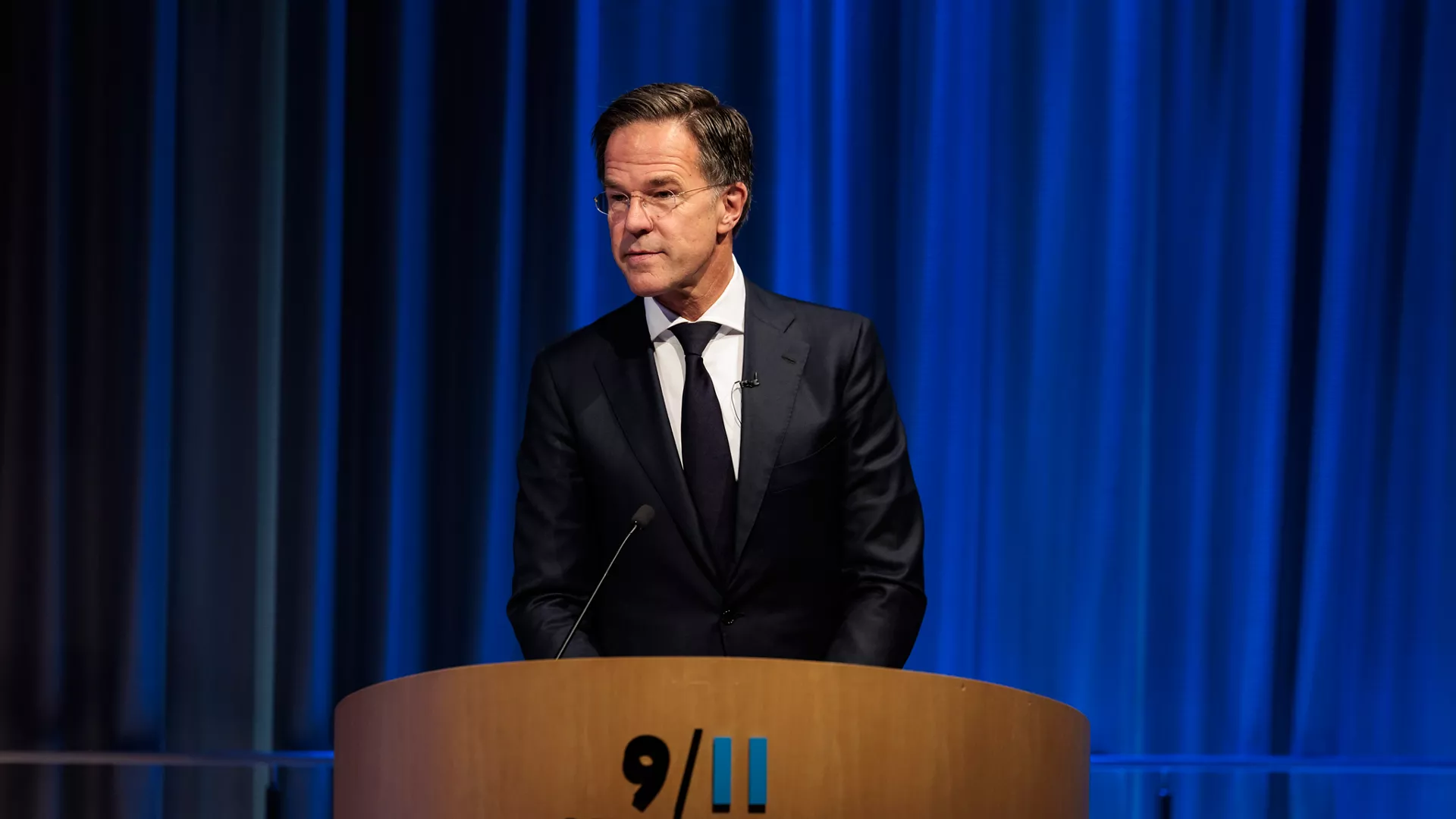


NATO Secretary General Mark Rutte
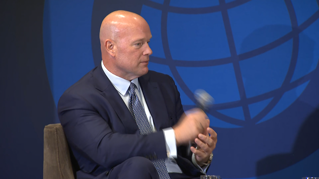
NATO Secretary General Mark Rutte and the Permanent Representative of the United States to NATO, Matthew G. Whitaker
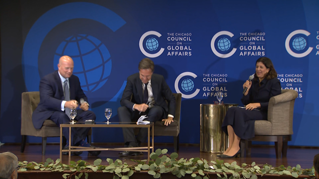
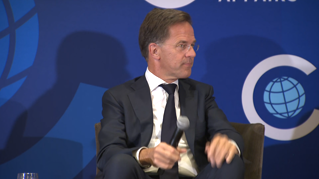
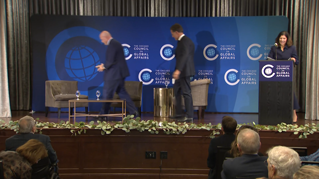
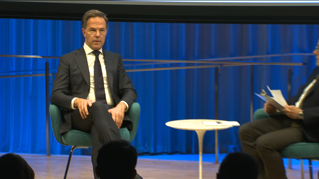
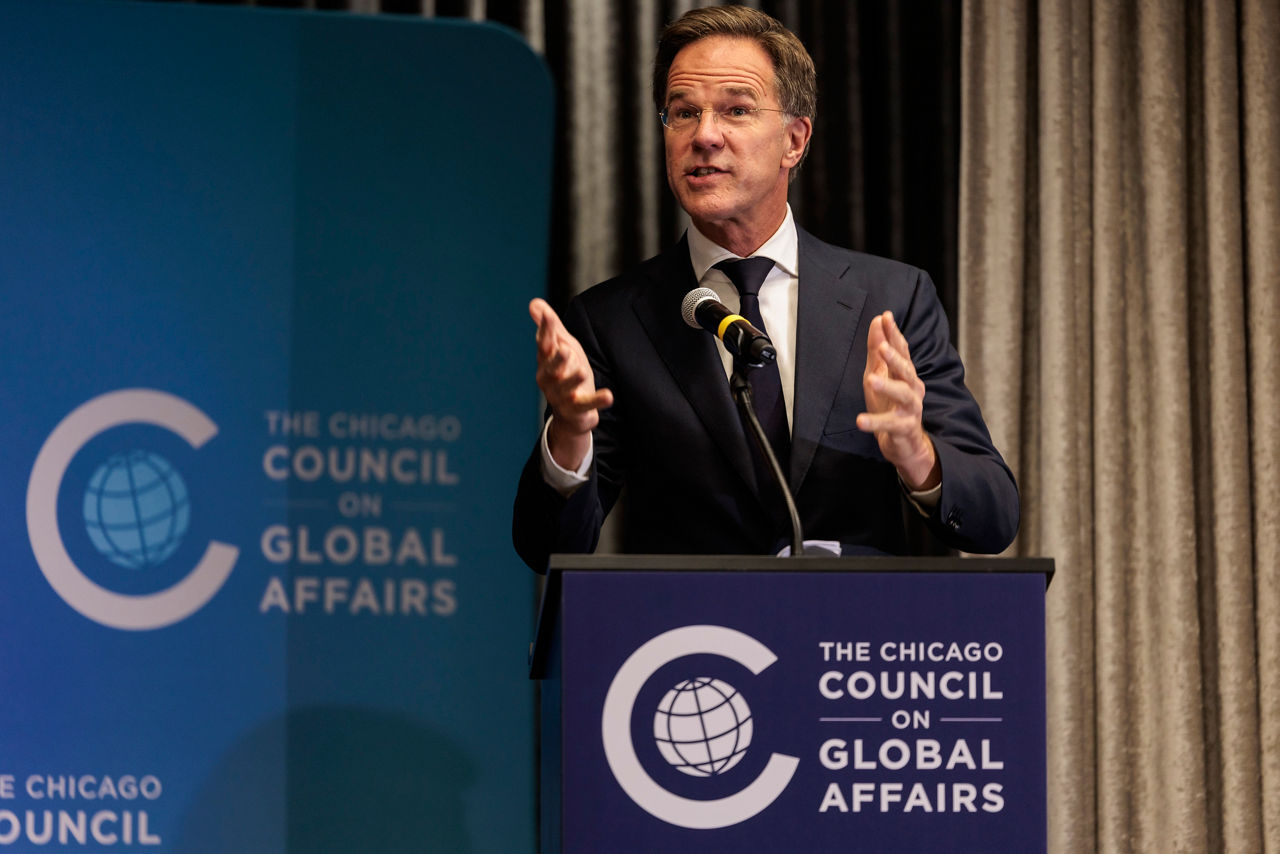
NATO Secretary General Mark Rutte participates in an event hosted by the Chicago Council on Global Affairs
NATO Secretary General Mark Rutte participates in an event hosted by the Chicago Council on Global Affairs
NATO Secretary General Mark Rutte and the Permanent Representative of the United States to NATO, Matthew G. Whitaker, participate in an event hosted by the Chicago Council on Global Affairs
NATO Secretary General Mark Rutte and the Permanent Representative of the United States to NATO, Matthew G. Whitaker, participate in an event hosted by the Chicago Council on Global Affairs
NATO Secretary General Mark Rutte participates in an event hosted by the Chicago Council on Global Affairs
NATO Secretary General Mark Rutte participates in an event hosted by the Chicago Council on Global Affairs
NATO Secretary General Mark Rutte with Iowa Governor Kim Reynolds and the Permanent Representative of the United States to NATO, Matthew G. Whitaker
NATO Secretary General Mark Rutte with Iowa Governor Kim Reynolds and the Permanent Representative of the United States to NATO, Matthew G. Whitaker
NATO Secretary General Mark Rutte with Iowa Governor Kim Reynolds and the Permanent Representative of the United States to NATO, Matthew G. Whitaker
NATO Secretary General Mark Rutte and the Permanent Representative of the United States to NATO, Matthew G. Whitaker
NATO Secretary General Mark Rutte and Permanent Representative of the United States to NATO, Matthew G. Whitaker, visit Iowa National Guard Joint Forces Headquarters
NATO Secretary General Mark Rutte and Permanent Representative of the United States to NATO, Matthew G. Whitaker, visit Iowa National Guard Joint Forces Headquarters
NATO Secretary General Mark Rutte and Permanent Representative of the United States to NATO, Matthew G. Whitaker, visit Iowa National Guard Joint Forces Headquarters
NATO Secretary General Mark Rutte and Permanent Representative of the United States to NATO, Matthew G. Whitaker, visit Iowa National Guard Joint Forces Headquarters
NATO Secretary General Mark Rutte and Permanent Representative of the United States to NATO, Matthew G. Whitaker, visit Iowa National Guard Joint Forces Headquarters
NATO Secretary General Mark Rutte and Permanent Representative of the United States to NATO, Matthew G. Whitaker, visit Iowa National Guard Joint Forces Headquarters
NATO Secretary General Mark Rutte and Permanent Representative of the United States to NATO, Matthew G. Whitaker, visit Iowa National Guard Joint Forces Headquarters
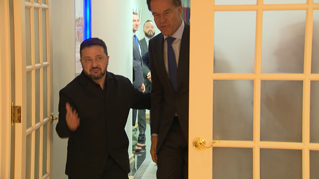
NATO Secretary General Mark Rutte meets with the President of Ukraine, Volodymyr Zelensky
NATO Secretary General Mark Rutte meets with the President of Ukraine, Volodymyr Zelensky
NATO Secretary General Mark Rutte meets with the President of Ukraine, Volodymyr Zelensky
NATO Secretary General Mark Rutte meets with the President of Ukraine, Volodymyr Zelensky
NATO Secretary General Mark Rutte meets with the President of Ukraine, Volodymyr Zelensky
NATO Secretary General Mark Rutte with the Permanent Representative of the United States to NATO, Matthew G. Whitaker
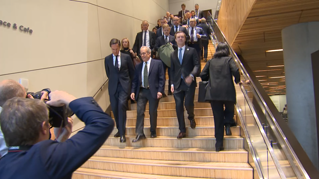
NATO Secretary General Mark Rutte visits the 9/11 memorial in New York
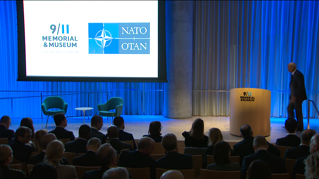
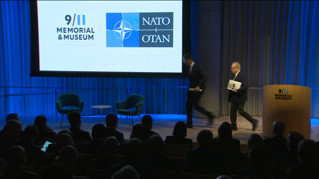
NATO Secretary General Mark Rutte gives a speech at the Memorial Event commemorating the 25th anniversary of the 9/11 attacks
NATO Secretary General Mark Rutte gives a speech at the Memorial Event commemorating the 25th anniversary of the 9/11 attacks
NATO Secretary General Mark Rutte gives a speech at the Memorial Event commemorating the 25th anniversary of the 9/11 attacks
NATO Secretary General Mark Rutte gives a speech at the Memorial Event commemorating the 25th anniversary of the 9/11 attacks
NATO Secretary General Mark Rutte meets with Mike Bloomberg
NATO Secretary General Mark Rutte meets with Mike Bloomberg
NATO Secretary General Mark Rutte meets with Mike Bloomberg
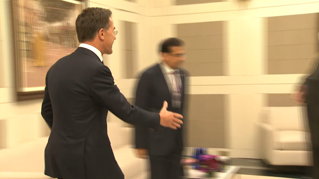
NATO Secretary General Mark Rutte meets with the Crown Prince of the State of Kuwait, Sheikh Sabah Khaled Al-Halad Al-Sabah
NATO Secretary General Mark Rutte meets with the Crown Prince of the State of Kuwait, Sheikh Sabah Khaled Al-Halad Al-Sabah
NATO Secretary General Mark Rutte meets with the Minister of Foreign Affairs of Poland, Radosław Sikorski
NATO Secretary General Mark Rutte meets with the Minister of Foreign Affairs of Poland, Radosław Sikorski
NATO Secretary General visits the United States of America