Fermer
Retour
Accédez aux ressources médiatiques officielles de l'OTAN. Un contenu de qualité professionnelle, diffusé sur les dernières actualités. La référence pour les professionnels des médias.
Accédez aux ressources médiatiques officielles de l'OTAN. Un contenu de qualité professionnelle, diffusé sur les dernières actualités. La référence pour les professionnels des médias.
Désormais, vous pouvez télécharger des versions complètes ou partielles de nos vidéos depuis notre site Web.
Si vous souhaitez également vous abonner à la newsletter et recevoir nos dernières mises à jour, cliquez sur le bouton ci-dessous.
Entrez l'adresse e-mail avec laquelle vous vous êtes inscrit et nous vous enverrons un code pour réinitialiser votre mot de passe.
Le mot de passe doit comporter au moins 12 caractères, sans espaces, inclure des lettres majuscules/minuscules, des chiffres et des symboles.
Cliquez sur le bouton pour revenir à la page sur laquelle vous étiez et connectez-vous avec votre nouveau mot de passe.
Good morning. This is an early start of the day.
Good to see you all, and this will be an important meeting, because it is the last big meeting we will have before the Ankara Summit.
So, we will discuss, obviously, the Ankara Summit, which will be all about delivering. Delivering on the spending, delivering on the industry, delivering on the support for Ukraine.
When it comes to spending, what we are seeing is staggering amounts of money coming in. Europe and Canada spending in 2025 more than $90 billion extra compared to 2024 which is almost a 20% increase in defence spending. So that's really great, and we need it on a path to get to the 5% defence spending to deliver our capabilities and the capability targets.
When it comes to industry, we see contracts emerging all over the place, but we need to do more, both in the US and in Europe, to make sure that we have the defence industrial output we need, and we need to keep Ukraine strong. Strong in the fight, this will be a key issue today. This is all about NATO 3.0, a stronger Europe in a stronger NATO. This is what we are building.
Today we will have various meetings, the Nuclear Planning Group, that's where we will start. Then we will have a meeting at the 32 and we will have a meeting with the Ukraine Defence Contact Group where I can announce President Zelensky will also participate this afternoon, so that is important. I had the honour of hosting him last night. He will be there for the UDCG, so a pack day with many meetings, all about delivering, making sure the money, the industrial output, support for Ukraine is there.
Question:
What do you expect Allies to be able to do, will need to be involved?
Mark Rutte, NATO Secretary General
Well, let me, let me say that I really welcome the deal. I think President Trump struck a good deal. It is important because what this deal does is degrade the nuclear capability. This is what the US did through this, basically from the end of February, making sure that the nuclear capability is degraded in Iran, the same when it comes to the ballistic missile capability, which is posing a threat not only to the Middle East but also to Europe and other parts of the world, but also to restore the freedom of navigation. As you've seen in the G7 statement from the leaders of the G7, they're absolutely considering what they can do to help in making sure the freedom of navigation is there. This is not directly NATO, but if NATO can play a role, of course, we are always willing to help.
Question:
When will you be able to say that Europe has been largely able to back fill the gaps left by the US cutting back its commitments to the NATO force model. And are you going to be able to say that?
Mark Rutte, NATO Secretary General
Great question. And let me be very clear on this. So, the NATO Force Model, and let me tell you, say this again, is a planning tool. It's a planning tool. So, what the US has said, and we knew this was coming, because the US has to take care of multiple theatres. They cannot spread their resources too thinly. So, what the US has announced already before, is that they had to lower somewhat their contribution to the NATO Force Model. The question yesterday came up; is this immediate or not? It is immediate, however, why I'm a little bit reluctant to say this is because this is a planning tool: So, what would happen in reality if war would break out? Let's assume that an Article Five situation would emerge, then all Allies, including the US, will max out what they can do to make sure we can fight the war. So, as a planning tool, we have to consider the fact that the US is lowering its contribution, still considerable, but somewhat lower than it was in the past. What you there see is that the Europeans are now backfilling it. Some of this is already done, some of this is in progress. We are working on that, and, of course, we still have work to do on other issues, but we are really in a good place there.
Question:
What did you discuss with President Zelenskyy?
Mark Rutte, NATO Secretary General
We discussed basically all the issues we always discuss, that is, how's the war, how the war is going. Of course, Ukraine is really doing well. We see the reports coming in of how many Russian losses there are each month, which are somewhere between the 30 and 35,000 a month now, which is really incredible. Then, of course, how we can help Ukraine to have the weapon systems, the air defence systems they need to be able to maintain the fight, but also to protect crucial infrastructure in Ukraine. So, we've discussed all these issues, and I must say the President was in a good place. He just came back from the G7, I think it was a very good meeting. Also, when you look at the G7 final declaration, when it comes to Ukraine, so there was a very good conversation.
Question:
I still don't get it. Why are you so confident that European Allies will be able to fill the gap? Because it seems a bit that you are downplaying the challenge right now.
Mark Rutte, NATO Secretary General
Yes, I am, because I've seen a lot of this in the media, which is fine. That's your job, but my job is to try to explain how I see things, and when it comes to the NATO Force Model, it is exactly that. It is a planning tool, so if war breaks out, we will all max out what we need to do to make sure we can fight the war. In the planning phase, it is important to know what we can count on, what is in theory there. The US has said they will lower somewhat their contribution. I cannot tell you exactly what, because that, of course, is classified, but the good news is that when it comes to that planning tool, that Europeans are already backfilling a lot of those resources. In other cases, we are nearly there, and there are still areas where we need more work to do. So, we are in a good place.
Question:
[Inaudible] fund the PURL Initiative as part of the Ukraine support loan.
Mark Rutte, NATO Secretary General
Well, obviously the discussions are constantly ongoing with all Allies to make sure that Ukraine has what it needs, and when it comes to the crucial flow of equipment, which is still flowing from the United States into Ukraine, for example, when it comes to interceptors for Patriot systems, and this is crucial for Ukraine, and I really want to thank the United States for continuing that flow of crucial equipment into Ukraine. Obviously, I go cap in hand with my colleagues here amongst all 32 Allies and any relevant organisation to make sure we get the money, and at the moment we are in a good place.
Question:
You're saying we can still count on those capabilities in case of a conflict, but what in case of a simultaneous conflict?
Mark Rutte, NATO Secretary General
No, I'm not saying we can always count, of course it is a planning tool. So, when the United States says we have to make sure that if we get stretched too thinly, because it might be a multiple theatre war, you never know, then we have to make sure that what we promised NATO Allies to count on in that case, that we are exactly clear what they can count on from planning purposes, that is clear that they had to lower their contribution to the NATO Force Model, which now has to be backfilled. What I'm saying is, when I say it is a planning tool, it is a planning tool. So, if war breaks out, clearly what all Allies will do, including United States, is max out whatever they can do. I'm not saying that they can still do what they promised to the NATO Force Model, but they will still max out, and it depends, of course, on what type of war it is, what other constraints there are, what other challenges there are. But I'm pretty confident that we will fight that war and we will win it.
Question:
You said that the G7 was a good moment for Ukraine. Would you say it's a game changer? Will Donald Trump eventually do something for Ukraine?
Mark Rutte, NATO Secretary General
Donald Trump has done a lot for Ukraine. First of all, he was the one breaking the deadlock with President Putin in February last year. He started again to dialogue with him to get this work done. It was only the American president who could do that, and he consistently, with Jared Kushner, with Steve Witkoff, with Marco Rubio, worked on this. So this is one. Then, when it comes to supplying Ukraine, there's the crucial aid they need. When it comes, for example, to the interceptors for the Patriot systems, it is the US President making that possible, paid for by European and Canadian Allies, and that crucial flow is going into Ukraine as we speak, and they need it to defend their cities and their critical infrastructure. So the US is there all over the place, and what was good about the G7 is that was joint conclusions by the seven leaders on their joint support for Ukraine.
Question:
The NPG will give a statement for the first time in 20 years today. What is the reason or occasion?
Mark Rutte, NATO Secretary General
You will read the statement when it comes out. Final question.
Question:
Pete Hegseth, the Secretary of War, comes here after almost a year ago, he was just in October, after that came Under Secretary, so we don't know, is it good news or bad news for European Allies? What do Secretary Pete Hegseth expect?
Mark Rutte, NATO Secretary General
Pete Hegseth is a great friend. He's a great friend of his Alliance. You have seen the speech last year in February where he said, Hey, US is completely committed to NATO, but we have an expectation. The expectation is that you guys in Europe and Canada will equalise the spending with what the US is spending. My predecessor had already put in place a system agreeing on which capabilities we collectively need, which would bring us to a place where we would equalise with the United States. The problem was the decisions had not yet been taken. In The Hague we were able to do that. What we are now seeing is that the money is coming in. The fact that Germany will double its defence spending by 2029 compared to 2021, that, as European and Canadian Allies, we are now spending over $90 billion extra compared to last year. So we are, and that's the max you can do in one year, because there is some limit to the absorption capacity from year to year, so this is really a lot of money, almost 20% more in defence spending. It shows we are delivering. What Pete Hegseth is doing is working on the defence industry in the United States to make sure it opens up and produces more is crucial for the US but also for European Allies. Also jobs involved here on both sides of the Atlantic, so he is doing everything he can. He's a great friend and doing everything he can to make this Alliance stronger. Final question, because you thought you were having the final question, and she took over.
Question:
Okay, Secretary General, we have heard that the EU Council is trying to establish contact with President Putin's office. What is your thought on that?
Mark Rutte, NATO Secretary General
Well, clearly, in the EU, that discussion is going on. I completely respect that. I understand why the discussion is going on, but it is a European discussion where NATO is not involved. But I, of course, closely follow this. We constantly update each other, and, but this is purely a European discussion, and as NATO, I should not, should not comment. So we'll see you all later today. We will have two more press conferences, one about the DMM, and then another one about UDCG. So you will be busy, I will be busy. See you later.


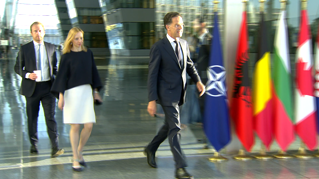
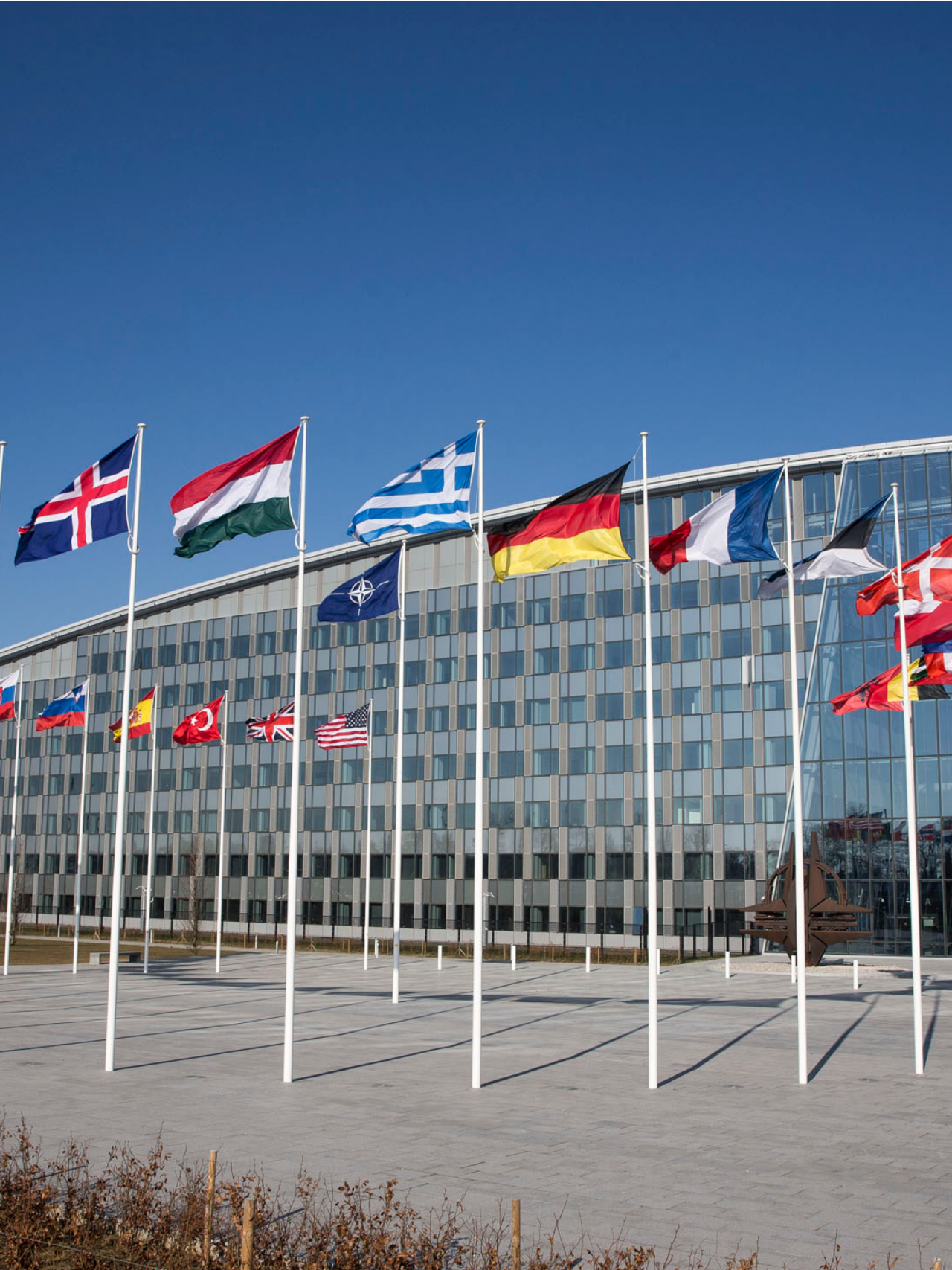
Doorstep statement by NATO Secretary General Mark Rutte ahead of the meetings of NATO Ministers of Defence in Brussels
Doorstep statement by NATO Secretary General Mark Rutte ahead of the meetings of NATO Ministers of Defence in Brussels
Doorstep statement by NATO Secretary General Mark Rutte ahead of the meetings of NATO Ministers of Defence in Brussels
Doorstep statement by NATO Secretary General Mark Rutte ahead of the meetings of NATO Ministers of Defence in Brussels
Doorstep statement by NATO Secretary General Mark Rutte ahead of the meetings of NATO Ministers of Defence in Brussels
Doorstep statement by NATO Secretary General Mark Rutte ahead of the meetings of NATO Ministers of Defence in Brussels
Doorstep statement by NATO Secretary General Mark Rutte ahead of the meetings of NATO Ministers of Defence in Brussels
Doorstep statement by NATO Secretary General Mark Rutte ahead of the meetings of NATO Ministers of Defence in Brussels
Doorstep statement by the NATO Secretary General