Close
Back

From now on you can download videos from our website
If you would also like to subscribe to the newsletter and receive our latest updates, click on the button below.
Enter the email address you registered with and we will send you a code to reset your password.
The password must be at least 12 characters long, no spaces, include upper/lowercase letters, numbers and symbols.
Click the button to return to the page you were on and log in with your new password.
Good afternoon, and thank you for joining us today for the launch of our 2025 Annual Report.
This report is basically a summary of what we have discussed, what we have decided, and also what we have done as NATO throughout 2025.
And it was quite an eventful year.
We see clearly that our world is constantly changing. And we are adapting to ensure we remain prepared.
Putin’s war of aggression continued, as did support for Russia’s war from China, from Iran, North Korea, and Belarus.
We saw increasingly reckless Russian behaviour in the context of NATO territory – whether through airspace violations or hybrid threats.
China continued its military buildup.
The threat from terrorism persisted.
The threat picture across 2025 made clear the need to do more. And throughout the year, NATO continued to come together to ensure that we are ready and able to respond to any threat, across all domains, both now and in the future.
Last year, NATO began a new chapter in our common defence.
We recognised, collectively, that this complex and more dangerous security environment called for a bolder approach, one that demands a stronger, a fairer, and a more lethal Alliance.
And that is why, at the NATO Summit in The Hague, Allies took a historic decision to raise defence investment to 5% of GDP.
And as Allies are now allocating more to invest in crucial capabilities, we need to ensure that the supply meets our demand.
So we also agreed to ramp up defence production and innovation, to ensure our industries can provide what our militaries need.
These were defining decisions that will shape the future of our Alliance for years to come.
The figures in the report speak for themselves.
We have made significant progress on defence investment, and NATO is stronger today than it has ever been.
In 2025, for the first time, all Allies met the goal agreed in 2014 – to invest at least 2% of their GDP on defence. And many went much further.
In fact, we saw [a] 20% increase in what Europe and Canada spent on defence in 2025 as compared with 2024.
Continuing this crucial trend will be a priority in the years to come.
For too long, European Allies and Canada were over-reliant on US military might.
We did not take enough responsibility for our own security.
But there has been a real shift in mindset.
A collective recognition of our changed security environment.
And as a European, I am proud of what we are doing – the tremendous progress being made.
We are investing because it is crucial to be able to address the threats we face.
Russia remains the most significant and direct threat to security in the Euro-Atlantic area.
In the past year, Russia has tried to test our security, and disrupt and divide our societies – whether through airspace violations, sabotage and malign cyber activities, or political interference and information threats.
NATO’s response to reckless provocation – whether from Russia or others – has been clear, swift and decisive.
Damage to our critical undersea infrastructure prompted the creation of Baltic Sentry to better guard against potential threats to our undersea infrastructure.
In September, airspace violations from Russian drones over Poland led to the creation of Eastern Sentry, further strengthening Allied deterrence along the eastern flank, from the High North to the Black Sea.
Through both Baltic and Eastern Sentry, we are testing new solutions and integrating innovation, including through the use of drones and counter-drone technologies.
And as we continue to invest in the deterrence and defence of the whole of NATO, we also continue to provide crucial support to Ukraine.
Our security is so closely connected.
And that’s why in 2025 Allies provided the overwhelming majority of military assistance to Ukraine.
This was in addition to ongoing humanitarian support and other forms of non-lethal aid.
In February 2025, we opened JATEC in Poland – the first joint NATO-Ukraine centre to share lessons learned from the war.
In the summer of 2025, we launched PURL, providing billions of Euros worth of vital American military hardware to Ukraine, paid for by NATO Allies and partners.
We continued to deliver crucial support – through NSATU, our command in Wiesbaden – and we worked with Allies and partners who formed the Coalition of the Willing in 2025 to ensure that, once the war comes to an end, there are security guarantees in place to secure the peace.
2025 was a landmark year for NATO. This is clearly demonstrated and documented in this annual report, which I am proud to share with you today.
And with that, I am ready to take your questions.
Lorne Cook, Associated Press
You said again today that NATO is stronger than it's ever been. And when I read the document, I feel this collective, kind of dissonance between what we see in the world and what we have to say about NATO. We've got an ally that had its designs on Greenland, a bunch of other Allies had to go there with a trigger force to keep this Ally away. We've had that Ally calling others cowards. We have the Secretary of State and Defense who don't turn up. Russia remains the biggest threat to NATO and doesn't seem like President Putin is intimidated at all, really, and you've said yourself, within the next few years he could launch an attack somewhere in Europe. How is it that NATO is so strong in these circumstances?
NATO Secretary General Mark Rutte
Well, let me answer that question head on, and I've said it before, I don't believe that with[out] the present American administration, the whole of NATO would have been reaching the 2% at the end of 2025. Take some big economies like Spain, and Italy, and Belgium. and Canada were far from the 2% mark. They all got to the 2% and this is bringing billions and billions of euros / dollars to spend on defence. And then at The Hague Summit, without the present administration in the United States and the present President, I don't think we would ever have reached this commitment to spend 5% of our GDP on defence, including the 3.5% on core defence. And then finally, I think it was very important that the new American President coming in, Trump 47, opened the dialogue again with Russia to end the war in Ukraine. Because in the end, it was only the United States, I believe, who was able to break that deadlock. So, that would be my direct reaction to your question.
Teri Schultz, DW
Just to follow up a little bit on Lorne, you wouldn't have the higher defence spending, but you also wouldn't have had the insecurity that many European countries felt by the threat of one Ally to attack another. But more broadly, when you look at the threat picture as you give it, and you say that it's much more dangerous, the Middle East doesn't come up. And yet, so many of your public statements over the last weeks have been about how NATO Allies need to support the US in its efforts on Iran. I mean, do you feel that this is now a NATO issue? And how much are you working behind the scenes to do what you have advocated, and that is support the United States in its attacks on Iran? Thank you.
NATO Secretary General Mark Rutte
Thank you for that question and this is not new. The Alliance, NATO, has for some times been clear, even before I became Secretary General, that Iran cannot possess a nuclear weapon. And NATO has also long recognised the threat Iran's missile programme posed to allies and their interests. And what the United States is currently doing is degrading those capabilities, both the nuclear and the missile. And take as an example what happened with Diego Garcia, the UK/US base, which was targeted by a missile which therefore could reach 4000 kilometers. So, the logical conclusion of that missile launch is that Iran has now capabilities increasingly dangerous for Allies.
Of course, the good news is that NATO stands firmly with all Allies. We successfully, as you know, intercepted ballistic missiles heading to Türkiye from Iran on three separate occasions. And when it comes to making sure that sea lanes are opening up again, and if they have opened up again, that collectively, we are able to, as a world community, to make sure that ships can sail there. We have now 30 countries coming together, many from NATO, but also Japan and Korea, Australia and New Zealand, and Bahrain, and the UAE, but most of them from NATO, to discuss and then implement the question of the what, the where and the when, when it comes to making sure that the sea lanes stay open.
Nick Beake, BBC
The first question is on Iran. You told our partners at CBS News that President Trump is doing this to make the whole world safe. I was just wondering how you can argue that in the short and medium term, and also how concerned you are about the impact on Ukraine? Because you talk about how it's so central to Europe's security, and we've seen already how it's really benefiting President Putin what's happening in terms of the easing of sanctions on oil, and that the Ukrainian conflict is being overshadowed, which I know is concern of yours.
And secondly, if I may, you have made a conscious decision not to criticise President Trump publicly. You are among a number of figures on the global stage who have done that, but just last week, he was saying that NATO Allies were cowards for not joining what's happening in Iran, joining him and Prime Minister Netanyahu. And in that Truth Social post, he ended it by saying: “We will remember.” Now whether or not President Trump is aware of this, but that has real echoes and chimes with words of remembrance that for more than 100 years, people in Europe in particular have been using that sort of phrase “we will remember them”. So, I just wonder, I'm not inviting you to criticise President Trump, because I know that's something you've been reluctant to do. But how does that touch you? How does that feel, you, when you see that sort of post?
NATO Secretary General Mark Rutte
Well, thank you. Let me, there are various elements in the question. So, first on Ukraine, the good news is that essential equipment into Ukraine continues to flow, and that is important, because we have to do everything. And NATO is very much involved, through the command in Wiesbaden, through JATEC, individual nations providing support to Ukraine, including the essential equipment coming from the United States, paid for by European Allies, getting into Ukraine. So that continues, that's good.
Then when it comes to the comments of President Trump, as I said also on CBS, what I've been seeing is some frustration with him, about the Europeans needing to take time to react to his request, when it comes to this question of making sure that sea lanes are open. And I said, hey, there is a reason for that, and the reason is that for good reasons, the US was not able to consult with Allies because they wanted to keep the campaign secret. And again, for good reasons, to make sure that nobody knew what happened on that Saturday morning. There is always a risk if you inform too many people that things might leak. But that also had the disadvantage that it takes time for the Europeans to get organised.
The good news now is that, thanks to the leadership from the United Kingdom, France and others - there were originally six countries, the UK, France, Italy and Germany and Japan and the Netherlands. Then on Friday, 22 countries, and by now, over 30 countries, have committed to come together to discuss the what, the where, and the when, when it comes to making sure that the sea lanes stay open. And this is exactly also to the request of President Trump. And more generally, when it comes to the Middle East, and the situation with Iran, NATO has been consistent over the years that NATO does not want, as an alliance, and this is a collective position, for Iran to get its hand on either a nuclear capability, or a missile capability.
Irina Somer, News agency, Interfax, Ukraine
Follow up what you just said, that American weapons continue to flow to Ukraine. Washington Post just reported that Pentagon might consider to deliver, to redirect, weapons which is going to Ukraine, to Middle East. So, what do you know about it? And because it's mentioned that it is already weapons, which already was pre-ordered in the frame of the PURL, NATO program for Ukraine. So, what do you know about this, and what NATO is going to do, or would do, if it will happen?
NATO Secretary General Mark Rutte
Well, as I already mentioned in reaction to another question, this crucial equipment through PURL, so this US vital equipment for Ukraine, including interceptors, is continuing to flow into Ukraine. And let me add that since the launch, and that was of course last summer, PURL has now supplied around 75% of all missiles for Ukraine's Patriot batteries and 90% of the ammunition used in other air defense systems. So, this is an important program, again, continuing to flow.
Şerife Çetin, Anadolu
You've mentioned your efforts regarding the formation of a multinational coalition outside of NATO to address the situation in the Strait of Hormuz. But I want to focus more on the NATO dimension of the conflict. And you've mentioned it yourself, in light of the recent developments in the region, the ballistic missile attacks on Türkiye a NATO-territory, on three occasions actually, I would like to know, is the Alliance taking or planning to take additional measures to augment Türkiye’s security? Could you kindly elaborate on those?
NATO Secretary General Mark Rutte
Well, obviously I cannot go into the more secretive military planning, but I can assure you one thing: NATO is the strongest military alliance in world history. And we will do everything as 32 Allies, the United States, Canada and the 30 Allies in Europe, to do everything to defend every inch of NATO territory. And taking out these three missiles heading for Türkiye is clear evidence of that, and we will continue to do so, and making clear to any adversary that we will do everything necessary to indeed make sure that we are safe.
Elizabeth Malo, Breaking Defense
This week, the CEO of Rheinmetall warned that European, American, and Middle Eastern munitions stockpiles were nearly empty. In the 2025 report, it says that, in line with the updated Defence Production Action Plan, greater spending would allow for a rapid expansion of such production. How do you explain these claims that NATO countries still have near empty munitions despite years of warning, and what concrete steps will you take to fix that gap?
NATO Secretary General Mark Rutte
Thank you so much, and this is clearly one of the main focus areas, also in Ankara at the NATO Summit, no doubt. How to make sure that we ramp up defence production, because defence production, in the end, is an integral part of our overall deterrence and defence. It is the men and women in uniform, but also making sure they have what they need, to fight the wars which others want to mount on us, and we then will defeat them if they try. When it comes to ammunition particularly, as you know, there is some good news that we have been able to increase the production of ammunition six-fold compared to a couple of years ago, but still, clearly, there is more to do.
And when you look at the broader defence industrial base, and this is an issue which we have to confront, both in the United States and Canada, as well as in Europe. The defence industrial base at the moment is simply not producing enough, and we are not fast enough in implementing innovation. We are getting better, but we have to do more. And one of the reasons why we started the two Sentries last year and also Arctic Sentry this year, is not only to defend what we try to defend and will defend through the Sentries, but also to make sure that we know where the gaps are, which capabilities we need to develop, including when it comes to innovation. Take, for example, drone and anti-drone technology. Here, as also is now the case in the Middle East, we can learn from Ukraine.
But there are other examples, also examples of how to make sure that the latest innovation, AI technologies, are an integral part of our overall defence. So this is crucial. I know the American president had a meeting with the “Five Primes” in the US. I spoke with some of the CEOs afterwards. That was a very effective meeting. We are doing the same, of course, here with national leaders like President Macron and others sitting with defence industry here in Europe. And finally, this is, of course, a transatlantic issue, but it is also a transatlantic defence industrial base. More and more we see European companies investing in the United States, but we also see US companies setting up shop here to, for example, produce missiles for Patriots.
Thomas Gutschker, FAZ
Two questions, please. The first one, there's a report out today claiming that Russia now delivers combat drones to Iran. Can you confirm this? Does NATO have any information about this? So, the other way. And the second question completely unrelated. The former Lithuanian Foreign Minister Landsbergis has called for a NATO investigation into whether Hungary, and especially Hungarian Foreign Minister Szijjártó, has leaked confidential information from NATO meetings. You've heard what he said about his behaviour before and after EU meetings. Do you see reason of concern that he's behaved in the same way when he met with fellow NATO colleagues, and if so, would you launch an investigation? Thank you.
NATO Secretary General Mark Rutte
Thank you very much. On the first question, of course, we know that Russia, Iran, North Korea, and China are working closely together. We know that Iran is one of the suppliers of essential gear for Russia to maintain and solidify its war against, its unsolicited provocation, war against Ukraine. That's clear. So it tells you something when these reports come out that Russia is sharing so much also with Iran. So let's not be naive about it. I cannot tell you what intelligence is telling us, because obviously that's intelligence, so that we keep that secret. But you can see yourself from open sources, and we noticed for some years that there is a close connection between Iran, Russia, North Korea and China.
And then on the second question, all 32 Allies, they all agree that Russia is our most significant threat. There is no discussion about that threat to our security now and longer term. And also, that all 32 allies are totally committed to make sure that we have the collective defence in place, we take the necessary steps required to ensure indeed that we can deter and defend. So we are working together, together with all Allies on this every day.
Step Vaessen, Al Jazeera
I want to clarify something, because you have been under criticism in the last couple of days because of the interviews you gave in the weekend. European diplomats felt you overstepped your role, because the mood in Europe was not endorsing the war Israel and the US are now fighting, but there was a, much more hesitation, and also the fact that you said all these countries are coming together; the message the European nations were saying that they only want to help when there is a cease fire, or at least the fighting has stopped. The message you're giving now sounds different. So, could you please respond to this criticism and clarify exactly what these 30 countries are going to do?
NATO Secretary General Mark Rutte
I think I'm still saying the same, and it is that, as I said also on Sunday, that NATO has always been consistently clear that the whole of the Alliance, that obviously, for Iran to possess a nuclear or a missile capability poses a threat, not only to the region - an existential threat, by the way, to potentially Israel - but also a threat to Europe. And Iran is an exporter of chaos to the region and to the world for many years now. Let's not be naive about that, and what the United States is doing now is degrading that capability. And yes, I applaud that.
In the Alliance, you will always have different views. That's unavoidable. It is an Alliance of democracies, but when it comes to not accepting Iran having a nuclear and missile capability, we all agree. The whole of the Alliance has also condemned the indiscriminate attacks of Iran on its neighbours. That was in a meeting only last week with ambassadors also of the Gulf states here at NATO headquarters. And then, indeed, when it comes to this group of countries coming together, most of them from NATO, to make sure that the Strait of Hormuz, the sea lanes, are open. And indeed, that begs the question, given the fact that the war is ongoing, what does that mean in terms of the what question, the when question and the where question. Actively now, countries are working together, and the United Kingdom is leading that effort under Prime Minister Starmer and the senior military in the United Kingdom, together with France and others, to make sure that those questions will be answered.
And this is to President Trump's request. He said, hey, I would have rather have that seen earlier starting and there, my reaction is, Europe needed time because the United States, for good reasons, was not able to inform Allies of what was going to happen now, three and a half weeks ago, on Saturday morning, because that would have, yeah, that would have potentially led to a leak, or whatever. That is always a risk when the US had the opportunity to take out Iran's leadership. So I totally understand that. I don't criticise that, but it means that it takes some time for Europe to come together, and that's happening as we speak.
Lili Bayer, Reuters
I'd actually like to follow up on Irina's question. So in that same Washington Post story, it said that the Pentagon had actually notified Congress that it intended to divert about 750 million in funding provided by NATO countries through PURL to restock the US military's own inventories, rather than to send additional assistance to Ukraine. What is your reaction to this? And was NATO notified of this change? Thank you.
NATO Secretary General Mark Rutte
Well, again, it's not for me and very difficult to do this in an open presser, but to comment on individual weapon deliveries. But I can assure you that the critical support from the United States into Ukraine, paid for by Allies, so this famous abbreviation PURL, continues to flow. And this is crucial, because this is next to the intelligence the US is sharing with Ukraine, which is essential. It is also essential defence industrial output from the United States, from their stockpiles when it comes to, for example, interceptors for Patriot systems, but also other crucial and vital military gear.
Xenia Polska, Deutsche Welle Ukrainian
So, based on the report and what you have already mentioned about Ukraine, NATO is now coordinating the arms deliveries to Ukraine. It's coordinating the training for Ukrainian army. It is learning its lessons, as you said, from Ukrainian war experience through NSATU for coordinating and JATEC for the lessons learned. We have heard news about the role of Ukrainians also in different military trainings and manoeuvres, and given this level of operational involvement and cooperation, would you describe Ukraine as already part of NATO's defence ecosystem, even without the formal membership?
NATO Secretary General Mark Rutte
Well, let's be very precise on this. NATO is not party to the conflict. So NATO is indeed coordinating all the support, the training and the weapons deliveries, and capturing all the lessons, and making sure we share them within NATO. And then, of course, we also share our insights with Ukraine through this Joint Education and Training Centre in Poland, the so called JATEC. You're totally right on that. But then, I don't want to put a particular frame on it. There is a path into NATO for Ukraine, which was agreed at the Washington Summit in 2024, that path will take time, because we know there are various Allies not accepting NATO membership at the moment, so that is not on the cards for now.
But we also know that through the coalition of the willing, together with United States in Paris in January, under the leadership of President Macron, we agreed on what the security guarantees for Ukraine should look like, post a cease fire or a peace deal, preferably a peace deal, if not, then at least a long-term cease fire. And I think that is extremely relevant, because in the end, if it is not NATO membership, and again, that's not on for now, we have to make sure that when the war stops, Putin will not try again. Because he knows - and this is why we need the security guarantees - that the reaction will be devastating, and that is collective: NATO countries outside NATO said this, Coalition of the Willing, many NATO countries, including United States, involved
Ana Crespo Guillen, Estrella Digital
You said that the trend of increasing defence spending will be a priority in the years to come. Spain has reached a defence spending of 2% of its GDP in 2025 and is therefore approaching what it considers its ceiling, which is 2.1%. At the same time, other NATO Allies that have also reached the 2% benchmark are expected to more than double their efforts toward 5% by 2035. So how do you assess the fact that over the next decade, Spain's planned increase in defence spending would be limited to around 0.1 percentage points, while most other Allies are expected to make significantly larger increases? Thank you so much.
NATO Secretary General Mark Rutte
But let me start by commending Spain, because at the beginning of last year, Spanish defence spending was about 1.3, 1.4% and in April, I got a call from Pedro Sanchez, the Prime Minister, saying, we will go to the 2%. He did. This is billions and billions extra structurally spent on defence by Spain. It was one of the four bigger economies, not on 2%, the others were Italy, Belgium and Canada. And then there were some very important Allies, but little bit smaller economies, like Slovenia and Luxembourg. They all reached 2%, including Spain. Spain is deployed all over NATO in Forward Land Forces in missions. You have a Patriot battery securing the airspace in that part of Europe, Türkiye, but also wider to make sure that we can defend ourselves and every inch of NATO territory.
So, Spain is really doing what Spain needs to do. And yes, at the NATO Summit in The Hague, Spain signed up to the statement, but it was also you know, the disagreement, the agreement to disagree, that we believe Spain needs to spend 3.5 to get to the Capability Targets. Spain thinks it can be done on 2.2 and future will tell who is right. I think I am. We will see. But that is not new. That was the Summit in The Hague. But what happened last year really, let me commend Spain for what Spain is doing.
Ardy Stemerding, NOS
Good afternoon, Mr. Rutte. President Trump is calling your organisation an organisation of “cowards”. You're not responding to that. Is that your strategy to keep the Americans on board?
NATO Secretary General Mark Rutte
Well, let me be clear, as Secretary General, of course, the Alliance is very dear to me. Otherwise, I would not have this role. But, as I said before, the United States under this President is doing stuff which is quite crucial for the Alliance. But then I have to repeat a little bit of this, starting again the dialogue with Russia, breaking that deadlock, getting the peace process going. It is making sure that the whole of the Alliance came up to the 2%. I'm, again, not sure whether we would have reached that at the end of last year without President Trump, and then in The Hague, we agreed on the 5% spending target. And this is doing two things, one of this equalising with the US, that is taking out this big irritant that the Europeans and the Canadians were spending less than the Americans, problem basically since Eisenhower, so hey, it was about time to solve that issue.
But more importantly, it is making sure that, as an Alliance as a whole, we have what it takes and what we need to deliver on the Capability Targets Defence Ministers agreed last June in 2025, so that if the Russians, or whoever adversary, wants to try something against this, we are not only now - yes, now we can defend ourselves - but also longer term, we can do that. That's why we need to spend that 3.5% core defence spending, 5% overall. And that is all, yeah, I think also in a large part - and not every European likes me to repeat this, but it is true - without Trump, I don't think it would have happened.
Oliver Baube, AFP
I would like to come back on what you said on Ukraine, that essential equipment continues to flow to Ukraine. The question is, for how long? And we are talking here about missiles, interceptors, like Patriots. I mean, are you concerned that the stocks might be exhausted very soon, if the war in Iran lasts longer? Thank you.
NATO Secretary General Mark Rutte
Well, I mean, yes, the flow is continuing. And we also know that in the Middle East and a lot of stockpiles are being used, that's clear. And there was this other issue already, and it is the defence industrial base, that we have to produce more. Your country, France, has some of the most impressive defence industrial companies in Europe, but please ask them to produce more, and the same I could say to colleagues from Germany. Germany - and by the way, Italy, the Netherlands, others - have some of the best defence industrial companies in this part of the world, but they need to produce more.
Extra production lines, extra shifts, opening new factories. The money is there. There was always the problem: “Can we have the 10-year safety and security in money supply?” Yes, you have it now, because tens, hundreds of billion extra spent on defence. And we know that about 20 to 30% is spent on defence industrial output. So, the good news is the flow is continuing. And at the same time, we know, even without the campaign now against Iran, that there was an absolute necessity to ramp up our defence industrial production. And this is an issue which Europe has to face, which the US has to face, and collectively, as a transatlantic defence industrial base, we have to face.
Tamara Nutsubidze, Euroscope
Tamara Nutsubidze, independent media platform from Georgia, Euroscope. Thank you for this opportunity, Secretary General. I read in your report about Georgia that Allies also revised NATO's engagement with Georgia in light of the 2024 parliamentary elections. So, it is very important for us. Can you tell us more details? What was revised, what was reprioritised as here is mentioning? And also NATO not only a military organisation, it's also a political organisation. So how do you estimate recent developments in Georgia? I mean, these repressive laws against media, NGOs, civil society, opposition leaders are in the prison. So, can you tell us more detail? Thank you.
NATO Secretary General Mark Rutte
Yeah. First of all, when it comes to Georgia, obviously, we coordinate closely with the European Union. When it comes to the relationship between NATO and Georgia, we think there is merit in keeping that relationship going. But, of course, we also have to recognise recent developments, and that's why we call upon Georgia to return to the path of a more pro-EU, European forward-looking approach, including making sure that all the developments, and let's say the whole trajectory Georgia was on in terms of democracy, rule of law, that that has continued, and obviously there are serious worries at the moment. So, we have the dialogue, we have the discussion, but we have taken the position that it is better to keep the relationship going and then having that avenue to discuss those issues than to say, ‘hey, we don't like it. We end the relationship altogether’.
Milda Vilikanskytė, LRT
Secretary General, question on Ukraine. You talk about overwhelming support from NATO and that United States are crucial for peace negotiation. Yesterday, from Ukraine, we heard that United States pressure Kyiv to give up Donbas region in exchange for security guarantees from American side. Would you say it would be a fair deal, fair offer or fair ask from a country who defend itself for more than four years, to give up territory in exchange of security guarantees? Thank you.
NATO Secretary General Mark Rutte
Well, let us first of all agree that all of us want this war to end. That is the United States, European part of NATO, Canada, but also Ukraine. Also Ukraine wants this war to end, but it has to be a lasting end, and that means that, after war ends, we have to make sure that Ukraine is sovereign, that Ukraine is secure, and we have seen a speeding up of the peace process thanks to President Trump - and I mentioned it already, commending the US efforts there - but for Ukraine to be not only sovereign, but also secure, key in all of this are the security guarantees. They are absolutely vital. And this is why it was so important that in Paris, in January, the United States and the Coalition of the Willing agreed on the security guarantees, because this prevents Vladimir Vladimirovich Putin from ever attacking Ukraine again, post a long-term ceasefire, or preferable, a full peace deal. And, of course, when it comes to territory, any decisions on territory clearly are for Ukraine to take.
Maria Vasileiou, TA NEA
I would like to go back to the Iranian threat and Europe following the launch of ballistic missiles against Diego Garcia. Could you elaborate a bit more? Because you have repeatedly been saying in the past that Russian missiles can reach European capitals in just a few hours. Is this the case now with Iranian missiles? Are you thinking along these lines these days? And more precisely, following the Iranian missile strikes on Turkey and the drone attacks on British bases in Cyprus, what is your concern? What is NATO’s concern now on the security in the eastern Mediterranean? Thank you.
NATO Secretary General Mark Rutte
Well, on your first question, let's be lucid and conscious of the fact that Diego Garcia is 4000 kilometres away from Iran. So, if a missile from Iran is able to reach Diego Garcia, that is a relevant development. And what I was saying before to one of the questions asked, that it means that Iran already had capabilities, which are dangerous for Allies, but this means they are increasingly dangerous for Allies. And you can do the math yourself, 4000 kilometres.
So, in that sense, it's clear that where NATO Allies collectively, unanimously, agreed that two things should not happen, one is Iran having a nuclear capability, and secondly, Iran having its hands on a missile capability of this magnitude, then clearly there is reason to assume that there is an increasingly more dangerous situation for Allies. The good news, of course, is that Allies are prepared. We can defend ourselves. NATO is a very strong Alliance. You have seen that in Türkiye, with the three missiles heading for Türkiye. And let me say to all citizens in NATO territory, that our military, the leadership of the Supreme Allied Commander, they are on this, all of them, to make sure that we have what it takes and what we need to defend every inch of Allied territory.
NATO Spokesperson Allison Hart
Thank you so much for joining us today. That's all we have time for. But very grateful to see you and have a good afternoon.
NATO Secretary General Mark Rutte
Have a great afternoon. Thank you.
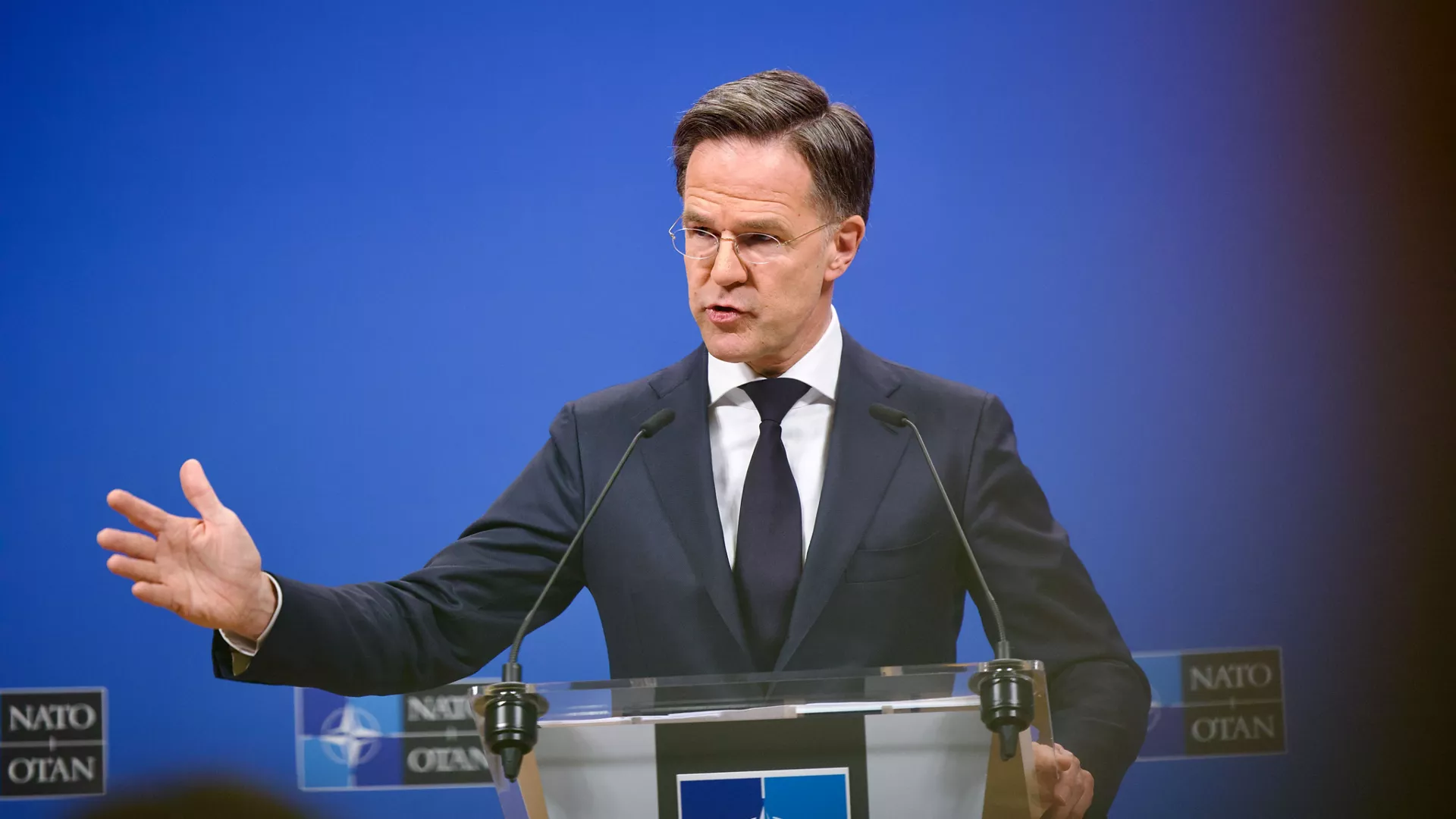

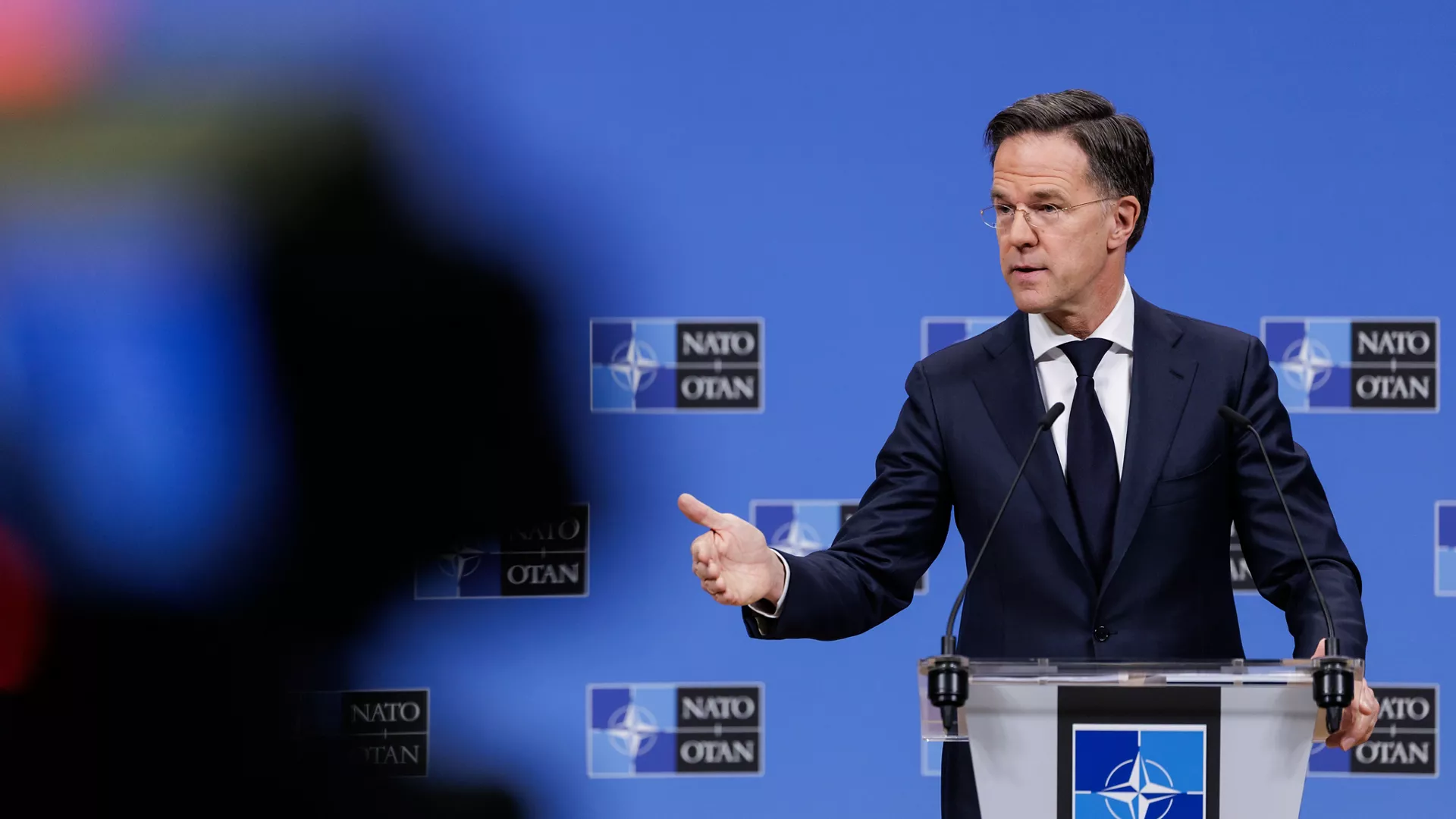


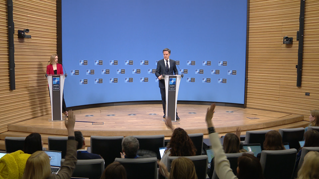
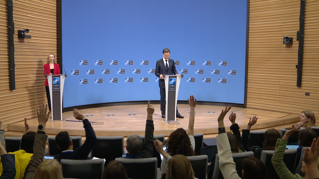
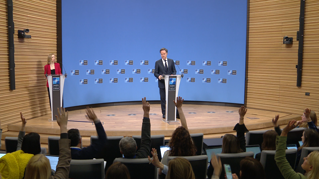
Press conference by the NATO Secretary General Mark Rutte for the launch of his Annual Report for 2025
Press conference by the NATO Secretary General Mark Rutte for the launch of his Annual Report for 2025
Press conference by the NATO Secretary General Mark Rutte for the launch of his Annual Report for 2025
Press conference by the NATO Secretary General Mark Rutte for the launch of his Annual Report for 2025
Press conference by the NATO Secretary General Mark Rutte for the launch of his Annual Report for 2025
Press conference by the NATO Secretary General Mark Rutte for the launch of his Annual Report for 2025
Press conference for the launch of the NATO Secretary General's Annual Report for 2025